
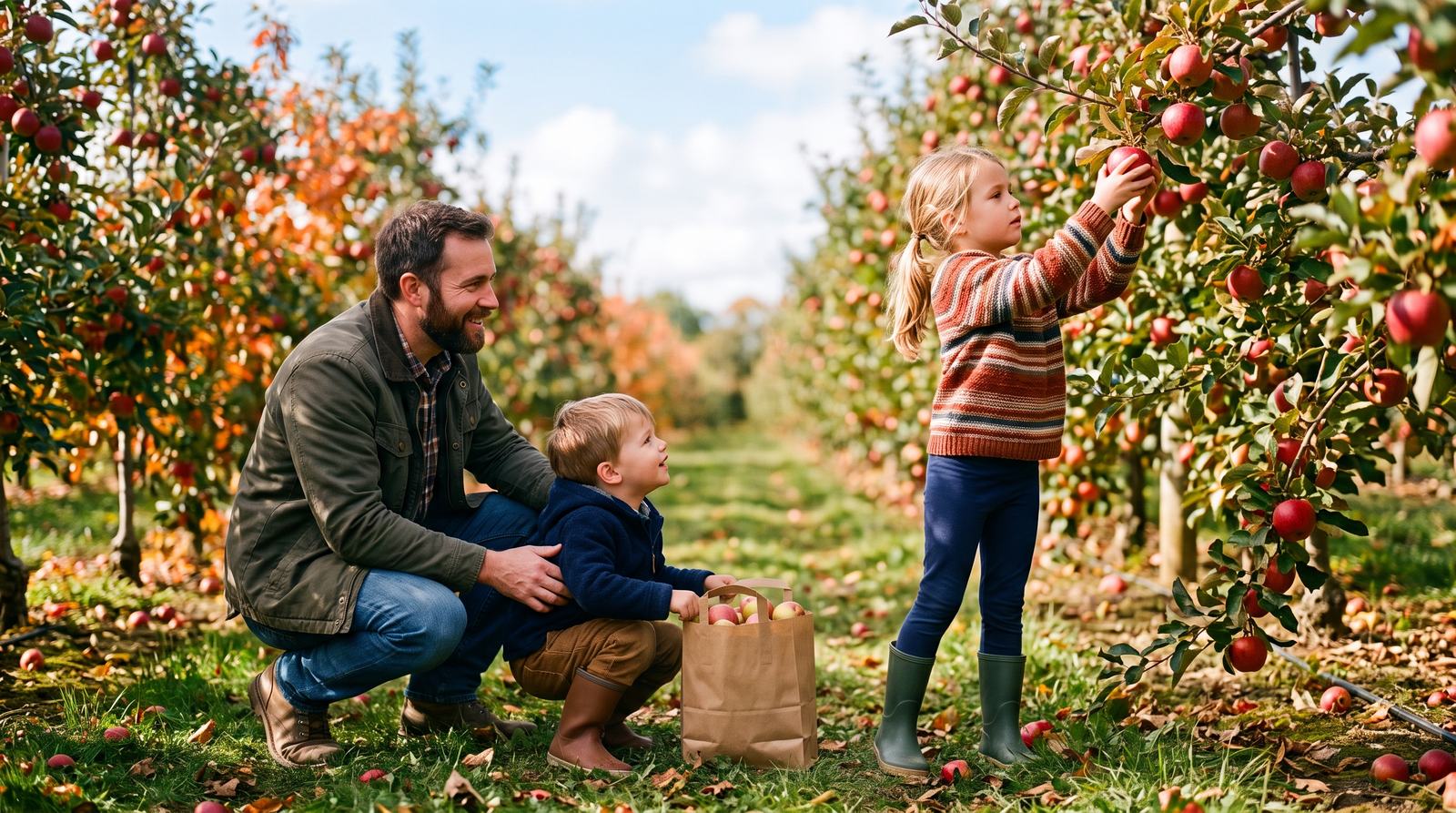
A pick-your-own farm is one of the easiest family outings there is: kids get a real job, you pay only for what you pick, and the day ends with something to eat. In most of the Northern Hemisphere the year runs strawberries in June, blueberries and peaches in summer, apples from August, pumpkins in fall, and Christmas trees in December.
What can you pick, and when?
Seasons shift with your region and the weather, but the order stays the same almost everywhere. This is a typical Northern Hemisphere year, based on the Massachusetts pick-your-own season guide and similar calendars from other growing regions:
- Strawberries: early or mid-June into July.
- Blueberries and raspberries: July and August.
- Peaches and plums: mid-July into September.
- Apples: August to November, with each variety ripening on its own schedule.
- Pumpkins: September and October.
- Christmas trees: from late November, usually through the weekends before Christmas.
In the Southern Hemisphere, flip the calendar by about six months: strawberries around November and December, apples from about February to May. Warmer regions start earlier and cooler ones later.
Because a hot week or a late frost can move a crop by days, call or check the farm's website or social pages on the morning you plan to go. Most farms post what is ready to pick and close fields once they are picked out, even mid-season.
Is it worth it with little kids? Ages and attention spans
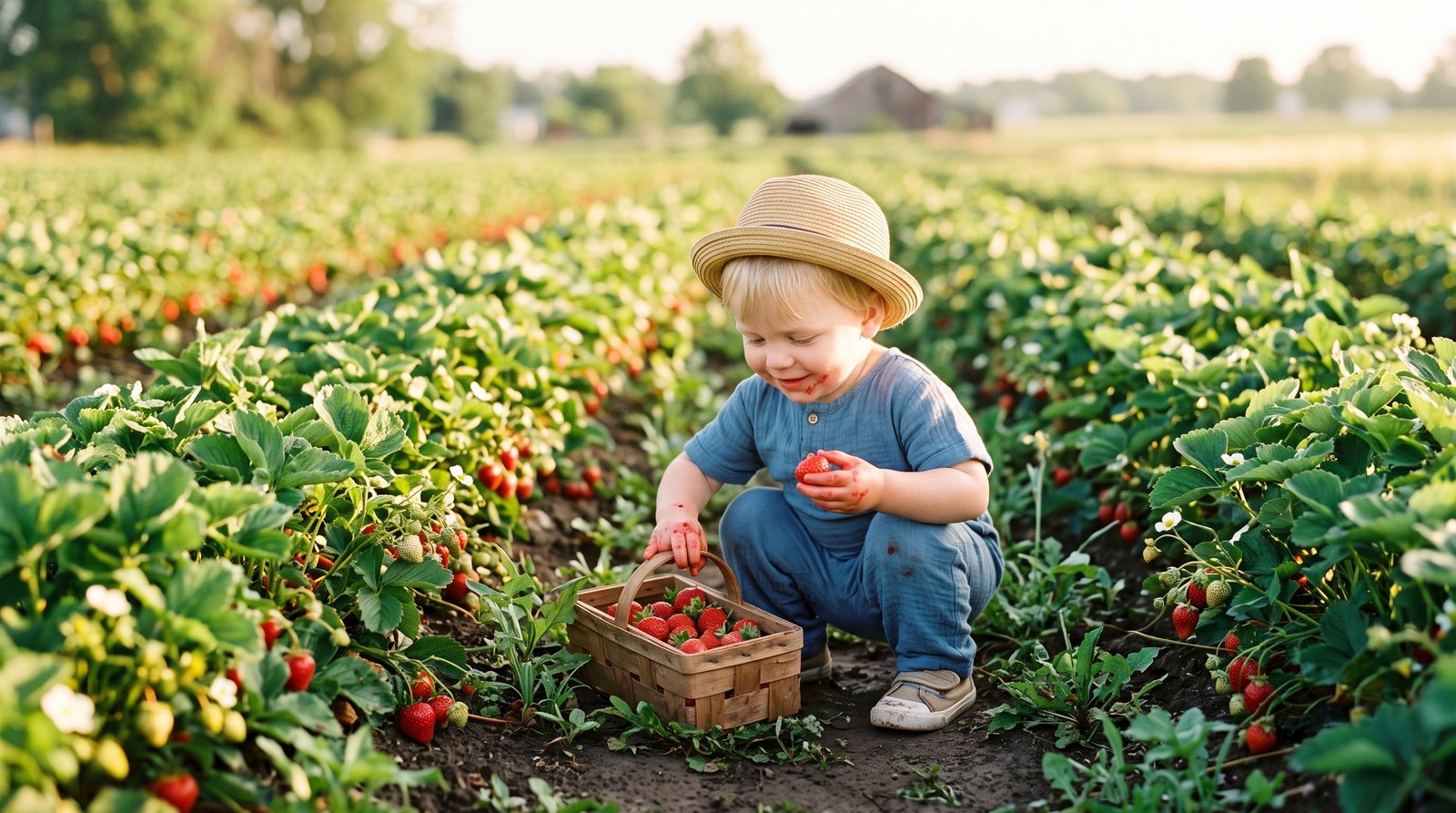
Yes, at almost every age, as long as you size the visit to the child. The picking itself rarely lasts longer than a young child's interest, and farms are built for families.
- Ages 2 to 3: plan on 20 to 30 minutes of picking. Give them their own small container and low fruit to reach, like strawberries or a pumpkin patch. Expect more tasting than picking.
- Ages 4 to 7: the sweet spot. They can follow simple rules, pick carefully, and carry their own bag. Apple rows with low branches and blueberry bushes at their height work well.
- Ages 8 to 12: give them real responsibility, such as choosing the ripe apples, checking each pumpkin for soft spots, or keeping a tally of what the family picked.
Many farms add hay rides, corn mazes, farm animals or a play area. Those extras can turn a one-hour pick into a half day, which is great for older kids and too much for a toddler. Decide in the car which extras you will do so nobody melts down at the gate.
Pro tip: one container per child
Give every child their own small bag or basket and let them keep what they pick in it until checkout. Kids pick more carefully when the fruit is theirs, siblings stop arguing over the family bucket, and you can see at a glance when a child is done.
What to bring
Farm fields are open, uneven and often muddy. Pack as you would for a long park day, plus a few farm-specific extras:
- Closed shoes or boots that can get muddy. Sandals and berry fields do not mix.
- Sun hats and sunscreen for summer berry fields, and warm layers for fall and December. Fields have little shade and can be windy.
- Water and simple snacks, so hungry kids are not eating unwashed fruit by the handful.
- Wipes, plus soap and water or hand sanitizer, for sticky hands and before eating.
- A payment method. Some smaller farms are cash only; check ahead.
- Your own containers, only if the farm allows them. Many sell their own bags and boxes and weigh or price by container.
- A wagon or a sturdy stroller with big wheels for toddlers and for carrying pumpkins, if the farm permits them in the fields.
- A change of clothes for the drive home, especially after strawberries.
If you want to make a day of it, our list of family day trip ideas and our no-nonsense family picnic plan pair well with a morning on the farm.
Farm rules and etiquette kids should know
Pick-your-own farms are working farms. A few rules keep the plants healthy and the farmer happy, and kids follow them better when they hear them before you arrive:
- Pick only in the rows or trees the staff point you to. Other rows may not be ripe or may have been sprayed.
- No climbing trees and no shaking branches. Fruit that falls bruises, and branches break.
- Pick from the plant, not the ground. Fallen fruit is usually not for sale and can attract wasps.
- Ask before tasting. Some farms welcome a taste, others charge for everything picked, and fruit has not been washed.
- Pick only what you plan to pay for. Pulling fruit and dropping it wastes the crop.
- Leave the dog at home unless the farm says pets are welcome.
If the farm has animals, wash hands with soap and water after visiting them, and supervise handwashing for children under 5, as the CDC advises for anyone around farm animals. Hand sanitizer is the backup when there is no sink.
"On a farm, the kids are not along for the ride. They are doing the job."
Apple picking with kids
Apples are the easiest fruit to teach. The trick, from Ontario's guidance for apple growers, is to roll the apple gently upward on its stem instead of pulling. A ripe apple comes away easily without disturbing its neighbors. If it will not let go, it is not ready, so move on.
Then treat apples like eggs. Set them in the bag rather than dropping them, and do not let kids swing a full bag; bruised apples spoil fast. Pick a mix of varieties if the farm offers several, and ask the staff which are best for eating fresh and which for baking.
Apples do not all ripen at once, so the varieties on offer change week to week. Late-season apples often keep for weeks in the fridge, which makes October a good time to pick extra.
Pumpkin picking with kids
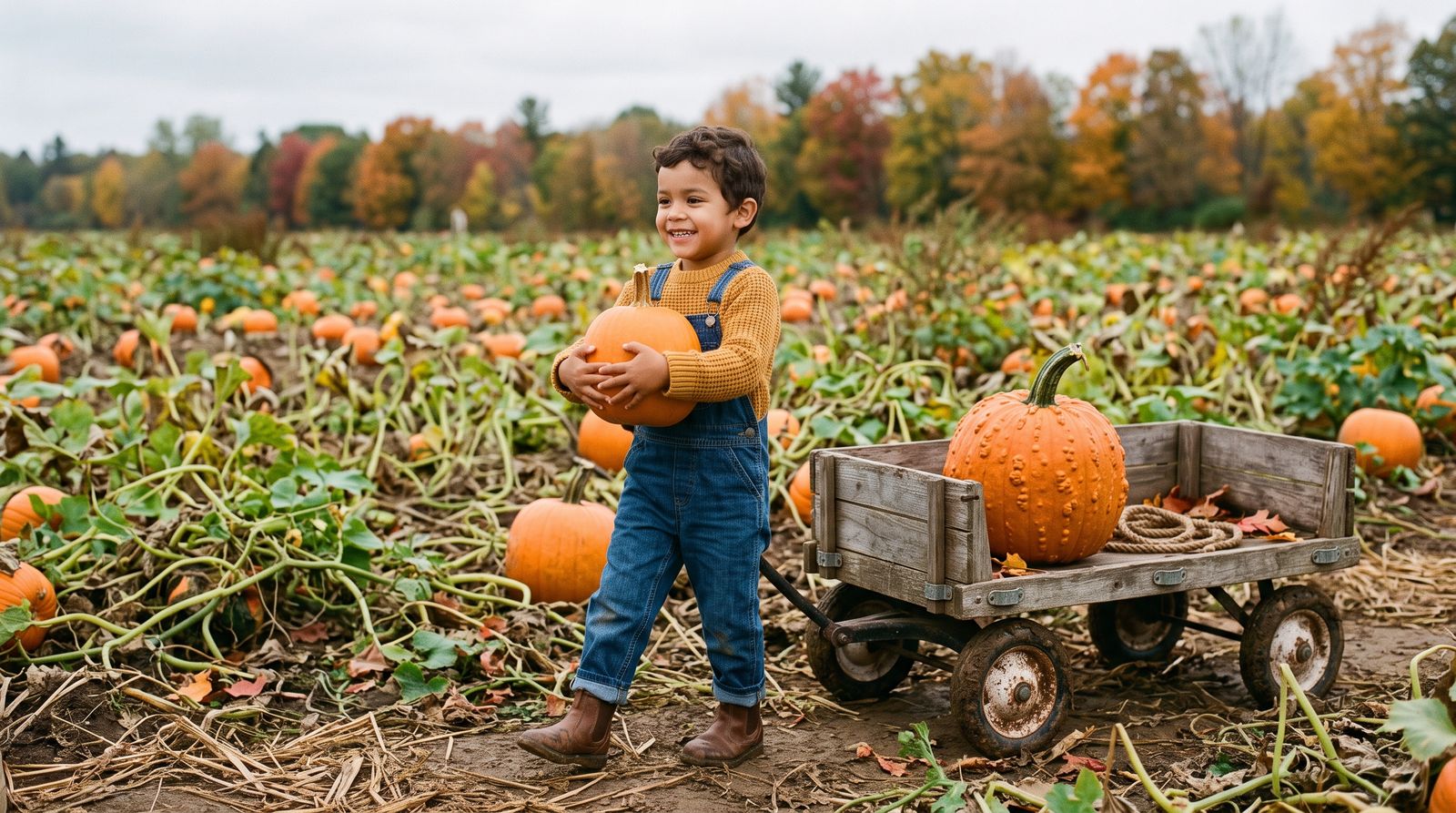
A pumpkin patch is the most toddler-friendly harvest of the year: the fruit sits on the ground and kids get to choose. The NC State Extension's pumpkin advice gives kids a simple checklist: plenty of stem still attached, an even color, and no soft spots when you feel around it.
Then the big rule: never carry a pumpkin by its stem. The stem can snap or tear the skin, and a damaged pumpkin rots faster. Carry it from underneath, or use a wagon. A large pumpkin of 10 to 15 pounds (about 4.5 to 7 kilograms) is heavy for a small child, so let them choose a small one they can carry themselves.
A whole, well-cured pumpkin can last up to about three months. Keep it somewhere cool and dry, out of the rain and off damp ground, and it will see you through the season as decoration and then as soup or pie.
Berry picking in summer
Strawberries are the classic first pick for small kids because the plants are low and the payoff is instant. Teach them to pick only berries that are red all over and to pinch the stem rather than pulling the berry, which can uproot the plant.
Go early in the day. Berry fields get hot by late morning and the fruit is firmer when it is cool. Use shallow containers so the berries on the bottom are not crushed, and get them into the fridge soon after you get home.
Blueberries suit slightly older kids: the ripe ones are fully blue with no red or green, and they roll off easily into a cupped hand. Raspberries are delicate and grow among thorny canes, so give them to careful pickers over age 5 or so.
Cutting your own Christmas tree
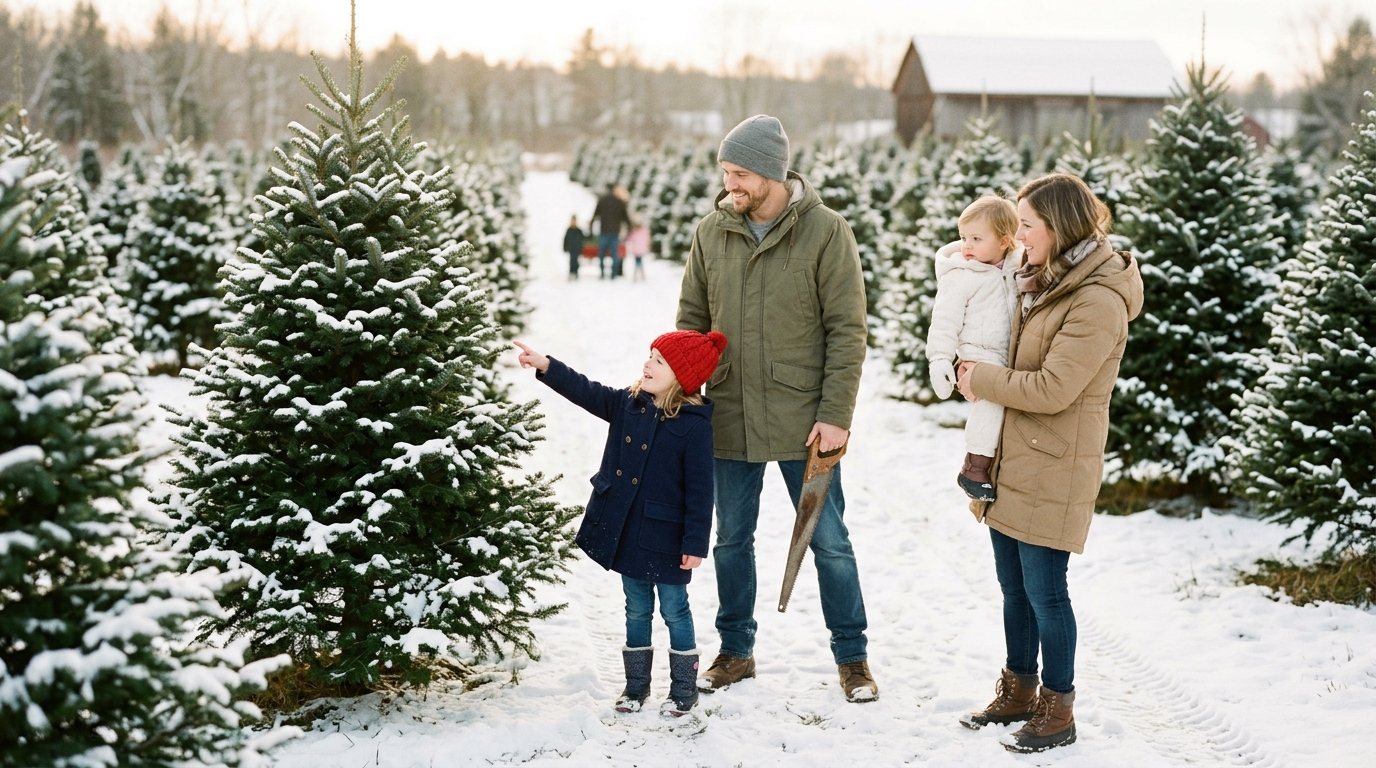
Christmas tree farms are a December tradition for many families. Kids choose the tree, adults handle the saw, and most farms will shake, bale and help load it.
To check freshness on a pre-cut tree, run your fingers along a branch. If needles break easily or fall off in your hand, the tree is dry, as Penn State Extension explains. A tree you cut yourself starts out fresh, which is a big part of the appeal.
At home, the National Christmas Tree Association recommends cutting a disk of about 1/2 inch (about 1 centimeter) off the base before it goes in the stand, using a stand that holds about 1 quart (about 1 liter) of water for every 1 inch (2.5 centimeters) of trunk diameter, and checking the water every day. Keep the tree away from fireplaces, heaters, vents and direct sun. Topping up the water makes a good daily job for a child.
Using the harvest at home
Before anyone eats the haul, wash it. The FDA's produce advice is to rinse fruit under running water, skip soap and produce washes, scrub firm produce with a clean brush, and dry it with a clean towel. Wash berries just before eating, not before storing; they keep longer dry.
Then give kids a cooking job that uses what they picked:
- Apples: slices with peanut or seed butter, a pot of simple applesauce, or baked apples.
- Berries: smoothies, yogurt bowls, or a quick fruit salad they assemble.
- Pumpkins: roasted seeds, soup, or pumpkin muffins.
- Peaches: sliced for snacks or chopped onto oatmeal.
For more ideas that turn fresh fruit into everyday snacks, see our guide to healthy snacks kids will actually eat. For more ways to get the family outside together, try our outdoor playdate ideas.
This week, look up the nearest pick-your-own farm, check what is ready on its website, and put a morning on the calendar. Give each child a container and one job, and let them lead.
Frequently asked questions
What is the best age for pick-your-own with kids?
Ages 4 to 7 are the sweet spot: kids can follow farm rules, pick carefully and carry their own bag. Toddlers enjoy short visits of 20 to 30 minutes, especially strawberry fields and pumpkin patches where the fruit is low. Older kids can take on real jobs like choosing ripe apples or checking pumpkins for soft spots.
When is apple picking season?
In most of the Northern Hemisphere, apples are picked from August to November, with different varieties ripening at different times. In the Southern Hemisphere the season runs roughly from February to May. Check with the farm on the day you go, because weather shifts what is ready.
Can kids eat fruit while picking?
It depends on the farm. Some welcome a taste, others charge for everything picked. Ask first, and remember the fruit has not been washed. Bringing your own snacks and water keeps hungry kids from grazing in the rows.
How do I pick an apple without damaging the tree?
Roll the apple gently upward on its stem instead of pulling it. A ripe apple separates easily. If it does not come away, it is not ready yet. Place apples in the bag rather than dropping them to avoid bruising.
How do I choose a good pumpkin?
Look for plenty of stem still attached, an even color, and no soft spots. Carry it from underneath, never by the stem. A whole, cured pumpkin kept cool and dry can last up to about three months.
What should we wear to a pick-your-own farm?
Closed shoes or boots that can get muddy, a sun hat and sunscreen in summer, and warm layers in fall and winter. Fields are open and uneven with little shade. Bring a change of clothes for the drive home.