
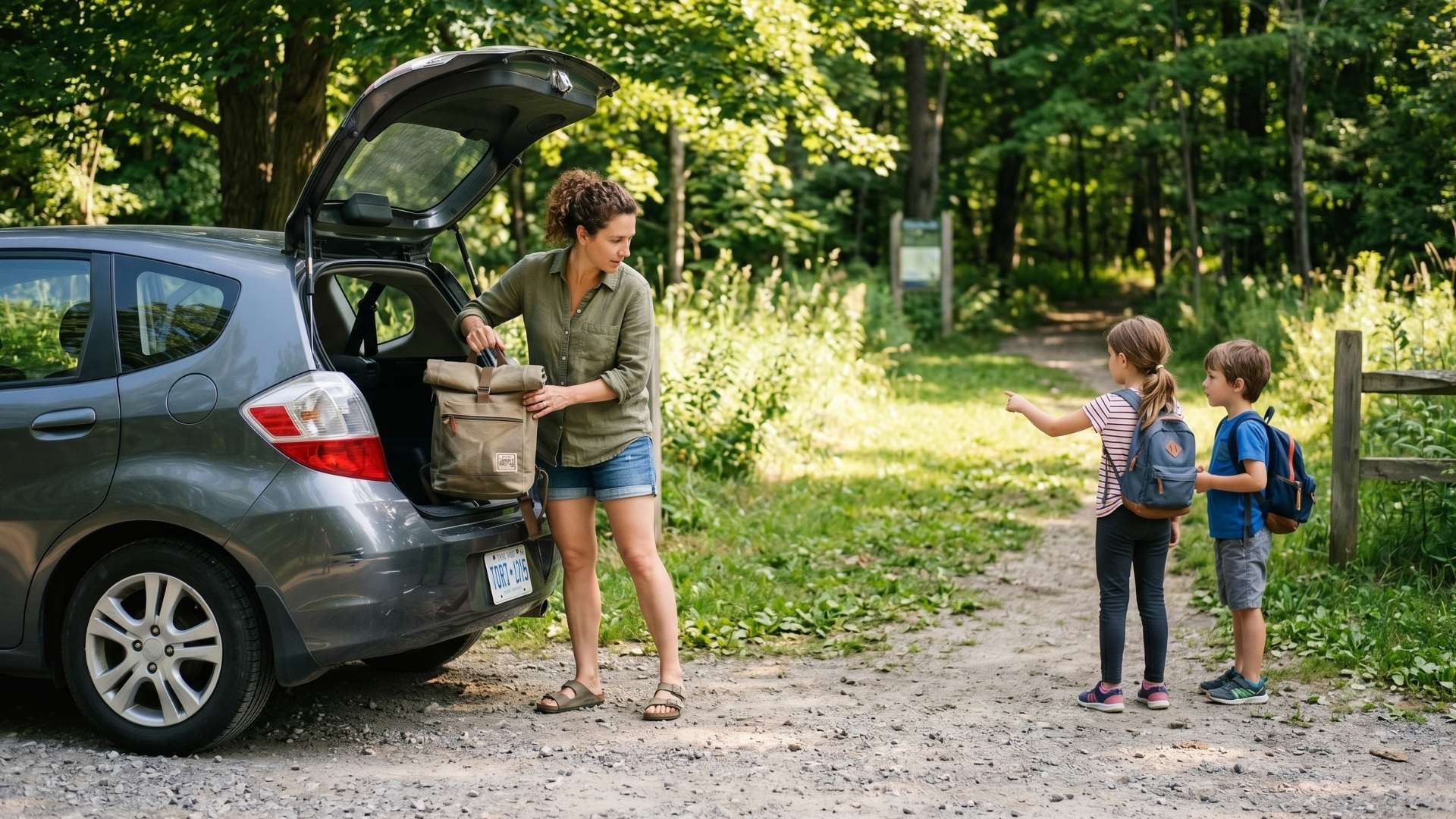
A family day trip that works has a 90-minute travel radius, one anchor activity, a real food plan, and a deliberate buffer for the meltdown that will come. Keep the driving short, the schedule loose, and the expectations modest, and a day trip becomes the easiest and cheapest family adventure there is. Here is how to plan one.
Why 90 minutes is the right radius
The single decision that makes or breaks a day trip is how far you go. Ninety minutes of travel each way is the practical limit, and treating it as a firm rule will improve almost every day trip you take.
The arithmetic is simple. Ninety minutes out and ninety minutes back is three hours of travel. On a day trip, that is already a lot of time in transit, and it still leaves a genuine four-to-five-hour window at the destination. Push the travel to two or three hours each way and the day inverts: most of it is spent travelling, the time at the destination shrinks, and children spend the trip strapped into a seat rather than doing anything fun.
Beyond about 90 minutes, the honest answer is usually that the trip wants to be an overnight, not a day trip. If a place is two or three hours away, consider making it a 24-hour family trip or a weekend getaway instead. This article sits inside our complete guide to traveling with kids.
The 4-hour itinerary
A day trip needs a plan, but a light one. The most common mistake is cramming three or four destinations into a single day, which guarantees a rushed, fraught trip. One anchor is enough.
A reliable day-trip shape:
- Arrive and settle, around 30 minutes. Park, find the toilets, let everyone stretch and adjust to the new place. Do not rush this; a calm arrival sets the tone.
- The anchor activity, around two hours. This is the one real thing you came to do: the beach, the farm, the trail, the museum. Two hours is plenty for young children, and the anchor is the whole point of the trip.
- A proper meal or long snack break, around 45 minutes. Sitting down to eat is also rest. It resets everyone for the rest of the day.
- One small second thing or free play, around an hour. Not a second major destination, just unstructured time: a playground, an ice cream, a wander. This is where children often have the most fun.
- Leave with time to spare. Begin heading home before anyone is exhausted, which the next sections cover.
That is four to five hours at the destination, anchored by one activity, with built-in rest. A day trip planned this loosely almost always goes better than one planned to the minute.
What to pack

A day trip needs one well-packed bag, ready to grab. Pack it the night before, not on the morning of, when time is short and things get forgotten.
The day-trip bag:
- Water for everyone, and more snacks than you think you need. A hungry, thirsty child unravels fast, and snacks buy time everywhere.
- Weather layers. A spare jumper and a light rain layer, whatever the forecast says. Weather 90 minutes away is often not the weather at home.
- A full change of clothes for younger children, and spare underwear for anyone recently toilet trained. Day trips produce spills, puddles, and accidents.
- Sun protection: hats, sunscreen applied before you leave, and reapplied at the destination.
- A small first-aid kit: plasters, antiseptic wipes, any medicines your child needs.
- Car entertainment for the drive: a couple of books, a small toy, an audiobook or playlist queued up.
If the day trip involves a drive, check that every child's car seat or booster is correctly fitted before you go; the US National Highway Traffic Safety Administration's car seat guidance is a reliable reference for the right seat at every age and size.
Building in the meltdown buffer
On a day trip, a child will hit a wall. It is not a question of whether but when, and the trips that go well are the ones planned with that certainty in mind.
A meltdown buffer is mostly about what you do not do. Do not schedule the day so tightly that there is no slack. Leave gaps with nothing in them, so when a child needs to stop, sit, or simply melt down for ten minutes, the schedule can absorb it without the whole day collapsing.
Practical buffers: keep one easy, low-demand option in your back pocket, such as a playground or a quiet green space, for when the anchor activity is not working. Watch for the early signs of a tired or overstimulated child and respond before the full meltdown, with a snack, a drink, or a sit-down. And accept that some part of the day will go wrong. A day trip with one rough patch and several good ones is a successful day trip.
The best day-trip categories

The best day trip for your family depends on the weather, the season, and your children's ages. A few categories reliably deliver.
- Nature and parks. Trails, woods, large parks, and nature reserves. Low cost, lots of room to move, and forgiving of noise and energy. Best in fair weather.
- Water. A beach, a lake, or a river spot. Water entertains children for hours with little else needed, though it demands close supervision.
- Farms and animals. Petting farms, city farms, and wildlife parks. Reliably engaging for toddlers and preschoolers in particular.
- Indoor options for bad weather. A children's museum, a science centre, an aquarium, or an indoor play centre. Keep one or two on your list for when the forecast turns.
- A town to wander. A nearby town with a market, a green space, and somewhere to eat. Lower-key, and good for mixed-age families.
Match the category to your youngest child especially. The day trip has to work for them, and when it does, it usually works for everyone.
When to call it

Knowing when to head home is as important as the planning. The goal is to leave on a high note, while the day is still good.
Resist the urge to extract every last hour. A day trip that ends with a tired, happy child in the car is a trip everyone remembers fondly. A day trip stretched two hours too long, ending in a meltdown in a car park, becomes the trip nobody wants to repeat. The last hour you squeeze out is rarely worth what it costs.
Watch your children rather than the clock. When you see energy dropping and patience thinning, begin winding down: one last thing, then the walk back to the car. Time the drive home so you arrive before a complete collapse, ideally with younger children napping along the way. Plan the trip so the drive home does not land on top of the dinner-and-bedtime rush. For longer journeys, our guides to car snacks that do not make a mess and off-peak travel timing help keep the whole day calm. Pick one destination within 90 minutes this week, plan it around a single anchor activity, and keep the rest of the day loose.
Frequently asked questions
How far should you drive for a family day trip?
Aim for no more than 90 minutes of travel each way. That is three hours of travel in total, which still leaves a genuine four-to-five-hour window at the destination. Beyond 90 minutes, the day is dominated by travel and children spend most of it in a car seat. If a place is two or three hours away, it is better as an overnight trip than a day trip.
How do I plan a day trip itinerary with kids?
Keep it light. Plan one anchor activity of about two hours, not three or four destinations. A reliable shape is: a calm 30-minute arrival, the two-hour anchor activity, a 45-minute meal break, and an hour of free play or one small second thing. Leave gaps in the schedule so a tired child does not derail the whole day.
What should I pack for a family day trip?
Pack one bag the night before with water and plenty of snacks, weather layers and a rain layer, a full change of clothes for younger children, sun protection, a small first-aid kit, and entertainment for the car. If you are driving, check every car seat and booster is correctly fitted before you leave.
What are good day trip ideas for young children?
Nature and parks, water destinations like a beach or lake, and farms or animal parks all reliably engage young children, and most are low cost. Keep one or two indoor options, such as a children's museum or aquarium, on your list for bad weather. Match the choice to your youngest child; if it works for them, it usually works for everyone.
When should we head home from a day trip?
Leave while the day is still going well, on a high note. Watch your children rather than the clock, and when you see energy dropping and patience thinning, start winding down. A trip that ends with a tired, happy child beats one stretched two hours too long that ends in a meltdown. The last hour you squeeze out is rarely worth the cost.