
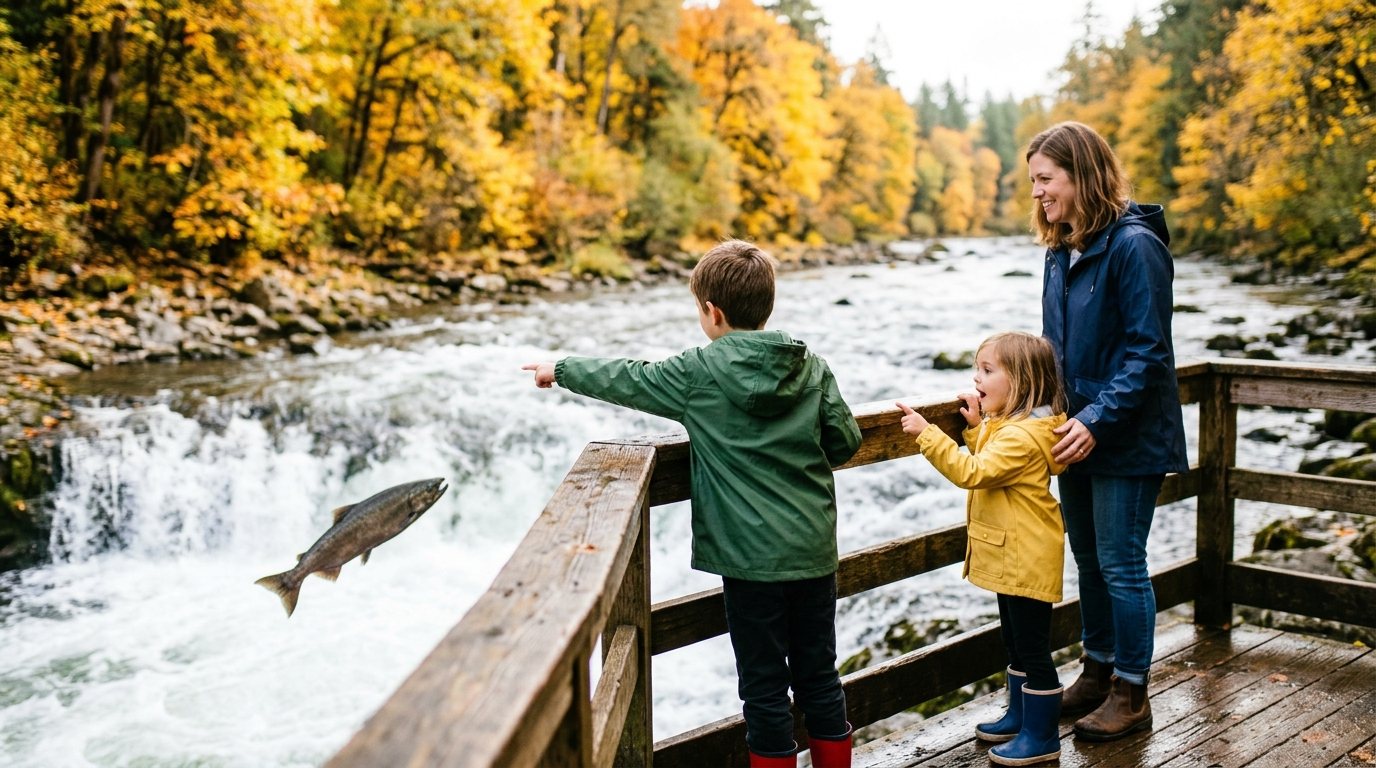
The salmon run is the few weeks each year when adult salmon swim from the ocean or a large lake back up the river where they hatched, to lay their eggs. Kids can watch fish leap at waterfalls and climb fish ladders. In most places the big runs happen from late summer to late fall, peaking in September and October.
What is a salmon run?
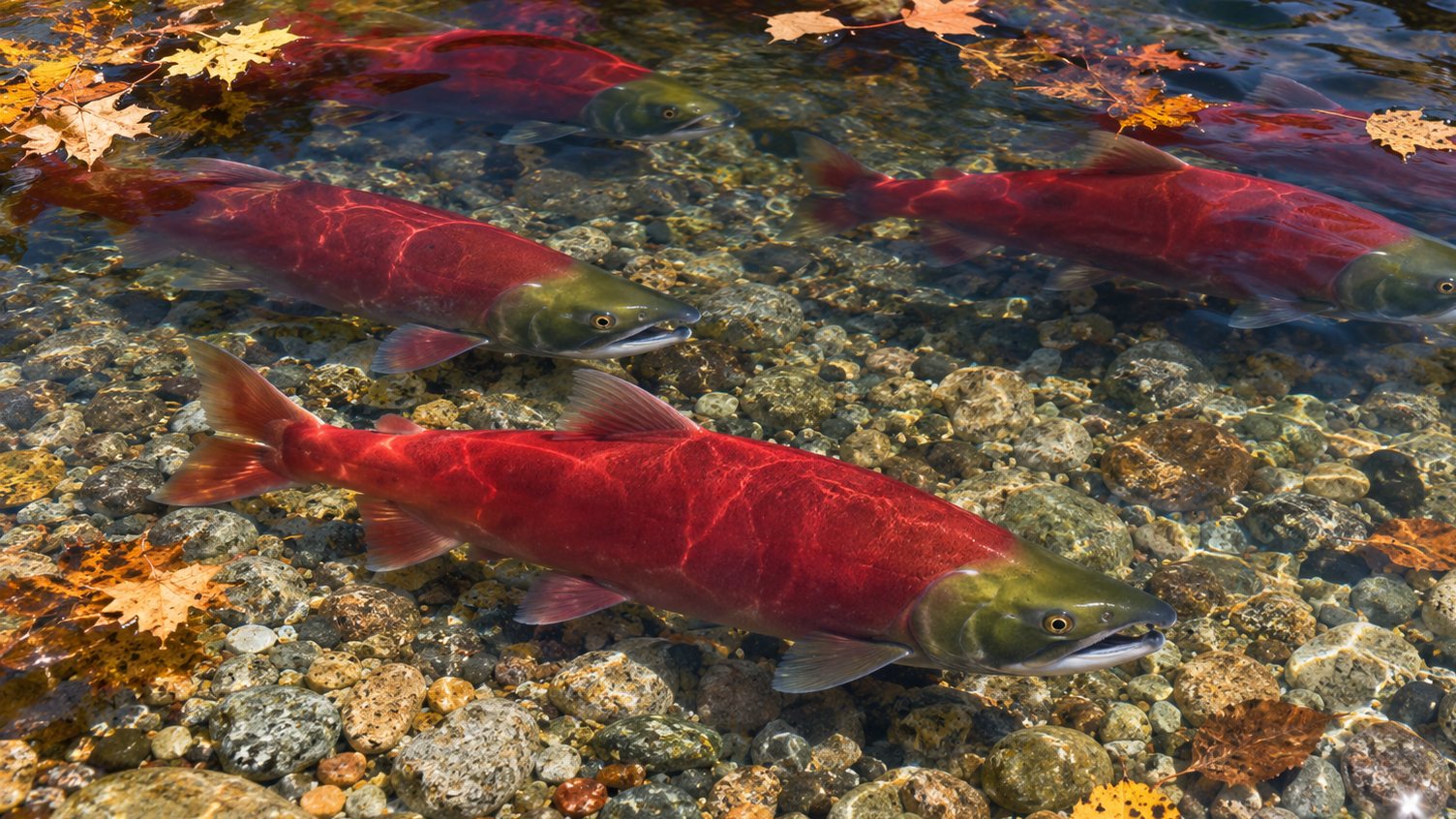
Salmon start life in a river. As the Pacific Salmon Foundation explains, the eggs hatch in the gravel, the young fish grow in fresh water, then head out to sea to feed and grow for a few years. When they are ready to spawn, they swim all the way back to the stream they came from.
How do they find it? According to the US Geological Survey, scientists believe salmon use the earth's magnetic field to get close, then follow their sense of smell to their home stream, using a smell memory they built as young fish.
Pacific salmon die within days of spawning. Atlantic salmon can survive, swim back to sea and return to spawn again, although NOAA Fisheries notes that repeat spawners are becoming rare.
When and where can you see the salmon run?
Timing depends on the river, the species and the weather. These are some of the best-known family viewing spots, with typical timing:
Ontario and the Great Lakes
Chinook and coho salmon run up rivers that flow into Lake Ontario from late August, peaking from mid-September to mid-October, according to Destination Ontario's salmon run guide. Popular spots include the fish ladder at Corbett's Dam in Port Hope, the salmon ladder on Toronto's Humber River at the Old Mill, the fish ladder on Bowmanville Creek, and the Sydenham River in Owen Sound. Each place page has the address, parking and parent tips.
British Columbia
The Adams River in Tsútswecw Provincial Park, near Kamloops, has one of the largest sockeye runs in the world. Sockeye return in especially big numbers every four years, and 2026 is one of those dominant years. The Salute to the Sockeye festival runs October 9 to 25, 2026, with sockeye arriving from mid-October into early November. On Vancouver Island, Goldstream Provincial Park is best from late October through November, when chum, coho and Chinook spawn and bald eagles gather to feed.
US Pacific Northwest
Washington, Oregon and Alaska have hundreds of viewing streams, with different species running from summer into winter. In Seattle, the fish ladder at the Ballard Locks has underwater viewing windows where kids can see salmon eye to eye. Check the local run calendar before you go, as each species has its own weeks.
UK, Ireland and Northern Europe
Atlantic salmon run on many rivers in Scotland, Ireland, Wales and Scandinavia, with fish moving upstream from spring through fall and spawning in late fall and early winter. In Scotland, the fish ladder at Pitlochry, beside the dam on the River Tummel, is a long-standing family favorite, with fish passing from spring into October. Look for salmon leaping at weirs and waterfalls after autumn rain.
Southern Hemisphere readers: wild salmon runs are mostly a Northern Hemisphere sight, though New Zealand has introduced Chinook salmon in some South Island rivers.
How does a fish ladder work?
A dam or weir is a wall salmon cannot jump. A fish ladder is a staircase of water beside it: a series of small pools, each a little higher than the last, with water flowing down through them. The salmon jump or swim from pool to pool, resting in between, until they reach the river above the dam.
Some ladders count the fish too. At Corbett's Dam in Port Hope, the ladder has an underwater monitoring system that records the number, species and size of the fish going through. The ladder opened in 1974 and helped bring salmon back to the Ganaraska River after they had disappeared from Lake Ontario.
For kids, a ladder is often the best view of all: the fish come close, they jump in the same spots over and over, and you can stand right beside the action instead of searching a wide river.
When to go and what to bring
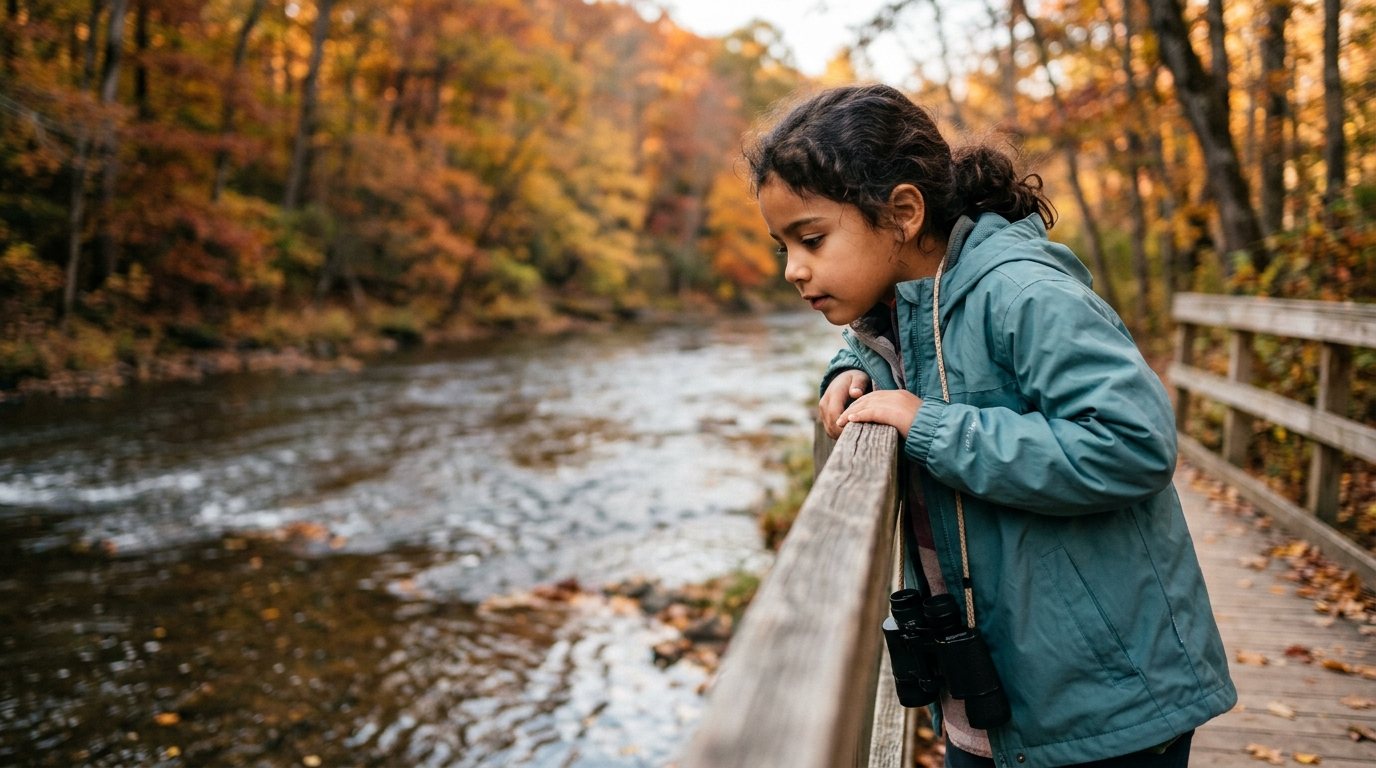
The best viewing is often a day or two after good rain, once the water has cleared: higher water draws salmon upstream, and clear water lets you see them. Bright, calm days help too.
- Polarized sunglasses for everyone. They cut the glare on the water so you can see fish below the surface.
- Waterproof boots or sturdy shoes. Riverbanks are muddy and slippery in fall.
- Warm, waterproof layers, plus hats and gloves for late-season runs.
- A child carrier for toddlers on trails that are not stroller-friendly, or a stroller with big wheels where the path is paved.
- Binoculars for older kids, especially where eagles and other birds gather.
- Snacks and a warm drink. Salmon watching involves waiting.
Pro tip: give kids a spotting job
Before you arrive, tell each child what to look for: one counts jumps, one looks for the biggest fish, one watches for a fish that makes it up a step of the ladder. A job turns waiting into a game and keeps eyes on the water instead of on the snack bag.
Viewing rules and staying safe by the river
Spawning salmon are at the end of their journey and easily disturbed. The Pacific Salmon Foundation's viewing tips ask visitors to approach quietly, stay out of the water, and never throw rocks or sticks. The stream bed may hold redds, the gravel nests where salmon lay their eggs, and a single footstep can crush them.
- Stay on marked trails and viewing platforms.
- Keep dogs leashed and out of the water, or leave them at home.
- Respect fishing sanctuaries: many rivers close to fishing during the run.
- In bear country, including much of British Columbia and Alaska, read the posted wildlife signs and keep kids close.
Riverbanks are slippery and fall rivers can run high and fast. Hold small children's hands near the edge, and choose railed platforms and ladders over open banks with young kids.
Be ready for the smell, too. Late in the run, dead salmon line the banks. That is normal, and it is a good starting point for the most important conversation of the day.
What to explain to kids, by age
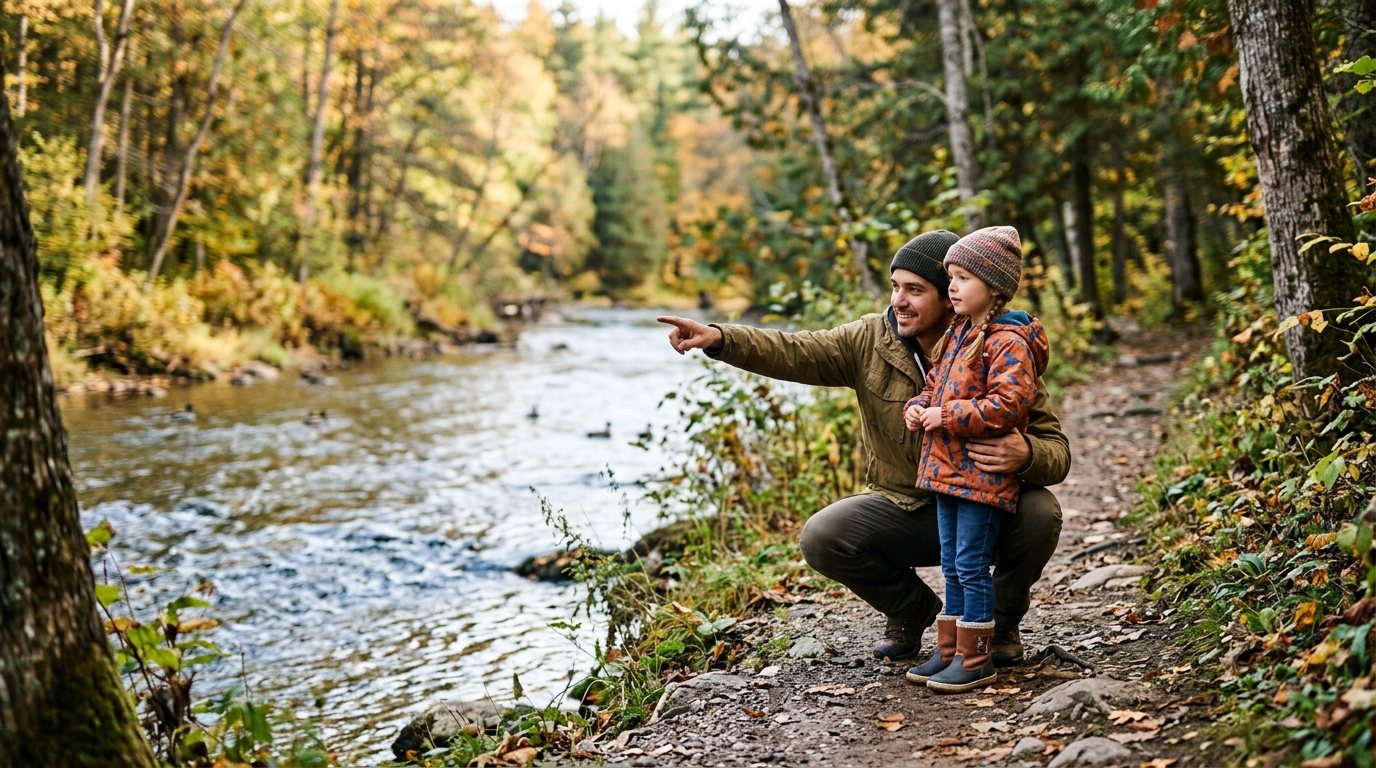
The salmon run is a ready-made science lesson. Pitch it to the child in front of you:
- Ages 3 to 5: keep it simple. The fish are going home to the river where they were born, to lay their eggs. Point out the jumping, the splashing and the big fish.
- Ages 6 to 8: add the journey. These fish swam out to the ocean, grew big, and found their way back by smell. Count jumps, compare species, and talk about how hard it is to swim against the current.
- Ages 9 to 12: go deeper. Why do Pacific salmon die after spawning, and why is that good for the river? Their bodies feed eagles, bears and other animals, and the nutrients end up in the soil and trees along the stream.
Kids often ask whether the fish are sad or hurt. A gentle, truthful answer works: this is the natural end of a salmon's life, it happens after they have laid the eggs for the next generation, and in a few months tiny new salmon will hatch in this same gravel.
"The salmon run is a whole life cycle you can see from one riverbank."
If your family likes slow time outdoors, our guide to forest bathing with kids pairs well with a riverside walk.
Make a day of it
Most viewing spots sit inside parks or conservation areas with trails, picnic areas and playgrounds, so salmon watching fits neatly into a fall day out. Bring lunch using our family picnic plan, or combine it with another stop from our list of family day trip ideas.
This week, look up the salmon viewing spot nearest you, check its run report or social page for recent sightings, and pick the first clear day after rain. Pack the polarized sunglasses and give each child a spotting job.
Frequently asked questions
When is salmon run season?
It depends on the river and species, but most runs happen from late summer to late fall. In Ontario, the peak is usually mid-September to mid-October. In British Columbia, many runs peak from October into November. Atlantic salmon in the UK and Europe move upstream from spring through fall. Check local reports before you go.
Why do salmon die after spawning?
Pacific salmon put all their energy into one journey home and one spawning. They die within days of spawning. Their bodies feed eagles, bears and other wildlife and add nutrients to the river and forest. Atlantic salmon can survive spawning and return again, though this is becoming rare.
What is a fish ladder?
A fish ladder is a series of small stepped pools beside a dam or weir. Water flows down through the pools and salmon jump or swim up from one pool to the next, resting in between, until they pass the barrier. Many ladders let you watch the fish up close.
How do salmon find their way home?
Scientists believe salmon use the earth's magnetic field to navigate back toward their home river, then follow their sense of smell to the exact stream where they hatched, using a smell memory formed when they were young.
Is the salmon run good for toddlers?
Yes, for a short visit. Choose a spot with a railed platform or fish ladder where fish come close, go on a clear day after rain, and keep it to 30 to 60 minutes. Use a carrier on rough trails and hold hands near the water.