
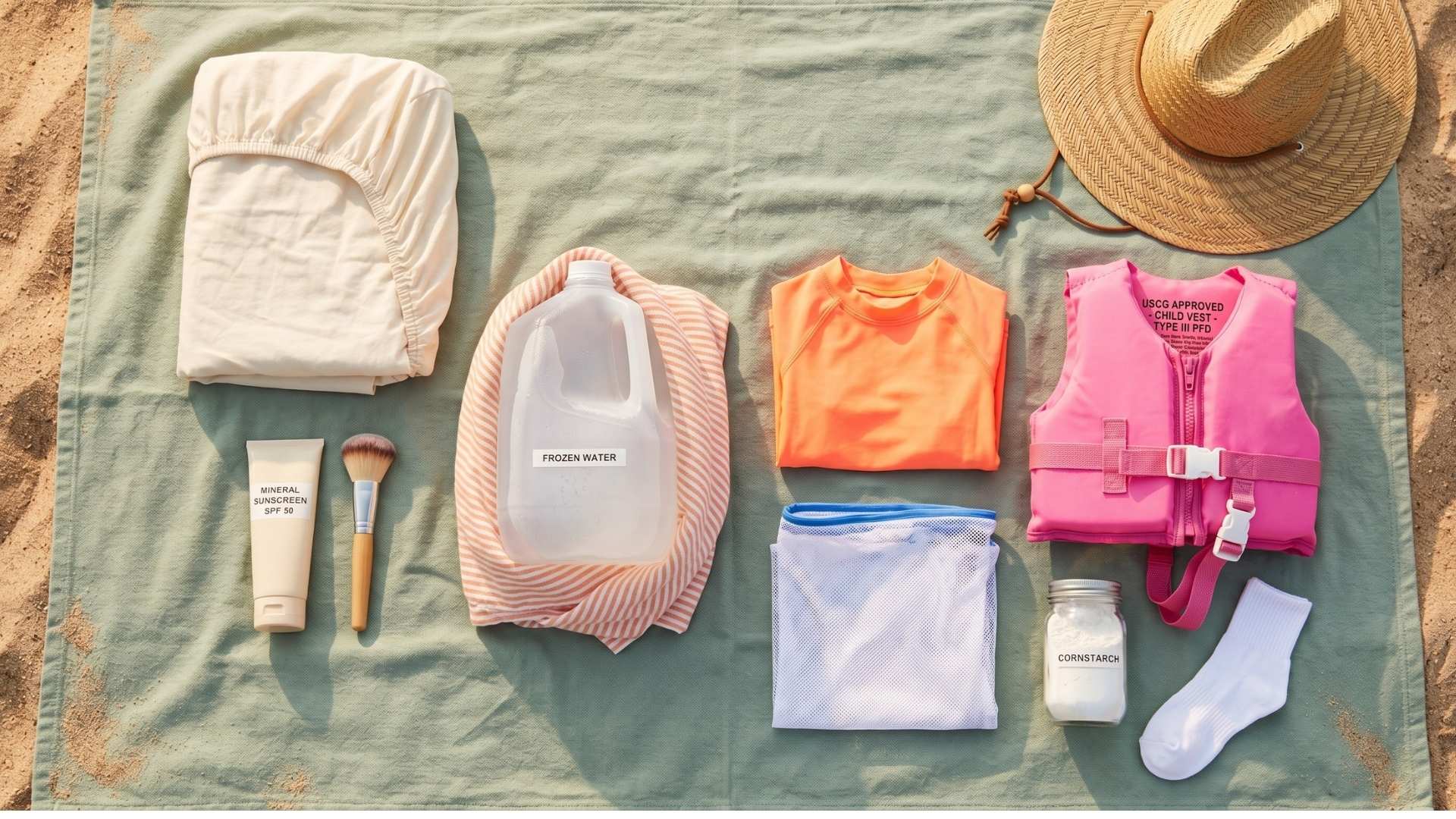
The most useful beach hack for families with small kids is also the most overlooked: a small canister of cornstarch in your bag. It pulls dry sand off skin in seconds. Pair it with a frozen jug of water in the cooler that doubles as cold drinking water by lunchtime, a mesh laundry bag for sand toys, a pop-up tent for shade, and a 4 PM arrival, and you have a different kind of beach day from the one most families end up with.
In this guide
- The single best hack: cornstarch for getting sand off skin
- Sunscreen hacks that actually work in the field
- The frozen-jug trick and other cooler genius
- Sand management: the war you cannot win, but can negotiate
- Setting up camp: shade, seating, and the gear worth its space
- Beach toys: less than you think, and dollar-store kitchenware wins
- Cooling, snacks, and the hydration plan that prevents meltdowns
- The hack experienced families guard the most: timing the day right
- The safety non-negotiables, in plain language
- Insider gems most packing lists never mention
- What to skip (or rent at the destination)
- A quick recap, in one paragraph
- Frequently asked questions
Before the hacks (a short note)
These are the tricks experienced families actually use. They sit alongside the safety habits that matter most: a designated water-watcher, a US Coast Guard-approved life jacket on every non-swimmer, bright high-visibility swimsuits, and a meeting spot named the moment you arrive.
For the full safety primer, see our family water safety guide and our open water and beach safety guide. For the master beach packing list, see the master beach packing list for families.
The single best hack: cornstarch for getting sand off skin
Cornstarch is the underrated MVP of family beach days. At the end of a session, brush off as much loose sand as you can, then sprinkle cornstarch generously on legs, arms, feet, and hands. It pulls moisture off damp skin, which is what makes wet sand cling, and the sand slides off without scrubbing. Two minutes turns a sandy kid back into one who can sit in a car seat without grinding grit into the upholstery.
Cornstarch, not talc-based baby powder. Talc has been at the center of a long-running cancer-litigation story in the US, and the major brands have moved their North American baby-powder formulas to cornstarch versions. For sand removal at the beach, cornstarch works just as well or better, and the choice is simpler.
The application trick: pour a cup of cornstarch into a clean cotton sock and tie off the end. You now have a soft puffer you can dab onto skin instead of dumping clouds of powder into the air. Between trips, keep the loaded sock inside a sealed zip-top freezer bag so the powder does not leak into everything else in the beach bag.
Use the cornstarch sock right before kids get into the car, not inside it. Dab onto legs, arms, feet, and hands; brush off; then sweep any loose powder away with the whisk broom or a quick wipe before anyone gets in. A little goes a long way; a lot becomes a mess no one wants on the car carpet.
Sunscreen hacks that actually work in the field
 Most sun-protection advice falls apart at the beach because sand, water, wind, and a moving target make the standard rules hard to follow. These are the techniques that hold up.
Apply sunscreen at home before you leave
The single best sunscreen tip experienced parents share. The kid is dry, the bathroom is calm, you have control. Sunscreen does not stick to sandy skin, so once you arrive, every application is fighting both the sand and the kid. Get the first coat on at home.
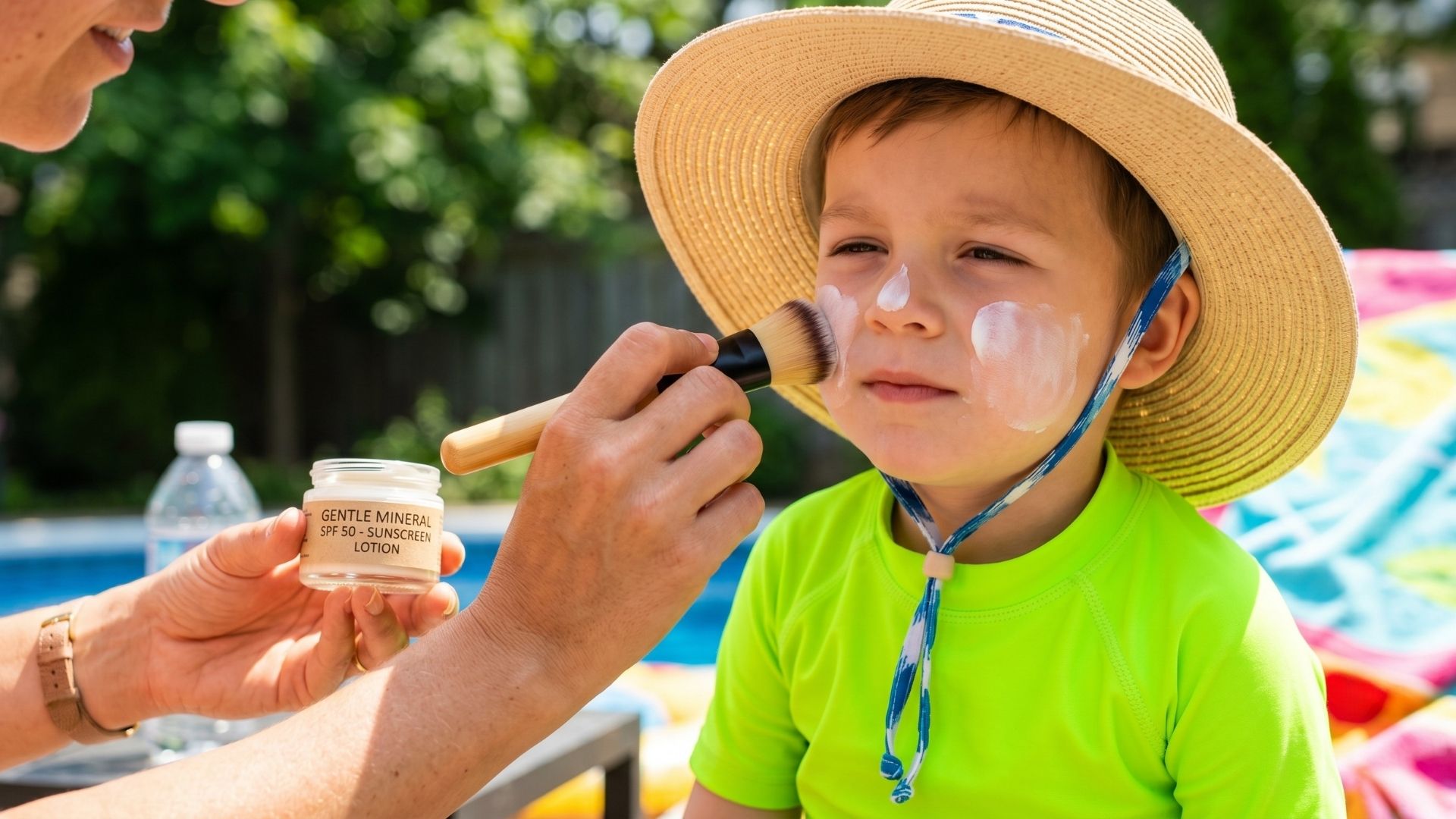
A clean foundation brush for the face
For kids who hate the hand-rub-on, a clean makeup foundation brush is the trick worth trying. Dab a small amount of mineral sunscreen onto the brush and apply it to the face like blush. Kids tolerate the soft brush even if they normally squirm at sunscreen. The brush lives in the beach bag; replace it once a season.
A 90-minute reapplication timer
Set a phone alarm for every 90 minutes from the time you arrive. When it goes off, everyone gets reapplied even if they swear they are not burning. Reflection off sand and water still hits skin under a beach umbrella. Easy spots to miss: ears, the part in the hair, the tops of feet, and the back of the neck. The Skin Cancer Foundation recommends reapplication every two hours; the 90-minute rule gives you a buffer for kids who are in and out of water.
Mineral sunscreen, not chemical, especially for little kids
Zinc oxide and titanium dioxide are the two active ingredients the FDA has identified as generally recognized as safe and effective. They sit on top of the skin instead of being absorbed, which is gentler for younger skin. SPF 30 or higher, water-resistant, broad-spectrum. The AAP advises shade and clothing first for babies under 6 months, with a small amount of mineral sunscreen on exposed skin only if shade and clothing are not enough.
Reef-safe matters in some destinations
Hawaii, Aruba, Bonaire, Palau, and parts of the Florida Keys restrict sunscreens that contain oxybenzone and octinoxate. Mineral-only formulas are the safe pick everywhere, and they avoid the question entirely.
Rash guards as the actual shield
A long-sleeve UPF 50 rash guard or swim shirt covers the area you would otherwise have to sunscreen four times across a beach day. Pair it with a wide-brimmed sun hat with a chin strap (the strap is what keeps it on in coastal breeze). Cuts the reapplication workload roughly in half and is gentler on skin.
The frozen-jug trick and other cooler genius
Coolers are where small differences in technique add hours of cold and cut a lot of soggy mess. A handful of habits make the difference.
Freeze a large container of water the night before
The single best cooler hack. A frozen one-gallon (about 4-litre) container of water is the main ice block in your cooler. A clean empty milk carton, a sturdy reusable water jug, a juice bottle, or any food-safe container that size all work. It chills everything else for hours, and as it slowly melts, it becomes cold drinking water by lunch. You get two products out of one frozen jug. Leave a second un-frozen container in the car for a foot rinse at the end of the day.
Frozen juice pouches and frozen grapes
Pop a few juice pouches in the freezer the night before. By midday they are slushy and refreshing, and they stayed cold for hours after the regular drinks warmed up. Frozen grapes do the same thing and bag well for snacks.
Ice packs, not loose ice
Loose ice in a beach cooler ends up as cold sandy water at the bottom. Sealed ice packs, frozen water bottles, and the frozen jug stay clean and last longer. Save the loose ice for cocktails back at the house.
Pre-chill the cooler
Leave the empty cooler in a cold garage or the fridge overnight before a beach day. A pre-cooled cooler holds ice and food cold for substantially longer than a warm cooler filled with the same ice. Five minutes of advance prep, hours of extra cold.
Backpack-style soft cooler for the carry across sand
A hard rolling cooler on dry sand is a workout. A soft-sided backpack cooler frees both hands, fits in a beach wagon, and is light enough for one parent to wear while the other handles a toddler. Hard coolers can live in the car for the gallon-jug rinse station.
Sand management: the war you cannot win, but can negotiate
Sand is going home with you. The point is to slow it down and choose where it ends up. These are the moves that matter.
A mesh laundry bag for every sand toy
Put every bucket, shovel, mold, and toy car in a single mesh laundry bag (the dollar-store kind for delicates is perfect). At the end of the day, dunk the whole bag in the surf, shake it twice, and the sand stays at the beach. Toys come home clean, the bag dries in 20 minutes, and you load the car without leaving a sand trail.
The fitted-sheet sand barrier
An old fitted sheet (the elastic-cornered kind from a bed) becomes a low-walled play zone. Lay it on the sand with the elastic side facing up. Weight each corner with the cooler, a chair, a bag of damp sand, or a heavy beach bag. The corners stand up like short walls. Sand cannot blow into the center, which gives you a clean zone for snacks, sunscreen, naps, and babies.
Cornstarch in a sock, used just before everyone gets in the car
The cornstarch trick from above, used as the very last step. Puff the sock onto skin standing on the asphalt by the open car door, brush off, sweep the loose powder away with the whisk broom or a wipe, then kids into dry clothes and into the car. The whole sequence takes two minutes and saves you from a back seat full of sandy, powdered floor mats. Store the loaded sock in a zip-top bag in the beach bin between trips.
A laundry basket in the trunk
Keep a plastic laundry basket in the trunk all summer. Sandy towels, gritty water shoes, the wet swimsuit-bag, and the mesh toy bag all go straight into it. The basket holds the mess; the car carpet stays dry. Whole basket comes inside at the end of the day for the wash.
A cheap rubber doormat by the door
A dollar-store rubber or plastic doormat lives in the trunk. Set it on the asphalt by the open car door so kids stand on it during the rinse, change, and shoe swap. Their feet do not transfer sand from beach to rinse to car carpet.
A jug of water in the car for foot rinsing
Fill a one-gallon (about 4-litre) container at home and leave it in the trunk. A clean milk carton, a juice jug, or a sturdy reusable water bottle of that size all work. Use it for a quick foot rinse before kids step into the car. Bonus: fill the container with hot tap water before you leave the house and wrap it in a thick towel; hours later it is still warm. A warm rinse is much kinder to cold beach feet than ice-cold tap water.
Whisk broom or soft brush for dry sand
A small whisk broom, a soft brush, or a lambswool duster makes quick work of dry sand on bags, chairs, and folded towels. Brush, do not shake; shaking sends sand into the wind and into the next family's snacks.
Setting up camp: shade, seating, and the gear worth its space
The thing most parents wish they had brought is more shade. The thing most parents regret bringing is a second beach chair. Here is what experienced families actually set up.
A pop-up beach tent or wind-friendly shade
A standard beach umbrella catches coastal wind like a sail and flies away, which is dangerous on a crowded beach. A weighted pop-up beach tent stays put. Some popular wind-friendly shade designs use a single sail anchored to a pole driven into the sand; check what kind your beach allows. If you do use an umbrella, sand-screw anchors are non-negotiable, and even then orient the opening away from the wind.
A beach wagon with wide soft tires
The transport solution that pays for itself by the second trip. Standard small-wheeled wagons sink to the axles in dry sand. Wagons with balloon-tire wheels (sometimes sold as "beach carts" or "sand wagons") glide. Load it with the cooler, chairs, toys, and bags on the way in. On the way back, a wiped-out toddler often rides on top.
Backpack-style beach chairs
If you bring chairs, the strap-on-your-back kind let you carry your own seat hands-free. A standard fold-up chair becomes a two-hand carry that does not work with a toddler in the other hand. The backpack chair pays for itself within one carry across hot sand.
Single-arch wind shades like the Shibumi for a long beach day
If your family does long full-day beach trips multiple times a summer, look at the single-arch wind shades. The Shibumi Shade is the design most beach families end up recommending: a lightweight arch with a wide sail that catches the coastal breeze and stays anchored when umbrellas would fly. It costs more than an umbrella, packs down small, and a child can stand underneath without dodging metal spokes. Worth the spend if you beach often.
Beach toys: less than you think, and dollar-store kitchenware wins
The toy aisle wants to sell you a $40 sand kit. Your kid will be just as happy with $6 of kitchen junk. The rule for beach toys is bring fewer, and bring things that double as something else.
Dollar-store kitchenware as beach toys
Funnels, ramekins, plastic measuring cups, big spoons, silicone spatulas, a stainless-steel mixing bowl, a colander. Cheaper, more interesting to little kids, and less guilt if one walks off. The classic bucket-and-shovel set still works; add the kitchen junk for variety.
An inflatable kiddie pool placed in the shade
For toddlers who are intimidated by waves or a rocky shore, an inflatable kiddie pool is the underrated hack. Set it under the sun tent, fill it with a few buckets of ocean water hauled from the surf, and the toddler has their own contained ocean right next to your chair. Hours of contained, safe play. A clear shower-curtain liner pressed into a wide, shallow hole and weighted with sand around the edges is the DIY version. If you dig, dig shallow and fill the hole back in before you leave (more on that below).
A small mesh seashell bag per kid
Kids love collecting shells, pebbles, and sea glass. A small wearable mesh bag with a strap keeps the collection out of your pockets and lets you spot-check what they are bringing home (some beaches restrict taking anything from the shore; check posted rules). At the end of the day, dunk and shake the bag for a clean ride home.
Bubbles, kites, and a soft ball for breaks
Three universal hits. Bubbles work for any age and stretch a beach day at the shaded edge of the blanket. A kite uses the coastal wind that was working against your umbrella. A soft foam ball stays useful for kids of every age and does not hurt anyone if it lands somewhere unintended.
Skip the breakable, the heavy, and the noisy
Toys with many small parts get lost in sand within an hour. Hard balls, glass jars, and large inflatables on windy days create problems for everyone around you. Battery-powered noise toys are an unwritten beach faux pas; the waves are the soundtrack.
Cooling, snacks, and the hydration plan that prevents meltdowns
Most beach meltdowns are heat or dehydration in disguise. The fix is mostly preventive.
Pre-cut hydrating snacks
Watermelon, cucumber, grapes, berries, orange slices, melon cubes. Easy to eat with one hand, mostly water, and they stay appealing in heat. Pack them in hard-shell containers (cheap soft bags get crushed under towels). Skip anything that melts (chocolate, sticky bars) and anything seagulls will dive-bomb (open chips, sandwich bread).
A water bottle per kid, then more water than that
Refill stations at lifeguarded beaches are common but not guaranteed. Pack one insulated stainless steel bottle per family member, packed with ice, plus a refillable jug for the cooler. Hydration is the single biggest preventer of mid-afternoon collapse.
A battery-powered clip-on fan
A small clip-on fan attached to a stroller, a pop-up tent, or a beach chair makes a measurable difference for a napping baby or an overheated toddler. The newer rechargeable ones run six to ten hours on a charge. Cheap, packs flat, regularly underrated.
Cooling towels and a misting bottle
A cooling towel (wet it, wring it, drape it on the back of the neck) brings core temperature down fast. A small spray bottle of water lives in the cooler pocket; mist faces, hot feet, or anything that needs a quick rinse. Stuff a few damp washcloths in zip bags and freeze them; they double as cooling packs for kids and ice for any sunburn touch-up.
The hack experienced families guard the most: timing the day right
Most families show up between 10 and 11 AM and leave around 2 PM, then complain about heat, crowds, parking, and meltdowns. Experienced families pick one of two patterns instead.
The "two halves" approach
Arrive at 7 or 8 AM with breakfast in hand. Play for two or three hours when the sand is still cool, the sun is gentle, and the beach is half-empty. Pack up around 11, drive home for lunch and a nap. Come back at 4 or 5 PM for the second half. Total beach time is the same; the worst hours are spent at home with the air conditioning.
The 4 PM arrival
Skip the morning entirely. Arrive at 4 PM as the day-trippers are packing up. Parking opens up, the sand has stopped baking, the sun is forgiving, and the beach feels yours. Stay until 7 PM. The light during the last hour is the kind families take photos of for years. Bring dinner in the cooler and eat it sandy. This is the trick experienced beach families quietly keep for themselves.
Check the tide chart before you go
Low tide at an ocean beach gives gentler waves, bigger shallow areas for toddlers, and tide pools to explore. High tide brings stronger surf and less play space. A free tide app gives you a week of forecasts; aim for low tide during your two-or-three-hour window if your beach has noticeable tides.
Check the local beach rules
Tents, glass bottles, dogs, alcohol, drones, fires, fishing gear, and large canopies are restricted at many beaches. The rules vary by town, state park, and county. A two-minute check of the local parks-and-recreation page saves a parking-lot disappointment when a ranger asks you to pack up the gear you just unloaded.
The safety non-negotiables, in plain language
There are five rules that matter more than every hack on this list. Most are easy. None are negotiable.
A US Coast Guard-approved life jacket on every non-swimmer
Inflatable arm bands, pool noodles, and floats are toys, not flotation devices. The American Academy of Pediatrics and the US Coast Guard agree on this. What you want is a USCG-approved life jacket sized to your child's weight, with a snug fit at the shoulders and chest. The handle on the back of a kid's jacket gives a parent a grab-handle if a toddler heads toward water faster than expected.
Bright high-visibility swimwear
Research on child swimwear visibility has shown that neon orange, neon pink, and neon yellow stay clearly visible under water and at distance, while pale blue, dark green, gray, and white can disappear. The color you pick at a swimwear store affects how fast anyone can find your child if they go under. Skip blue and white; pick the brightest neon you can find.
A designated water-watcher who is off the phone
One adult on water-watch at a time. No phone, no book, no conversation that pulls eyes off the kid. Trade shifts every 20 minutes if you have another adult; make the handover visible so nobody assumes someone else is watching. Lifeguards are not babysitters. The CDC identifies drowning as a leading cause of unintentional injury death for children aged 1 to 4.
A meeting spot named when you arrive
Pick a visible landmark the moment you set up: "our orange umbrella by the third lifeguard tower." Walk to it with the kids. Take a photo of each child showing what they are wearing today. If a kid wanders off, the lifeguard hears "red rash guard, neon yellow swimsuit, blue Crocs" instead of guesses.
Vinegar in a small bottle for jellyfish stings
If a jellyfish sting happens at the coast, rinse the area with white vinegar, not tap water. Tap water and freshwater rinses can trigger more venom release; vinegar inactivates remaining stinging cells on most common species. The Mayo Clinic guidance covers the rest of the first-aid steps. For a severe reaction, especially trouble breathing or hives spreading, go to an emergency room and call ahead.
Hot sand is the underrated risk
On a hot day, dark sand and dry sand can both burn small feet within seconds. Water shoes with closed toes are the answer for kids walking from the parking lot to the water at midday. See the family water shoes guide for fit and selection.
Dig shallow holes, then fill them in
Deep beach holes are dangerous for two reasons. At nesting beaches, sea turtle hatchlings can fall into them and not get out. For everyone else, an unmarked hole on a beach at dusk is a broken-ankle waiting to happen. Dig shallow play holes and fill them before you leave. It is the rule the locals at every beach quietly enforce.
Insider gems most packing lists never mention
The hacks that change the dynamic of a beach day. None are essential; together they are what experienced families wish someone had told them on their first trip.
- Pack one outfit per kid in a labeled zip bag (shirt, bottoms, dry underwear, fresh swim diaper if needed). After they change, the wet swimsuit goes back into the same bag. Saves the bottom of the beach bag from becoming a damp pile.
- Roll your car keys and a small wallet into a clean disposable diaper, fold it like a used one, and leave it on the towel. No one steals what looks like a soiled diaper. The original beach security system.
- A small waterproof pouch on a lanyard for your phone. Skip the budget pouches that fog in salt air; spend $15 on a name-brand one. Use it for photos, mobile payments at concession stands, and quick lifeguard texts.
- A solar-powered or pre-charged power bank in the bag. Beach days are long, navigation home matters, and a dead phone in a sandy car park is the single most stressful problem on the list.
- A clip or carabiner on the umbrella. Hang the bug spray, the sunscreen, the kids' hats, and the mesh shell bag where you can find them.
- A bright ribbon or scarf tied to the top of your umbrella. Helps kids spot your spot from anywhere on the beach.
- Take a photo of where you parked. Beach lots blur into each other by late afternoon.
- A small "leaving snack" you do not bring out of the cooler until it is time to go. Turns the transition into a treat instead of a fight.
- A garden pump sprayer (the cheap one-gallon / 4-litre kind from a hardware store) filled with tap water becomes a portable rinse-off shower at the car for kids before they get in.
- Keep a year-round "beach bin" at home with sunscreen, hats, towels, sand toys, water shoes, the cornstarch sock, and the fitted sheet. Next trip, it is already packed.
What to skip (or rent at the destination)
Cutting the right things from your bag is what makes the rest of the list feel light. A few items that families regret bringing or hauling, and a few worth renting instead.
Skip these
- Glass containers (banned at most beaches; not worth the risk)
- Expensive jewelry, watches, or electronics without protection
- Hard balls and high-velocity toys near crowds
- Snacks that melt (chocolate, sticky granola bars, open chips)
- Complicated outfits (the dry-clothes kit should be a t-shirt, shorts, and underwear, full stop)
- Anything you cannot carry across sand while holding a child's hand
- Heavy coolers for a short visit (a soft cooler for a 90-minute visit is plenty)
- Bluetooth speakers played loud (waves and other families are the soundtrack)
Rent at the destination instead
- Beach chairs and umbrellas. Many beach towns have set-up services that have your shade and chairs waiting before you arrive.
- Beach wagons or carts (if you only beach a few days on vacation, a daily rental beats hauling a $200 wagon on a plane).
- Baby gear. Services like BabyQuip and Baby's Away let you rent pack-n-plays, high chairs, baby tubs, and beach carts from local families. Save the suitcase space.
- Stand-up paddleboards, kayaks, and snorkel gear (rent locally, do not buy and pack).
Consider staying somewhere with a kitchen
A rental with a kitchen cuts restaurant costs, lets you cook simple beach-day food, and means you can stage the cooler the night before. Most family beach trips that go well include a rental that has a full kitchen and a washer-dryer for the salt-and-sand laundry pile.
A quick recap, in one paragraph
Cornstarch in a sock for sand removal. Frozen jug of water in the cooler that becomes drinking water by lunch. Mesh laundry bag for sand toys. Fitted sheet weighted at the corners as a sand-free zone. Inflatable kiddie pool filled with sea water for toddlers. Beach wagon with wide soft tires. Pop-up tent for shade. Foundation brush for sunscreen on small faces. Bright neon swimsuits. US Coast Guard-approved life jackets. A water-watcher who is off the phone. A meeting spot named on arrival. Arrive at 7 AM or 4 PM, not 11. Fill the holes you dig. Park where you can find the car later. Bring a clean snack for the walk back. That is the article in 100 words.
For the complete packing list, see the master beach packing list for families. For more on what each age group needs, see the toddler water day packing list and the baby water day list. For sun specifics, see the family sun safety guide.
Frequently asked questions
What is the best way to get sand off skin at the beach?
Sprinkle cornstarch generously on damp skin, let it sit for a few seconds, then brush off. The cornstarch absorbs the moisture that makes sand cling, and the sand falls off without scrubbing. Cornstarch is the safer choice over talc-based baby powder. The application trick: pour cornstarch into a clean cotton sock and tie off the end; dab the sock onto skin instead of dumping powder.
What should I pack for a beach day with a toddler?
The essentials are sunscreen and a sun hat, a UPF rash guard and bright neon swimsuit, water shoes, towels, a wet bag, a hooded towel or cover-up, a dry outfit including dry underwear, snacks and lots of water, a small first-aid kit, swim diapers, a waterproof phone pouch, and shade you can secure (a pop-up tent works better than an umbrella). For more, see the toddler water day packing list.
What is the best time to go to the beach with kids?
Either early morning (7 to 11 AM) or late afternoon (4 to 7 PM). The middle of the day is the hottest, most crowded, and hardest on small kids. Two patterns work for experienced families: a two-halves day with a midday break at home, or a single late-afternoon arrival that gets the cooling sand, easier parking, and the best light.
Are life jackets necessary at the beach?
Yes, for any kid who is not a strong swimmer when they are near water. The American Academy of Pediatrics and the US Coast Guard recommend USCG-approved life jackets sized to the child's weight, with a snug shoulder and chest fit, not floats, arm bands, or inflatable rings. Many parents keep small kids in a life jacket the whole time at the beach because the handle on the back gives them a grab-handle.
How do I keep a cooler cold for a full beach day?
Pre-chill the cooler in the garage or fridge overnight. Use a frozen one-gallon (about 4-litre) container of water as the main ice block; a clean milk carton, a juice jug, or a sturdy water bottle of that size all work, and it doubles as drinking water by lunchtime. Add ice packs or frozen water bottles around it instead of loose ice (loose ice melts into sandy water). Keep the cooler closed as much as possible and in the shade.
What sunscreen is safest for babies and toddlers at the beach?
A broad-spectrum mineral sunscreen with zinc oxide or titanium dioxide, SPF 30 or higher, water-resistant, applied at home before leaving and reapplied every 90 minutes. The AAP advises shade and clothing first for babies under 6 months, with a small amount of mineral sunscreen on small exposed areas only if needed. Skip oxybenzone-based formulas, which are restricted in Hawaii and some other reef destinations.
What should I do if my child gets stung by a jellyfish at the beach?
Rinse the area with white vinegar, not tap water; freshwater can trigger more venom release. Carefully remove any visible tentacles with tweezers (not bare fingers). The Mayo Clinic guidance covers the rest. For a severe reaction (trouble breathing, hives spreading, severe pain), call emergency services and head to the nearest emergency room.
What beach gear is worth renting at the destination instead of bringing?
Beach chairs, umbrellas, and wagons are commonly rented from beach-town services that set up your spot before you arrive. Baby gear (pack-n-plays, high chairs, beach tents, strollers) rents from services like BabyQuip and Baby's Away. Snorkel gear, kayaks, and stand-up paddleboards are almost always cheaper and easier to rent locally. Bring sunscreen, hats, swimsuits, dry clothes, and personal items; rent the bulky stuff.