
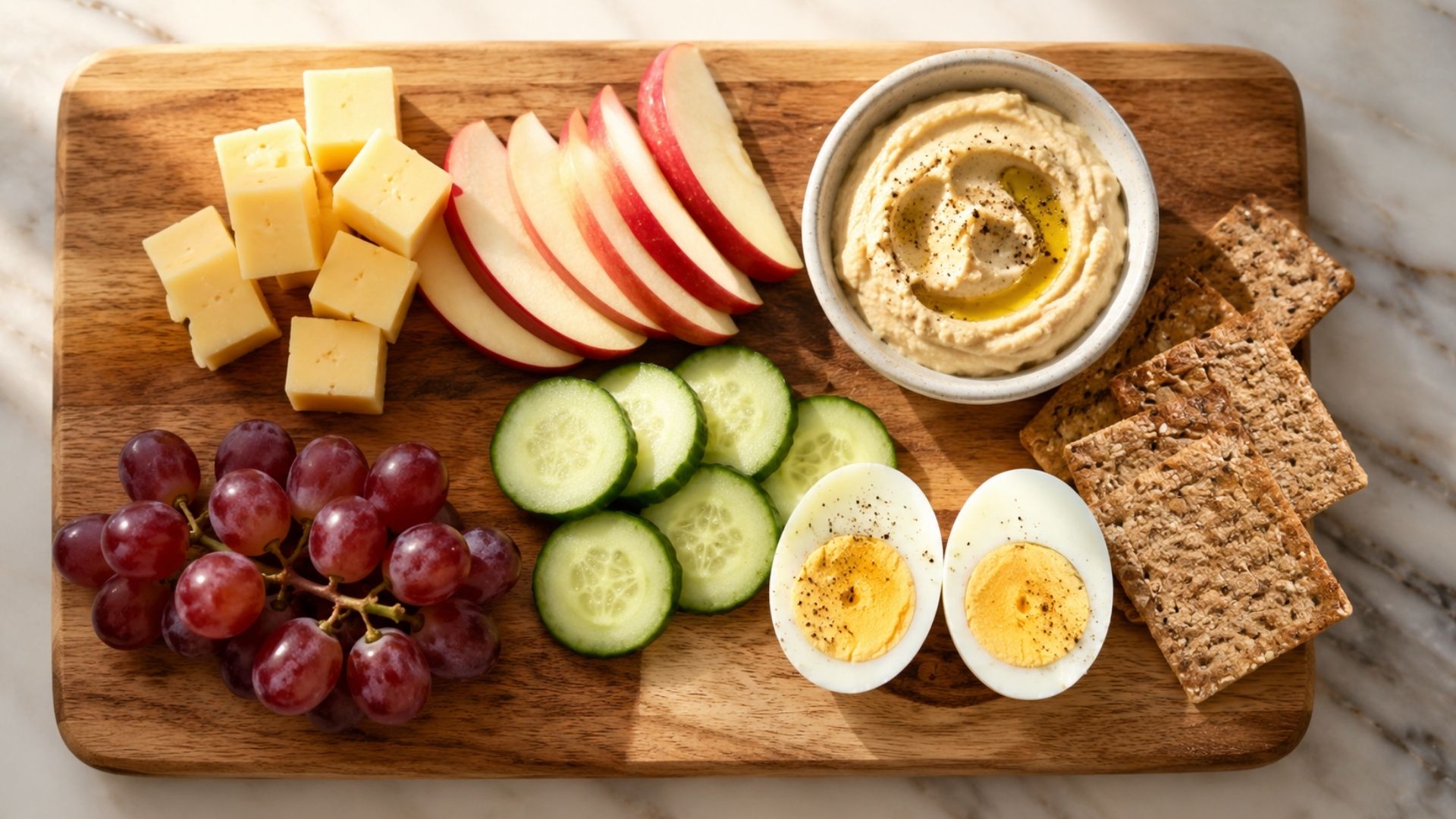
Healthy snacks for kids do not require special-occasion ingredients or Pinterest patience. The four-anchor formula (protein, fibre, healthy fat, fruit or vegetable) covers most snacks; 20 specific ideas below all hit it without elaborate prep. The harder skill is reading past the marketing language on packaged snack products labelled "healthy" that often are not. Here is what healthy actually means at each age, the snacks that hit it reliably, and the products to skip.
What healthy means at each age
"Healthy" looks different for a 2-year-old and a 12-year-old. Their nutritional needs, portion sizes, and developmental priorities differ enough that one menu does not cover the range.
Toddlers (1-3).
Healthy = full-fat dairy (brain development), iron-rich foods (meat, beans, fortified cereals), enough calories (toddlers eat small but often), and gradual introduction of varied flavours and textures. Skip choking hazards (whole grapes, raw carrots, hot dogs, popcorn until age 4, hard candy).
Preschoolers (3-5).
Healthy = balanced macronutrients across the day (carbs, protein, fat, fibre), 5-a-day fruit and vegetables, plenty of water. Sugar starts to need active management around this age; sugary drinks are the biggest single dietary risk.
School-age (6-9).
Healthy = enough calories to support steady growth, iron and calcium for the rapid-growth years, fibre for digestion, hydration. Most school-age kids self-regulate intake reasonably well if offered the right options.
Tweens (10-12).
Healthy = significantly more calories than younger kids (especially active tweens), continued iron and calcium (especially for menstruating girls), continued protein for growth. Tweens often need 3+ snacks a day; restricting at this age can produce disordered eating patterns later.
The USDA MyPlate guidance for kids covers the broader nutritional framework. The AAP HealthyChildren nutrition section covers age-specific guidance.
The 4-anchor formula
Every healthy snack hits at least two of these four anchors; the best snacks hit three or four.
- Protein. Cheese, yogurt, cottage cheese, hard-boiled egg, hummus, nut butter (or sunflower seed butter), beans, deli meat. Keeps the kid full longer than carbs alone.
- Fibre. Whole-grain crackers, oats, bran cereals, fruit with skin, vegetables, beans. Slows the carbs and keeps energy steady.
- Healthy fat. Avocado, nut butter, cheese, full-fat dairy, olives, fatty fish. Calorie-dense and brain-supportive (kids' brains use roughly 60% of their daily calories).
- Fruit or vegetable. Whole fruit (not juice), vegetable sticks, dips that include veggies. Vitamins, minerals, fibre, water.
Examples of 4-anchor combinations: apple with peanut butter and a slice of cheese (fruit + protein + fat); hummus with cucumber and pita (fibre + protein + fat + vegetable); yogurt parfait with berries and granola (protein + fruit + fibre); whole-grain crackers with cheese and grapes (fibre + protein + fat + fruit).
Our guide to the 50 best snacks for kids covers the full menu organised by prep time; this article focuses specifically on the healthier subset of that menu.
20 healthy snacks across age groups
For toddlers (1-3):
- Soft banana with a small spoon of nut butter or sunflower seed butter.
- Sliced soft pear with a small piece of cheddar.
- Cottage cheese with sliced peach or tinned mandarins.
- Plain whole-milk yogurt with a few mashed berries.
- Soft scrambled egg with a small piece of toast.
For preschoolers (3-5):
- Apple slices with peanut butter or sunflower seed butter.
- Cucumber rounds with hummus.
- Cheese cubes and grapes (halved for under-fours).
- Carrot sticks with ranch or hummus.
- Greek yogurt with a drizzle of honey and a few berries.
For school-age (6-9):
- Whole-grain crackers with cheese and apple slices.
- Hard-boiled egg with a sprinkle of salt and cucumber rounds.
- Avocado on whole-grain toast with a squeeze of lemon.
- Bean dip with carrot and pepper sticks.
- Yogurt parfait (yogurt, granola, berries).
For tweens (10-12):
- Whole-grain pita with hummus, cucumber, and tomato.
- Tuna and crackers (single-serve tuna pouch on whole-grain crackers).
- Smoothie (banana, frozen berries, milk or yogurt, a small handful of oats).
- Cheese and apple sandwich (cheese slice on whole-grain bread with apple slices).
- Trail mix (nuts/seeds, dried fruit, dark chocolate chips). Skip in nut-restricted contexts.
The marketing-claim trap (skip these packaged snacks)
Many packaged snack products marketed as "healthy" or "kids" are heavily sweetened, ultra-processed, or both. The label often hides what the ingredient list reveals. The biggest offenders.
- Fruit-flavoured yogurt and yogurt tubes. Often more sugar per serving than ice cream. Swap for plain yogurt with real fruit added at home.
- "Healthy" snack bars marketed at kids. Read the ingredient list; many are mostly added sugars, fillers, and palm oil. Swap for homemade granola bars (a Sunday-batch lasts the week) or fruit with cheese.
- Fruit snacks and fruit-shaped gummies. These are candy with a fruit picture on the box. Treat as candy, not as fruit.
- Juice boxes and "smoothie" pouches with added sugar. Whole fruit beats juice for fibre and satiety; many smoothie pouches have more sugar than juice.
- Cereal bars and granola bars high in added sugar (anything over 8-10g sugar per bar). Read the nutrition panel; many bars exceed 15g.
- Crackers shaped like cartoon characters or marketed to kids. Often higher in refined flour, salt, and added flavour than standard whole-grain crackers; pay no premium for the branding.
- "Veggie" chips and "veggie" puffs. The vegetable content is usually marketing; the substance is potato or corn flour fried in oil. Standard crackers are honest about what they are.
What to look for instead. Short ingredient lists. Recognisable foods. Less than 5g added sugar per serving for snack foods. Whole-grain flour as the first ingredient in crackers and breads. Single-ingredient snacks (cheese, fruit, vegetables, nuts/seeds) wherever possible.
The snack-platter strategy (the highest-yield format)
The snack platter is the single best format for getting a balanced snack into a kid. A plate with 4-6 small components (cheese cubes, crackers, cucumber sticks, grapes, a few olives, a hard-boiled egg) lets the kid pick what they want, see the variety, and self-regulate the portion.
Three reasons it works better than a single-item snack:
- Variety on the plate normalises eating multiple food types without pressure.
- The kid serves themselves; you avoid the negotiation about "finish your whole sandwich."
- Leftovers go back in the fridge for the next snack; very little waste.
Build a snack platter in 3-5 minutes. Slice fruit and vegetables; portion cheese cubes; add crackers and a small protein (hummus, hard-boiled egg, deli meat); add a few olives or pickles for variety. Serve on a flat plate (not a deep bowl); spread the components so each is visible.
For more on combining snacks across the playdate context (similar logic, social-eating version), see our guide to the 30 best playdate snacks.
Sugar: the realistic framework
Sugar is the most-debated single ingredient in kid food. The realistic framework is the same as the broader Funday food approach: pattern across the week matters more than any single snack.
What works.
- Treats are part of the regular food rotation, not banned and not unlimited. A cookie in the lunchbox, an ice cream after a Saturday outing, a piece of birthday cake at a party. Normal.
- Avoid sugary drinks as a daily default. Juice, soda, sweetened iced tea, energy drinks. Water is the daily drink; milk is fine; treats are treats.
- Read labels on packaged snacks. Aim for less than 5g added sugar per snack serving as a default; allow exceptions.
- Watch for hidden sugar in foods marketed as healthy: flavoured yogurt, granola bars, breakfast cereals, smoothie pouches. These are where most kid sugar comes from.
What does not work. Strict bans. Strict bans on sugar produce kids who binge on sugar at every opportunity (other families' houses, parties, anywhere out of parent eyesight). The research is consistent: restriction increases craving; moderate access reduces it.
Allergy-friendly versions of every snack above
Most of the healthy snacks above can be made allergy-friendly with simple swaps.
- Nut butter: sub sunflower seed butter (SunButter brand is widely available) or tahini.
- Dairy: oat milk, dairy-free cheese (some brands are good; try a few), avocado as a creamy spread instead of cream cheese.
- Wheat/gluten: rice cakes, gluten-free crackers, gluten-free wraps. Many are now genuinely good quality.
- Egg: skip the egg-based snacks; substitute cheese-based or bean-based snacks.
- Soy: avoid edamame and soy-based snacks; most fruit, dairy, meat snacks are fine.
- Sesame: read cracker and bread labels carefully (sesame is in more products than expected).
For the full top-9 allergen swap framework, see our guide to common allergen swaps that actually taste good. For managing allergies at school specifically, see food allergies at school.
When healthy snacks meet picky eating
What if your kid will only eat crackers and goldfish? The strategy is patient repeated exposure, not insistence. Three moves.
- Always include one familiar food on the snack platter. The familiar food is the kid's safe option; the new foods are alongside without pressure.
- Repeat exposure to new foods 10-15 times. Most picky kids will eventually try a food that has appeared on their plate a dozen times.
- Eat the healthy snacks yourself, with visible enjoyment. Modeling is the most powerful single tool.
For the full picky-eating framework, see our guide to picky eating: what works and what makes it worse, and the Division of Responsibility explained, which is the underlying framework.
Frequently asked questions
How often should kids have snacks during the day?
Two snacks plus three meals for most kids ages 3-12. Toddlers may need three snacks (smaller stomach). Active older kids and tweens may need three snacks. Fixed snack times beat constant grazing; the kid who grazes all day is never hungry enough to eat a real meal.
Are nuts safe for kids?
Whole nuts are a choking hazard until age 4; introduce as nut butters (smooth, thin layer) from around 6-9 months as part of early allergen exposure. From age 4+, whole nuts are fine for most kids unless there is an allergy. Many schools are nut-free; sub sunflower seed butter or tahini in lunchboxes for those contexts.
Is it okay to give my kid the same snack every day?
Yes. Most kids prefer predictability. The same apple-and-cheese snack every afternoon is fine; the same crackers in the lunchbox every day is fine. Variety matters more across the week (different fruits, different cheeses, different formats) than across each day.
What if my kid only wants junk food?
Two strategies. First, restrict access (do not stock the junk food at home; the kid eats what is available). Second, do not ban it entirely (which produces craving and binge-eating at friends' houses); allow occasional treats integrated into the regular food rotation. The household food environment is more powerful than any single rule.
Is plain yogurt really better than flavoured yogurt?
Yes. Most flavoured yogurts have 15-20g added sugar per serving. Plain yogurt with fresh fruit added at home (or a drizzle of honey for kids who do not like plain) has under 5g. The texture is the same; the sugar content is dramatically different.
How do I tell if a packaged snack is actually healthy?
Read the ingredient list (short is better; recognisable foods are better; first ingredient should be a whole food). Check the added-sugar line on the nutrition panel (aim under 5g per snack serving). Ignore the front-of-pack marketing ("natural," "healthy," "made with real fruit" mean nothing without the ingredient list to back them up).