
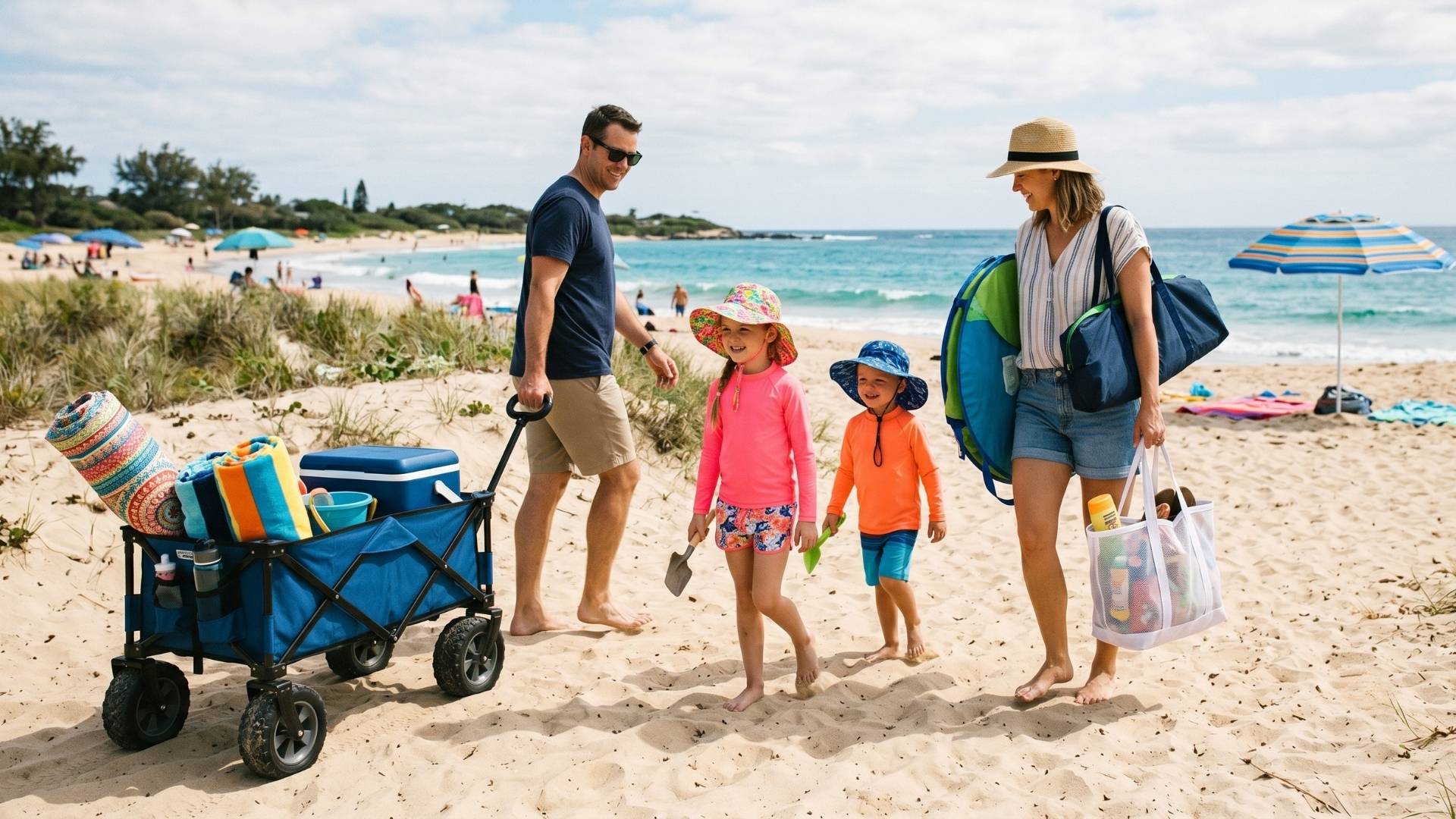
Family water day packing changes with how much control you have over the environment. At a splash pad, pack light and fast. At the beach, pack for sun, sand, wind, and a long stay. At an outdoor waterpark, pack for rules, lockers, and miles of walking. The non-negotiables across all three are sun protection, dry clothes (including dry underwear), towels, water, water shoes, a safety plan, and a car stash that handles the ride home.
Before you read on (a short note)
This is a practical packing guide. It pulls on the AAP, the CDC, the American Red Cross, and the US Lifesaving Association for the safety material, but it does not replace swim lessons, CPR training, or supervision.
For the deep water-safety primer, see our family water safety guide. For sun protection specifics, see our family sun safety guide. Each destination has its own master packing list linked below for the level of detail this pillar does not.
The one question that decides what you pack
Before you start filling a bag, ask one question: how much control will you have over the environment when you arrive?
At a splash pad, you usually have the most control. You are close to your car, close to bathrooms, close to home. The visit is short. If you forget something, you can leave or retrieve it.
At the beach, you have the least. You are dealing with sun, sand, wind, waves, distance from the car, no shade unless you brought it, and limited or no bathrooms. The visit is long. Whatever you forgot, you live without.
At an outdoor waterpark, you have the least flexibility about rules. You are dealing with security checks at the gate, what fits in a locker, what is allowed on slides, what is sold inside, and how much walking you will do on hot pavement. The park decides; you adapt.
That single question, how much control will I have over the environment, is what makes the same family ending up at three different destinations on three different weekends pack three different bags.
The universal water-day core kit (works at all three)
Some items belong in every water-day bag no matter where you are headed. Use this as your default checklist; the destination sections below tell you what to add or trade.
Sun protection
- Broad-spectrum mineral sunscreen, SPF 30 or higher, water-resistant
- Sunscreen stick for faces, ears, and the backs of hands
- Lip balm with SPF (lips burn faster than parents expect, especially with water reflection)
- Sun hats with brims, ideally with a chin strap for kids under 4
- Polarized sunglasses for adults and older kids, with a strap for kids who lose them
- Long-sleeve rash guard or UPF swim shirt for each kid
Why mineral sunscreen: the FDA's proposed rule (2019, still under review) classifies only zinc oxide and titanium dioxide as generally recognized as safe and effective. The absorption profile of older chemical filters is still under study. Mineral also goes on white, which makes it easy to see where you have and have not applied during reapplication.
Water clothing and dry clothing
- Swimsuit for each kid in a bright, high-visibility color (more on this below)
- Water shoes or sandals that stay on when kids run
- A complete dry outfit per kid, including dry underwear (the most-forgotten item)
- A light sweater or hoodie for the ride home (kids get cold faster than you expect once wet hair touches a car seat)
On color: research from Alive Solutions on child swimwear visibility found that neon orange, neon pink, and neon yellow remain clearly visible underwater while pastel blue, dark green, gray, and white nearly disappear. This applies to ocean, lake, and pool. Avoid blue and white swimsuits; pick a color you could spot on the lifeguard's monitor.
Towels and wet-item control
- One towel per person, plus one extra for spills and emergencies
- A wet bag, ideally with a dry side and a wet side (dry clothes in one pocket, soaked swimsuits in the other)
- A separate bag for sandy or dirty items
- A small trash bag
Food, hydration, and the cooler
- Insulated stainless-steel water bottle per person, packed with ice
- Snacks that survive heat (cheese sticks in a cooler, grapes, crackers, cut vegetables, granola bars; skip chocolate and sticky bars)
- A lunch if outside food is allowed (more on rules in the waterpark section)
- A cooler bag with reusable ice packs
Kid basics
- Swim diapers if needed (disposable swim diapers hold solids, not liquids; bring spares)
- Regular diapers and wipes for the ride home
- Hand sanitizer (especially before snacks)
- Small first-aid kit (band-aids, waterproof bandages or liquid bandage, antiseptic wipes, tweezers, vinegar packets for jellyfish stings if you are at the coast, any daily medication)
- Comfort item for toddlers if they have one
Parent essentials
- Phone in a waterproof pouch on a lanyard
- Keys
- Wallet, ID, payment card, a little cash
- Printed or saved tickets if needed
- A dry shirt for yourself (kids run up dripping the second they finish; do not skip this)
Safety
- Bright swimsuits (see above) so kids are easier to spot in water and on land
- Properly-fitting US Coast Guard-approved life jacket for weak swimmers, where allowed
- Waterproof ID bracelet or a card with the parent phone number in each kid's bag
- A photo of each child taken at the start of the day, showing what they are wearing
- A specific, named meeting spot chosen as soon as you arrive
That is the core. Everything below is what you add or trade depending on where you are going.
What changes at the beach (sand, sun, wind, distance from the car)
The beach demands the most self-sufficiency. You may not have shade, clean bathrooms, food, or easy access to your car. Sand gets into zippers. The sun feels stronger because of reflection from water and sand. Kids get tired fast and you carry whatever they brought.
The rule of beach packing: bring fewer toys and more shade, water, towels, and dry clothes.
Add to the core kit for any beach day
- A beach umbrella, pop-up tent, or sun shelter (umbrellas catch wind; a weighted pop-up tent is more reliable)
- Stakes, sandbags, or sand-screw anchors for whatever shade you bring (a flying umbrella in a crowded beach is dangerous; secure it before you leave the car)
- A large beach blanket or sand mat
- A mesh beach bag (sand falls through; canvas bags trap it)
- More water than you think you need, plus a refillable jug for refills
- A waterproof phone pouch (salt water and sand kill phones faster than rain)
- A first-aid kit with waterproof bandages, antiseptic wipes, tweezers, and vinegar packets for jellyfish stings at coastal beaches
- A clearly chosen family meeting spot (umbrella with a bright marker works well; pick it before kids leave for the water)
Rocky beach add-ons
Rocky beaches need different gear than sandy beaches. The risks are slippery rocks, sharp shells, uneven ground, and uncomfortable sitting areas.
- Closed-toe water shoes with thick, vulcanized rubber soles and reinforced toes (aqua socks are not enough on sharp rocks)
- A thicker blanket, foam mat, or foldable seat pad (a thin sheet is miserable on rocks)
- Chairs may matter more than a blanket on a very rocky beach
- Extra waterproof bandages (cuts and scrapes are more common)
- A bucket or mesh bag for kids who want to collect shells, stones, or sea glass (check local rules first; some beaches forbid taking anything)
- Lightweight gardening gloves for tide-pool exploring
- Extra socks for the ride home
- Lightweight knee pads for toddlers who crawl or climb on rocks
A small but useful rule: teach kids to step on dry rocks, not wet green or dark rocks. Wet algae is extremely slippery.
Sand-management essentials
You cannot avoid sand, but you can control where it goes.
- Baby powder or cornstarch (rub it onto sandy skin and sand falls off; works on hands, faces, feet, and the inside of swimsuits)
- A soft brush or whisk broom for dry sand on bags and shoes
- A separate bag for shoes
- A plastic bin or laundry basket left in the trunk for sandy gear (the single best beach-day investment)
- A one-gallon (about 4-litre) container of tap water left in the car for a final foot rinse before anyone steps inside (a clean milk carton, juice jug, or sturdy water bottle of that size all work)
- A foldable mat to stand on at the car while changing
Beach food logistics
Food on the beach gets sandy, melts, or attracts birds and bugs. Pack defensively.
- Use hard-case insulated containers for cold snacks like grapes, watermelon cubes, and cheese sticks (cheap soft bags turn them to mush)
- Skip anything that melts: chocolate, sticky granola bars, popsicles outside a cooler
- Sandwiches, wraps, bagels, hard-boiled eggs, crackers, yogurt pouches, and dry cereal travel well
- Insulated cups with lids so drinks do not collect sand
- Snack containers that close tightly
- Set up a no-sand food zone on one corner of the blanket. Kids eat sitting, not walking through sand
Things that make a long beach day easier
- A beach wagon with wide plastic wheels (standard strollers sink in dry sand)
- A robe towel or cover-up that doubles as a changing tent
- Hair ties, a comb, and a leave-in conditioner spray for salt-tangled hair
- A cheap inflatable kiddie pool set under the sun tent and filled with a bucket of ocean water (gives toddlers a contained, supervised splash zone away from waves)
- Mesh seashell bags so kids stop stuffing slimy shells into your pockets
- Clips to hold towels and blankets down in the wind
- A small spray bottle for sandy hands, hot feet, and cooling down
Beach safety, in short
At an ocean beach, swim near a lifeguard. Check posted flags and warnings. If older kids ever get caught in a rip current, the rule is stay calm, float, signal for help, and avoid fighting straight back against the current. Always confirm a meeting spot the moment you arrive, and run the water-watcher system if you have more than one adult. For the full safety deep dive, see our open water and beach safety guide.
When you arrive: the first ten minutes
- Set the shade and secure it before anyone wanders off
- Apply sunscreen if you did not at home
- Walk the meeting spot with the kids and name a landmark next to it
- Take a photo of each child showing what they are wearing today
- Name the water-watcher and hand off the role visibly when it changes
What changes at a splash pad (speed, public space, no shade)
Splash pads are the easiest water outing. They are usually free, low-commitment, close to a parking lot, and good for short visits between other things. They reward light packing.
The risk is the opposite of the beach: you assume "we are only going for an hour" and forget basics. Then one kid wants to stay longer, another gets cold, the bathroom has no soap, and snack time blurs into meltdown.
The rule of splash pad packing: pack as if you might leave in 45 minutes. Cover the basics; do not turn it into a full beach trip.
Trade or add to the core kit for a splash pad
- Skip the umbrella unless the park has zero trees (most splash pads are part of a public park with at least some shade)
- Skip the cooler unless you are staying past lunch (use a small insulated bag for snacks and bottles)
- Skip beach toys; keep splash-pad toys minimal (simple buckets, stacking cups, watering cans)
- Add a swimsuit cover-up or robe towel: kids constantly move between wet and dry areas
- Add an extra hooded towel for toddlers (warms them quickly and stays on better than a flat towel)
- Add wipes and hand sanitizer (splash pad buttons and nozzles are touched by hundreds of kids a day; clean hands before snacks)
- Add bug spray or mosquito wipes for late-afternoon visits (standing water and grass are mosquito country)
Pack a dry shirt for yourself
Parents pack perfectly for the kids and forget themselves, and this is the destination where it shows up fastest. When a toddler finishes running through the spray, they will be freezing, soaking wet, and running to you for a hug within 30 seconds. A dry shirt and shorts for each adult is the difference between a happy drive home and a sticky one. Keep them in the car stash so you can change before getting behind the wheel.
Splash-pad toys, with rules
Splash pads already provide the play; toys should be simple. Always check posted rules first. Some splash pads ban water shooters, balloons, balls, or anything that can block drains.
- A simple bucket (pouring, filling, dumping; one bucket carries a whole splash pad visit)
- Stacking cups (one of the best toddler splash-pad toys; cheap, light, and endlessly useful)
- Reusable water balloons, if allowed (set rules first: no faces, no babies, no strangers, no hard throws)
- Small foam water shooters, if allowed and used away from babies
- Toy boats for shallow streams and fountains
- Bubbles for younger kids during shade breaks, used away from slippery wet areas
Splash-pad hygiene that matters
Splash pads are public water-play spaces. The CDC's healthy swimming guidance covers the main concerns. Cryptosporidium, E. coli, and Giardia have all been traced to splash-pad outbreaks. A few small habits make a real difference.
- Do not let kids drink or swallow the splash-pad water (say it out loud before they start playing; repeat for toddlers)
- Change swim diapers in the bathroom or at the car, not at the splash area
- Wash or sanitize hands before snacks
- Take bathroom breaks every hour
- If your child has had diarrhea recently, wait two weeks after symptoms stop before visiting a splash pad (this is CDC guidance; Cryptosporidium can shed in stool for up to two weeks after diarrhea resolves)
- Keep open wounds covered with waterproof bandages
- Rinse or shower after play if facilities are available
- Wash swimsuits and towels at home; dry reusable water toys fully
Splash-pad safety
Splash pads feel safer than pools, and they are, but kids still need active supervision. The real risks are slips on wet concrete, running into other kids, getting separated, and overheating.
- Stay close to babies and toddlers; the water is shallow but the surface is hard
- Use water shoes with grip (concrete gets slippery and dangerously hot)
- Pick a home base before play starts (bench, stroller, picnic blanket) and tell kids that is where the family meets
- Run the water-watcher system if you are with another adult; hand off the role visibly
- Leave during thunder or lightning
Splash-pad parent hacks worth trying once
- Dress kids in swimsuits before you leave home; arrival becomes "shoes off, sunscreen check, go play"
- Pack one outfit per child in a labeled zip bag; wet swimsuit goes back into the same bag after changing
- Use a mesh bag for toys; water drains out so you are not carrying a puddle to the car
- Save one special snack for the walk to the car; it turns leaving into a treat instead of a fight
- Bring a hooded towel for toddlers; it doubles as a cover-up and warms them faster
- Take a photo of the posted rules so you can answer the inevitable older-kid questions later
What changes at an outdoor waterpark (rules, lockers, miles of walking)
An outdoor waterpark is the most rule-based water day. At the beach, you decide what to bring. At a waterpark, the park decides what you can use.
Before you pack a single thing, check the park's website for current rules. Common limits include outside food, coolers, glass containers, hard inflatables and floats, life jackets brought from home, large bags, certain swimsuit hardware, and water shoes on specific slides. Many parks now allow empty refillable bottles for in-park refill stations, but the policy varies by park and by year. Assume nothing; check the current page.
The rule of waterpark packing: bring only what you can carry, store in a locker, and use inside the park.
Trade or add to the core kit for a waterpark
- Skip the umbrella, cooler, and beach toys; they will not get past the gate
- Skip flip-flops (they fly off on slides and stairs); pack fitted water shoes or sandals with secure heel straps instead
- Skip floats and large inflatables (most parks ban them; the ones provided by the park are safer)
- Add a waterproof phone pouch on a lanyard (digital tickets, mobile food ordering, photos of kids; you need your phone but you cannot risk losing it)
- Add tinted swim goggles (commercial pool chlorine irritates eyes after an hour; tinted lenses cut sun glare on top)
- Add anti-chafing balm (BodyGlide or similar) for inner thighs and underarms (miles of walking in a wet swimsuit causes chafing fast for kids and adults)
- Add a cover-up for walking between rides, gift shops, and restaurants
- Add bright neon swimsuits for every kid (in a crowded wave pool, neon is the difference between seeing your kid in two seconds and panicking for thirty)
- Add cheap slide-on shoes kept exclusively for restroom runs (waterpark bathrooms are wet and high-traffic; do not walk barefoot or in the shoes you wear in pools)
- Add a small lock for a locker if the park requires one
- Add bright, distinctly-colored towels and giant towel clips (chairs all look alike; clipped neon towels mark your basecamp from across the park)
Swimsuit hardware: the metal check
Before you leave home, look closely at every swimsuit and pair of board shorts. Most major waterparks ban swimwear with metal grommets, exterior metal zippers, rivets, or hard plastic buckles on body slides, because the hardware scratches the slide flumes. The rule is usually enforced by ride attendants. A kid in the wrong swimsuit can be turned away at the top of the stairs. Stick to all-fabric swimwear for the big-slide day.
The locker strategy
Lockers cost money, take time to rent, and live a long walk from the slides. A few small choices make the day smoother.
- Rent the locker early before lines build
- Take a photo of the locker number and the row sign as soon as you find it
- Keep the keys or wristband on the parent who is most likely to need money or sunscreen
- Set up your basecamp (chairs with clipped towels) close enough to the locker that running back is reasonable
- Skip valuables entirely: leave jewelry, expensive watches, and anything you would mourn at home or in the car
The cashless-payment plan
Most waterparks are now cashless. Set up Apple Pay or Google Pay on a waterproof smartwatch before you go, or load funds onto the park's official RFID cashless wristband at the gate. That keeps your hands free and lets you buy food at any outdoor kiosk without a back-and-forth to the locker.
Food rules and the legal loophole
Most outdoor waterparks limit outside food and beverages, with a few exceptions worth knowing. Baby formula, baby food, and documented medical or allergy-related foods are almost always allowed; bring them clearly labeled and mention them at the security checkpoint up front. Many parks now allow empty refillable water bottles for in-park refill stations; some do not. If outside food is banned outright, the loophole many families use is a midday tailgate lunch back at the car. Most parks offer re-entry hand stamps or wristbands; confirm at the gate and budget the time.
Waterpark safety
- Choose and walk to a specific meeting spot together as soon as you enter
- Take a photo of each kid as you walk through the gate so you have the exact outfit on hand
- Put a waterproof ID wristband on younger kids with the parent's phone number
- Bright neon swimsuits make crowd visibility easy for you and for the lifeguards
- Use park-provided life jackets unless yours is approved and the park allows outside flotation (some do, some do not)
- Inflatable arm bands and pool noodles are toys, not flotation devices; the AAP and the US Coast Guard both say so
- For the full waterpark safety deep dive, see our waterpark safety guide
Waterpark hacks worth trying once
- Screenshot tickets, parking passes, and confirmation numbers before you leave home; cell service can be weak near gates
- Pack a small tube of liquid bandage or waterproof strips (regular band-aids peel off on a water slide within two minutes)
- Bring tinted goggles for chlorine plus sun glare, not just chlorine
- Carry hair detangler and a wide-tooth comb for after-pool tangles; ten minutes saves the bedtime cry-fest later
- Set the family rule: nobody rides without telling another family member which slide they are heading to
The water-day car stash (the trunk kit that saves the ride home)
The single best water-day investment costs almost nothing. It is a plastic bin in your trunk that stays packed all summer. Whatever happens at the beach, splash pad, or waterpark, the car stash is the dry, calm baseline waiting for you at the end of the day.
What lives in the car stash, all summer
- Two dry towels (these never go on the beach)
- A complete spare change of clothes for each kid, including dry underwear
- A dry shirt for each parent
- Cheap flip-flops for everyone
- A plastic laundry basket or large bin for sandy, wet gear
- A cheap rubber or plastic doormat (set on the asphalt by the open car door; kids stand on this to be rinsed and changed instead of sandy ground or hot pavement)
- A one-gallon (about 4-litre) container of tap water for the foot rinse (see the warm-water tip below)
- A roll of paper towels and a trash bag
- A package of wipes
- Hand sanitizer
- A box of granola bars or shelf-stable snacks (the special "car snack" not eaten at the beach)
- Backup diapers and swim diapers if you have a baby or toddler
- A sunscreen stick (the one in the bag will likely get hot and separate)
- Motion-sickness bags or a sealable bag (water-day tiredness plus a winding drive home is a known combination)
- Pajamas for late evening outings (kids change at the car and arrive home ready for bed)
The warm-water-jug trick
Fill the container with hot tap water right before you leave the house. Wrap it in a thick towel and stash it in the trunk. Hours later, the water is still warm. Pouring a warm rinse over cold beach feet at the end of the day is much kinder than ice-cold tap water, and kids cooperate with it. This is the single most under-used hack on the list.
Where to change into dry clothes at the end of the day
The goal is simple: dry clothes on, with privacy, and without dragging sand or chlorine into the car. The right answer depends on where you are and what gear you brought along.
A pop-up changing tent.
A small pop-up privacy tent (sold as a "beach changing tent" or "privacy shelter") sets up in about 10 seconds, packs down to the size of a frisbee, and gives any age kid a private spot to change. The good ones cost $25 to $50. Keep it in the car for any outing without on-site changing facilities. Toddlers usually need a parent inside with them; older kids manage on their own.
A hooded changing poncho (also sold as a swim poncho, changing robe, or dryrobe).
A terry-cloth or microfiber poncho slips over the head. The kid takes off the wet swimsuit underneath and puts dry clothes on through the bottom opening, all while the poncho stays on. Great for ages 4 and up. Lightweight, fast, and they double as a cover-up walking to and from the water.
A large hooded towel wrap for babies and toddlers.
For little kids who are not ready for a poncho, a large hooded towel wrapped around them works the same way. The child stays inside the towel; a parent helps change them while the towel stays in place.
On-site changing rooms and shower stalls.
Many beaches at state parks, regional parks, and resort areas have changing rooms or shower stalls. Outdoor waterparks always have changing rooms next to the lockers. Larger splash pads often share basic park facilities. Use them when they exist; they are usually cleaner and easier than the alternatives.
Family bathrooms at the venue.
Some splash pads, waterparks, and beach-side rec centres have family-style bathrooms that fit a parent and one or two kids. Helpful for younger children who want help and privacy at the same time.
Cabanas or rented beach huts.
Some resort beaches and beach clubs offer cabanas or small huts for the day. If you are at a property that has them, the cabana doubles as the changing space and the shaded base for the day.
Drive home in a swimsuit and cover-up.
For splash pads especially, often the easiest answer. The visit was short and the swimsuit will dry on the way home. Pop a cover-up on, drape a towel on the car seat under the child, and drive. A full change can wait for the driveway.
Quick-dry boardshorts and rash guards that simply dry on the drive.
Many school-age kids do fine with quick-dry boardshorts and a rash guard for the day; both dry on the 20-minute drive home and the kid arrives in their normal outfit, no change needed.
The fallback routine when nothing else is available
If you ended up at a beach without facilities and forgot the changing tent or poncho, use the car as the privacy screen. Open the hatchback (best on SUVs and wagons) or the rear passenger door (sedans) so the open door blocks the line of sight. The cheap rubber doormat goes on the asphalt for the kid to stand on. Use a warm-water foot rinse from the towel-wrapped jug. Help the child swap into dry clothes behind the open door. The wet swimsuit goes into the laundry basket in the trunk.
Whatever method you use, the sequence at the end of the day matters: dry off, brush off sand, foot rinse, dry clothes on, then the special car snack once everyone is buckled. That order is the difference between a calm drive home and one where everyone is itching, complaining, and demanding immediate food.
Packing by age (baby, toddler, school-age, tween)
The same destination needs different items by age. Use these add-ons on top of the core kit for whichever child you are packing for.
Babies (under 1)
The baby clock is the shortest of any age. Plan for shade, feeding, sleep, and a real exit window.
- Swim diapers and regular diapers (more than you think; double whatever your usual outing amount is)
- Wipes, plus extra wipes
- A waterproof changing pad
- A baby-safe sun hat with a brim (the AAP recommends keeping babies under 6 months out of direct sun whenever possible, using shade and clothing first)
- Lightweight long-sleeve UPF cover-up
- Mineral sunscreen for babies over 6 months on small exposed areas (for babies under 6 months, the AAP advises shade and clothing first; use a small amount of mineral sunscreen on exposed skin only if shade and clothing are not enough, and ask your pediatrician)
- A baby-specific shade tent or the shaded side of a pop-up tent
- Feeding supplies: bottles, formula in a sealed cooler bag, breastfeeding cover if you use one
- A baby carrier (often easier than a stroller on sand, splash pads, and waterpark walkways)
- Stroller fan if you use one safely
- A small lightweight blanket for naps
The simple baby rule: keep visits short, plan around naps and feedings, stay in shade, and leave before everyone is exhausted.
Toddlers (ages 1 to 3)
Toddlers need the most gear and create the most planning stress. They run toward water, refuse hats, eat sand, and suddenly need to be carried.
- Swim diapers and regular diapers or potty supplies (bring spares; disposable swim diapers handle solids, not urine)
- Hooded towel (warms them faster and doubles as a cover-up)
- Water shoes that stay on when they run
- Extra wipes
- A comfort item if they have one
- Snacks every 90 minutes (toddlers run out of fuel faster than the schedule expects)
- A bright swimsuit (toddler-spotting matters)
- A backup outfit beyond the dry-clothes outfit (toddlers are creative)
- A stroller or wagon for long walks (waterparks especially)
The toddler beach trick: place a bright towel, umbrella, or beach mat and tell your toddler, "This is our spot." It is not a substitute for supervision, but it creates a clear home base they can find.
Preschool and school-age (ages 4 to 9)
The sweet spot. They can carry a small bag, follow rules, and self-regulate to a point.
- A small kid-sized backpack or sling bag with their own water bottle, sun hat, and a small toy or book
- Goggles (especially at waterparks)
- Their own labeled water shoes
- A clear meeting-spot agreement (point at the umbrella or basecamp, say the rule out loud)
- Bright swimsuits in colors you would spot from far away
- Sunscreen they help apply (build the habit early)
Tweens (ages 10 to 13)
By this age, the trip changes shape. Pack less for them, more for independence and digital safety.
- A waterproof phone pouch they can wear themselves
- Reef-safe body sprays for skin issues (acne-prone tweens often dislike heavy sunscreen)
- Their own anti-chafing balm for waterpark days
- A small money plan (cash or pre-loaded wristband for snack stands)
- A clear check-in pattern: every 30 minutes at the basecamp
- An explicit lost-kid plan they can articulate back to you ("if I can't find you, I go to the lifeguard with the red shirt at the entrance to the wave pool")
Bright swimsuits still matter for tweens, even when they push back. Frame it once as a safety rule, then let them pick the color.
Pro hacks parents actually use
These are the small tricks that change the dynamic of a water day. None of them are essential; together they make the difference between a chaotic afternoon and a smooth one.
On the night before
- Freeze half-full water bottles. In the morning, top them off with cold water. They double as ice packs in the cooler and become cold drinking water by afternoon
- Charge your phone, your watch, and a power bank (a dead phone in a crowded park is the single most stressful problem on the list)
- Pack each kid's full outfit in a labeled zip bag (shirt, bottoms, underwear, fresh diaper if needed). After they change, the wet swimsuit goes back into the same bag
- Pre-apply mineral sunscreen on small kids if you are heading out before they fully wake up; they are calmer than they will be at the destination
- Sleep on it: "want to leave by 8" beats "want to leave by 6" most of the time for happy kids
On the way
- Take a photo of your parking spot (rows, signs, landmarks). Beach lots and waterpark lots blur into one another by late afternoon
- Screenshot tickets and confirmations (cell service can be weak at gates and lockers)
- If you have older kids, name the meeting spot before you get out of the car
When you arrive
- Take a photo of each child showing what they are wearing today
- Walk to and name the meeting spot together
- Apply or reapply sunscreen before anyone runs off
- Name the water-watcher; hand off the role visibly when it changes (a bracelet, a hat, a clipped tag)
- Set up your basecamp; clip your bright towel to a chair or hang a bright ribbon on your umbrella
During the day
- Use a face brush or makeup sponge to apply mineral sunscreen on faces (kids hate sandy parent-hands rubbed onto their cheeks)
- Apply lip balm with SPF every reapplication; lips burn first
- Keep sunscreen in a cooler pocket so it does not heat up and separate
- Bring a small spray bottle of water for sandy hands, hot feet, and quick rinses
- Reapply sunscreen every 80 minutes when kids are in and out of water
- Set a no-sand food zone on one corner of the blanket. Kids eat sitting down
- If a toy causes fighting, it goes back in the bag for the rest of the day (one consistent rule beats negotiating)
When it is time to leave
- Start packing 20 minutes before everyone is fully spent
- Use a visual timer or a clear 15-10-5-minute warning system ("in fifteen minutes we dry off, in ten we put shoes on, in five we walk to the car")
- Give each kid a job: carry the bucket, hold the towel, put water shoes in the bag
- Save the special car snack for once everyone is buckled
- Pajamas at the car turn a late beach day into a sleep-friendly drive home
What to skip (the overpacking trap)
Bringing fewer of the wrong things is what makes a packing list feel light. These are the items that sound useful and reliably are not.
- Too many toys (kids will play with sand, water, sticks, and one shovel; ten plastic molds are nine too many)
- Glass containers (banned at most beaches and all waterparks; not worth the risk anywhere)
- Expensive jewelry, watches, or electronics without protection
- Large floats and inflatables on windy days (they become projectiles or get carried out to sea)
- Hard balls and high-velocity toys near babies, toddlers, or crowds
- Snacks that melt: chocolate, sticky bars, popsicles outside a cooler
- Complicated outfits (the dry-clothes kit should pull on in under two minutes)
- Heavy coolers for a short visit (a soft insulated bag for a 90-minute splash pad trip is plenty)
- Anything you cannot carry while holding a child's hand
- Anything banned by the venue (check the website; rules vary)
If you are about to pack something and cannot answer "what specific problem does this prevent," leave it out.
Quick comparison: beach vs splash pad vs outdoor waterpark
If you only remember three sentences, remember these.
Beach:
Pack for self-sufficiency. Sun, sand, wind, and a long stay. Bring shade you can secure, more water than you think, a sand-management kit, a permanent car stash, and a meeting spot named before kids leave the towel. Closed-toe water shoes for rocky beaches.
Splash pad:
Pack light, but cover the basics. Swimsuits already on, water shoes, sunscreen, hats, a hooded towel, a wet bag, snacks, a backup adult shirt, and an honest exit plan. Hygiene rules matter: do not let kids drink the water, take bathroom breaks, change diapers away from the splash area.
Outdoor waterpark:
Pack for the rules. Check the park's website first. All-fabric swimsuits (metal-free for slides), bright neon for crowd visibility, water shoes with heel straps, a waterproof phone pouch on a lanyard, tinted goggles, anti-chafing balm, cheap dedicated bathroom shoes, and big bright towel clips for your locker-area basecamp. Locker rental, cashless payment plan, and a named meeting spot agreed at the gate.
For the full destination-specific master lists, see our master beach packing list, splash pad packing list, and outdoor waterpark packing list.
When to skip the trip entirely
A short rule that has saved many families a bad afternoon. Cancel or delay a water day if:
- A child in your family has had diarrhea in the last two weeks (CDC guidance on splash pads and pools)
- There is thunder or lightning forecast within an hour of your planned arrival
- UV index is at 10 or above and you do not have reliable shade
- An infant has not yet been cleared by your pediatrician for outings of that length
- Anyone in the family has an open wound that cannot be covered with a waterproof bandage
- Your gut says it is too windy, too cold, or too tired a morning. The water will be there next weekend
Frequently asked questions
What should I bring to the beach with kids?
Bring towels, bright swimsuits, rash guards, dry clothes including dry underwear, water shoes, sunscreen, hats, sunglasses, water bottles, snacks, a cooler, a wet bag, a beach umbrella or pop-up tent with stakes, a sand-management kit (baby powder or cornstarch and a soft brush), a small first-aid kit, a waterproof phone pouch, and a permanent car stash with extra towels and clothes. For babies and toddlers, add swim diapers, regular diapers, wipes, extra outfits, a changing pad, and a shaded rest space.
What should I bring to a splash pad with kids?
Bring swimsuits or quick-dry clothes, towels, a swimsuit cover-up, dry clothes and dry underwear, water shoes, sunscreen, sun hats, water bottles, snacks, wipes, hand sanitizer, a wet bag, a small first-aid kit, and a backup adult shirt if you have a toddler. Keep toys simple: a bucket, stacking cups, maybe a small water shooter if the splash pad allows them. Check the posted rules first.
What should I bring to an outdoor waterpark with kids?
Bring tickets and ID, a payment card, a phone in a waterproof pouch on a lanyard, all-fabric swimsuits in bright colors (no metal hardware for slides), rash guards, swimsuit cover-ups, fitted water shoes with heel straps, bright neon towels with chair clips, tinted goggles, anti-chafing balm, sunscreen, sun hats, cheap slide-on shoes for bathroom runs, a small lock for the locker, wet bags, and a small first-aid kit. Always check the park's current rules on outside food, water bottles, and life jackets before you pack.
What is the difference between packing for a beach day and a splash pad day?
A beach day needs self-sufficiency: shade you bring yourself, sand management, more water and snacks, a long meeting-spot plan, and a permanent car stash for the ride home. A splash pad day rewards minimalism: swimsuits already on, water shoes, towels, sunscreen, a wet bag, and a clear exit plan. The beach day takes an hour to pack; the splash pad day takes fifteen minutes.
What is the difference between packing for a splash pad and packing for a waterpark?
A splash pad is informal and free; pack for hygiene (no drinking the water, hand sanitizer, swim diaper changes away from the splash area) and a short visit. A waterpark is rule-based; check the park's website first, pack all-fabric swimsuits with no metal hardware, water shoes with secure heel straps, a waterproof phone pouch, anti-chafing balm, tinted goggles, bright towels with clips for your locker-area basecamp, and either a cashless wristband or a digital wallet set up before you arrive.
Do kids need water shoes at all three?
Yes. Closed-toe water shoes with thick rubber soles are essential at rocky beaches, splash pads, and outdoor waterparks. Concrete at splash pads and waterparks gets dangerously hot and slippery; rocky beaches have sharp shells and algae. Flip-flops fly off on water slides and trip up little feet. Get fitted water shoes that stay on when kids run.
What is the single most useful packing hack for any water day?
Keep a permanent plastic bin in your car trunk all summer with two dry towels, a full change of clothes for each kid including dry underwear, a dry shirt for each parent, cheap flip-flops, a one-gallon (about 4-litre) container of tap water for foot rinsing, cornstarch for sand removal, a trash bag, and shelf-stable car snacks. Whatever happens at the destination, the car stash is the dry, calm baseline at the end of the day.
What should I not bring to a beach, splash pad, or waterpark?
Skip glass containers, expensive jewelry, electronics without waterproof protection, large floats on windy beaches, hard balls or high-velocity toys near crowds, anything that melts (chocolate, sticky bars), heavy coolers for short splash-pad visits, and anything banned by the venue. At a waterpark specifically, avoid swimsuits with metal grommets, zippers, or hard plastic buckles, because they are not allowed on body slides.