
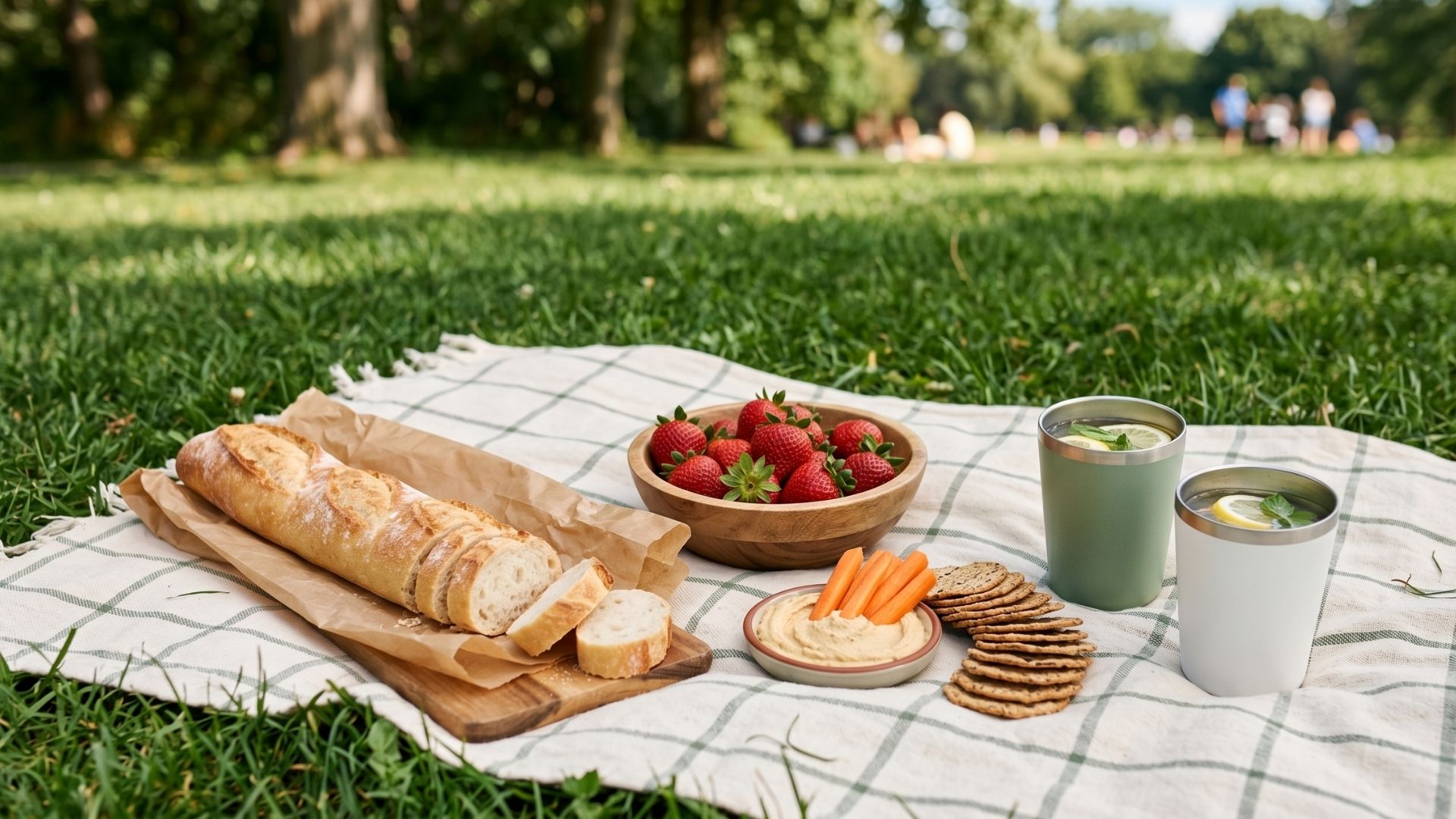
A great family picnic is one of summer's simple pleasures. It is also one of those things that can quickly turn into a logistical project for the parent who is doing the packing. The shortcut: a small list of foods that travel well, a 12-item kit you reuse every time, and the discipline to skip the Pinterest-style spread that nobody actually eats. Here is what works.
What makes a picnic actually good vs. an exhausting outdoor lunch
Two things separate a great picnic from a stressful one. First, the food is something you would eat at home and you brought a bit more of it than the kids will eat. Second, the gear is a single bag you grab and go, not a station-wagon load of plates, glasses, table linens, and a portable speaker.
Picnics fail when they get over-engineered. The four-tier carefully-arranged charcuterie board nobody touches because the kids want goldfish crackers; the six different drinks you packed because you could not decide; the elaborate dessert that melts on the way to the park. Skip the spread; bring a few things kids and adults both like.
Cost-wise, a good picnic for a family of four runs less than the cost of a takeout lunch for the same group, often less than half. The savings are not the point, but they are nice.
The anchor: a good dip
Every picnic needs one anchor item that holds the spread together visually and that everyone reaches for. A good dip is the simplest version: hummus, tzatziki, a quick guacamole made from two ripe avocados, or store-bought salsa upgraded with lime juice and a handful of chopped coriander.
Pair the dip with three crunchy things: pita strips or crackers, carrot sticks (peeled and cut into batons), and cucumber sticks. The platter looks generous, costs very little, and disappears within 20 minutes.
If you have a pickier kid who avoids dips, swap in a small bowl of cubed cheese and a handful of grapes alongside. The variety carries the spread for that kid; the dip does the work for everyone else.
The hero sandwich: one big sandwich beats five small ones
Skip the individual sandwiches. They take 10 minutes to assemble, get squished in the bag, and look sad on the picnic blanket. Do this instead.
Buy a whole baguette or a sub roll. Slice it lengthways. Layer it generously: cheese, sliced tomato, lettuce, sliced cucumber, deli meat or hummus or tuna salad, a drizzle of olive oil and vinegar, salt, pepper. Wrap the whole thing in parchment or foil. At the picnic, slice it into sections with a knife or just tear it.
Why this works. Visually, it is a centrepiece, not a stack of wrapped sandwiches. Each kid (and adult) gets to pick their section. Leftovers travel back home in the same paper. And one big sandwich for four people takes 5 minutes to make instead of 20.
Variations. A vegetarian version with mozzarella, basil, and roasted peppers. An all-cheese version (mozzarella, provolone, sliced tomato, pesto). A peanut-butter-and-jam version on a soft roll for a younger-kid picnic. Pick one and commit.
The four things kids actually eat at a picnic
After many picnics across many ages, four foods consistently get eaten by kids ages 3 to 12 across most preferences. The rest is either decorative or for the adults.
- Sliced fruit. Strawberries, grapes (halved for under-fours), apple slices, watermelon. Pre-cut, in a container, served as the first thing on the blanket while the rest is set up.
- A handful of crackers or chips. Plain or lightly salted. Familiar territory; eaten while the kid waits for everything else.
- A piece of the hero sandwich. Most kids will eat the cheese-and-tomato version of any sandwich; load up on familiar fillings.
- A small treat. A cookie each, a small piece of brownie, or a single mini-cupcake. The treat is the carrot at the end of the spread; without one, kids declare the picnic over too soon.
What kids almost never eat at a picnic, in our experience: hard cheeses on a board, pickles, olives, charcuterie, the elaborate salads. Adults love these; kids look at them suspiciously and ask for goldfish crackers. Pack the adult food only if the adults are eating, but do not expect the kids to touch it.
The 12-item picnic kit
Keep these items in a single canvas bag in the closet. Picnic day, you grab the bag, add the food, and go. No re-shopping every time.
- A picnic blanket large enough for four to sit on. Old wool blanket works fine. Backed with a waterproof layer is better.
- A small cooler bag and one ice pack. Keeps cold things cold for 3-4 hours.
- Reusable plates (4) and cups (4). Plastic or melamine; not glass.
- Forks and a small sharp knife (in a sheath) for slicing the sandwich.
- A roll of parchment paper and a small roll of foil. Dual-purpose: wrap the sandwich, line a tray, contain the leftovers.
- Wet wipes or a small flask of water with a small towel. Picnics are sticky.
- A few cloth napkins or a roll of paper towels.
- A small bin bag (folded). For trash and food packaging on the way home.
- A water bottle each (filled at home).
- Sunscreen and a small first-aid pouch (plasters, antihistamine, paracetamol).
- A small ground mat or a folded extra blanket for the under-twos who will not sit still on the main blanket.
- A small toy or two: a frisbee, a ball, a bubble bottle, a deck of cards. Keeps kids absorbed when they have eaten and want to move.
Total weight is about 6 to 8 kg packed. One adult can carry it; the other carries the kid (or the food bag).
Drinks: skip the juice boxes
Juice boxes are the easy default and the wrong default. They warm up fast, the kids drink them in 20 seconds and then ask for water anyway, and they create the most rubbish for the bin bag.
Better: a refillable water bottle for each person, filled at home. Add a slice of lemon or a few mint leaves to the adult bottles for variety. For an occasional treat, bring one bottle of a fizzy drink or a small flask of iced tea to share.
If you are picnicking near a coffee shop, the dual move is water bottles for the kids and an iced coffee picked up on the walk over for the adults. Do not bring the coffee from home; it will be lukewarm and disappointing by the time you sit down.
For the broader food and snack patterns that travel well, our guide to playdate snacks has the bigger menu of kid-friendly options that work outside the home.
Where to picnic (parks are not the only option)
The park near your house is fine. There are also some better picnic spots most families overlook.
- A small green space at the edge of a busy park. Quieter, less competition for benches, often closer to a parking spot.
- A botanical garden lawn (often free or low entry, beautifully maintained, usually has clean toilets).
- A beach during off-peak hours (early morning, late afternoon). Sand makes for a different but worthwhile experience.
- A river or canal towpath with a wide grass verge. Watching the boats is a built-in activity.
- A farmers' market lawn or town square. Pre-picnic stop at the market for the bread and cheese.
- A friend's garden. The most underrated option. Bring the picnic to them, eat outside, get the social side built in.
What to look for in any picnic spot: shade nearby (so you can move when the sun gets hot), a clean toilet within 10 minutes' walk, no proximity to a road or water hazard for under-fives, and a soft surface for the kids to flop onto after eating.
Cleanup, leftovers, and the 5-minute pack-down
The end of a picnic is when most of them go wrong. Kids are tired, you are tired, the blanket is covered in crumbs and ants are starting to arrive. The pack-down should take 5 minutes.
- Give every kid a job. "Maya, you carry the blanket to that bin and shake out the crumbs. Sam, you collect the plates into the bag." Even three-year-olds can carry a single plate.
- Wrap the leftovers in the parchment they came in; back into the cooler bag. Most picnic leftovers are dinner that night.
- Sweep the area visibly. Pick up every scrap of food packaging, every napkin, every plastic bit. Leave it cleaner than you found it.
- Last-minute toilet stop before the walk back if you have one available. Kids who say they do not need to go always need to go five minutes after you start walking.
When you get home: empty the cooler bag, rinse the cooler bag and the plates, hang the blanket to air out (do not wash unless something spilled), and put the canvas kit bag back in the closet. Five more minutes. The whole picnic-to-cleanup loop is under 90 minutes of active work for what is usually a 2-3 hour family outing.
Frequently asked questions
What time of day works best for a family picnic?
Late morning (10 to 12) for younger kids (under-fives), so you are home in time for nap. Early afternoon (12:30 to 2:30) for school-age kids. Avoid the 3 to 5 pm window in summer; that is the sun's hottest stretch and the kids' grumpiest. Early evening (5 to 7 pm) is a great option for older kids and tweens.
What if the weather turns?
Decide your weather threshold in advance. Light rain: still go, bring umbrellas, eat under a tree. Heavier rain: move it indoors, do a living-room picnic on the floor with the blanket, kids love this version. Strong winds: cancel; sand and grit get into everything and the kids are miserable within 20 minutes.
Are picnics worth the effort with a baby or toddler?
Different effort, similar payoff. Babies under 6 months mostly sleep through it; pack a portable shade. Crawling babies and toddlers need a defined area (the blanket is the boundary) and a snack they can self-feed (puff snacks, sliced banana, soft fruit). Expect a 45-minute window before they want to move; pack lighter food, plan for a shorter session.
How do you handle ants and bugs?
Two things. Pick the spot with attention to ant trails (look at the ground when you set up). Once seated, contain food in covered containers when not actively eating; the ants come for the open dishes. A small citronella stick at the edge of the blanket helps with flying insects. For wasps, do not panic, do not swat; they are mostly interested in sweet drinks and will leave once the food is packed up.
Can a picnic be the activity, or does it need to come with a hike or a swim?
It can absolutely be the activity. A 90-minute picnic with a frisbee and some lying-on-the-grass time is a full afternoon. You do not need to attach it to a hike, a beach trip, or anything else for it to count. The lounging part is half of what makes picnics good.
What about food allergies if other families are joining?
Same rule as a playdate: ask in advance. "Anything we should leave out of the picnic?" Most allergic-kid parents will appreciate the question and may offer to bring a separate option for their kid. Avoid peanut and tree nut for any picnic with kids you do not know well; default to the safer crackers, fruit, and cheese spread.