
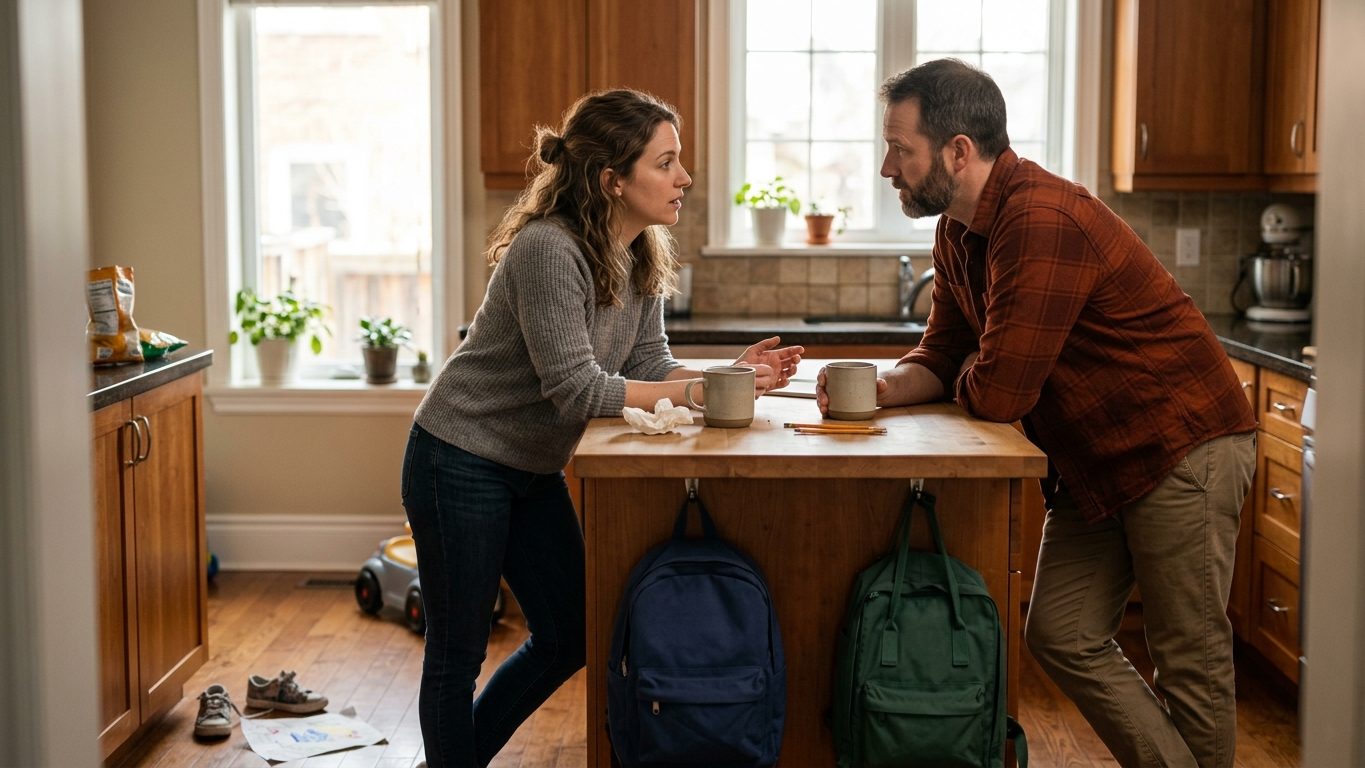
There are a handful of questions most parents do not ask other parents before a playdate, and they are the ones that matter most. Adult supervision. Pool and water access. Screen content. Allergies and medications. And, if there could be firearms in the home, how they are stored. Skipping these conversations does not make the risks go away; it just means you do not know the answers. Here are the exact scripts that work, how to read the response without being paranoid, and when to walk away from a playdate setup that does not feel safe.
A safety note. These scripts help you ask the questions; they do not replace your own judgment. If an answer leaves you uneasy, host at your place or say no for now. Share allergy and medicine details in writing, and in an emergency call your local emergency number (911 in the US and Canada, 999 in the UK, 112 in Ireland and across the EU, 000 in Australia).
Why parents avoid these conversations (and why they should not)
Two reasons parents skip the safety conversations.
Cultural awkwardness.
Asking another parent about supervision, medicines, or what is kept within kids' reach can feel like an accusation. Most parents are conflict-averse with each other; the questions sound judgmental when they are not.
Optimism bias.
Most playdates are fine, so most parents assume their kid's playdates will be fine. The cases where something goes wrong are statistically rare but not zero, and they are concentrated in exactly the situations the conversations would have caught.
Both reasons are real and both are wrong to act on. The conversations are awkward exactly once with each family; once you have asked, you know the answers and the relationship continues normally. Parents who get good at these conversations across many playdates find them stop feeling awkward and start feeling like routine logistics.
If you are still building out the broader playdate playbook, our complete guide to playdates covers the bigger picture. This piece is the safety-conversations layer specifically.
The 5 hard conversations
Five conversation categories cover the safety risks that come up most often in home playdates. Not every conversation applies to every playdate; sleepovers and longer drop-offs warrant more thorough conversations than 90-minute afternoon playdates.
If you are the host, the 10-minute childproofing walkthrough covers your side of the safety picture. For the bigger milestones these conversations come before, see drop-off playdates and sleepover playdates.
- Adult supervision. Which adult is in charge, where they will be, what kind of attention the kids will get.
- Pool, hot tub, and open water. If present, what the supervision setup looks like, whether the area is locked when not in use.
- Screen content and online access. What kind of content kids are allowed to watch or play, especially if your family has different rules.
- Food allergies, medications, and substance accessibility. Allergies the host should know; medications your kid takes; whether alcohol, medications, vaping or smoking products are kept out of kids' reach.
- Firearms, if relevant where you live. If there could be any in the home, one short question about how they are stored.
Each one has a specific script. The next five sections cover them in order. The pattern across all five: ask matter-of-factly, accept the answer at face value initially, watch how the answer was given (defensive answers are themselves information), and decide afterward whether the playdate is one you are comfortable with.
Supervision: how much, by whom, where
The second-most-important conversation and the second-most-often skipped. Most playdate problems come down to supervision details that were assumed rather than confirmed.
The supervision script.
"Just wanting to be clear: will you or another adult be there the whole time? Any chance the kids will be on their own for stretches?"
Why this matters. "I'll be home" can mean a parent actively in the same room, a parent in the home but working on a call upstairs, or a parent who steps out for 30 minutes for an errand. Each one is a different supervision dose; you have a right to know which one applies.
What you are listening for.
A direct answer. "I'll be in the living room most of the time, in and out of the kitchen." "My husband is home but he will be working in his office; I'll check in every 20 minutes." "Just so you know, I am running errands for an hour in the middle, and my older kid (age 14) will be home."
Adjustments based on the answer.
If supervision is intermittent rather than continuous, ask specifically about water access, firearm storage (if relevant), and screen content for those gaps. Decide based on the answer whether the playdate is comfortable; for young kids (under 7), continuous adult supervision is usually the right standard; for school-age and up, periodic check-ins can be fine if the safety basics are addressed.
Pool, hot tub, and open water
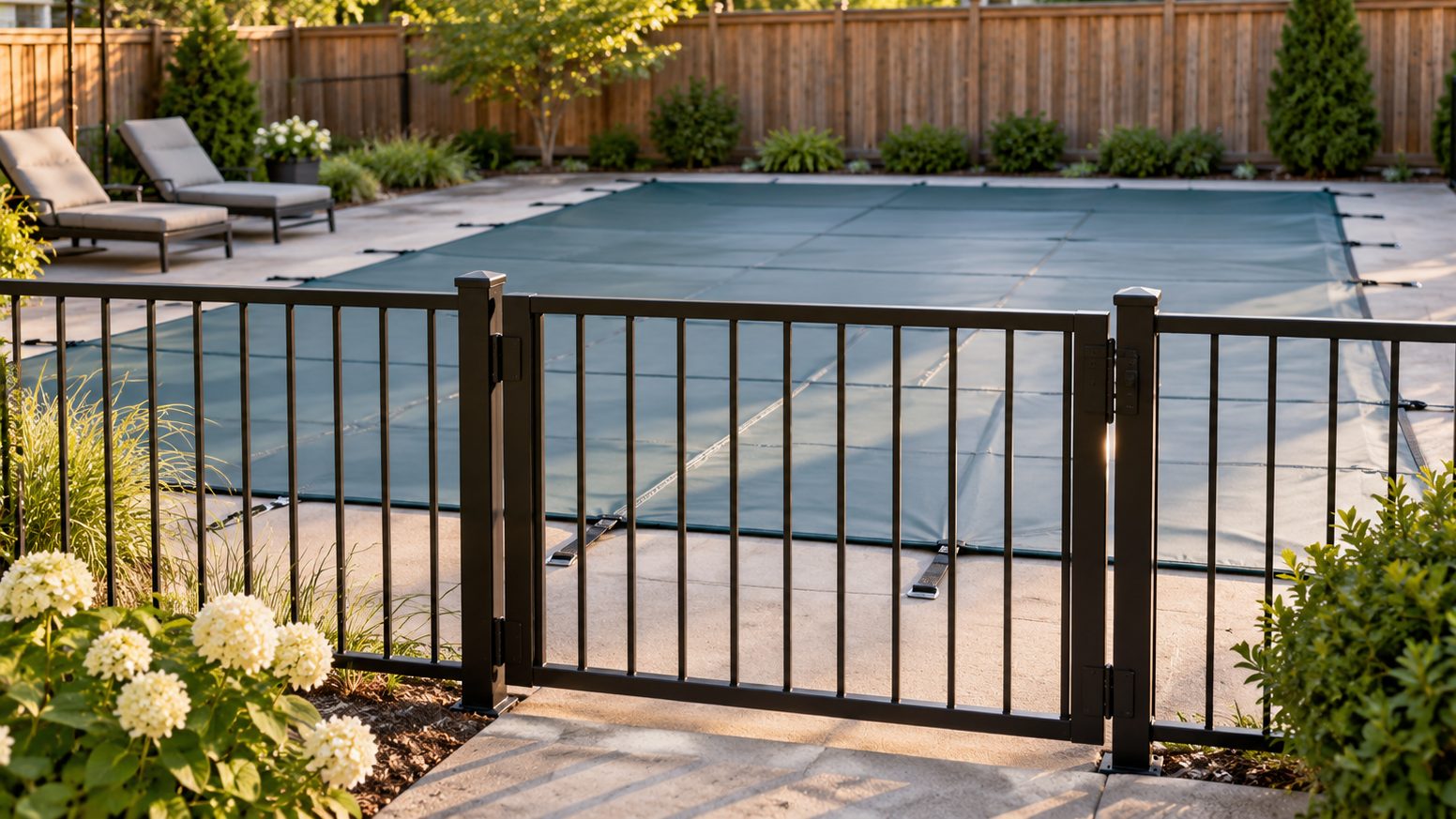
If the home has any water feature (pool, hot tub, koi pond, large outdoor fountain, water feature in a yard), the conversation needs to cover the supervision setup specifically. Drowning is the leading cause of accidental death for kids ages 1 to 4 and remains a top-five risk through age 14. It is silent, fast, and often happens in residential pools.
The pool / water script.
"I noticed your pool / pond / hot tub. What is the supervision setup when the kids are around it? Is the area gated when not in use?"
What you are listening for.
Adult-in-the-water or adult-actively-watching-poolside supervision; pool gates or covers when not in use; clear rules about kids in the water vs. on the deck; lifejacket policy for non-strong swimmers.
What raises a flag.
Casual or distracted-supervision answers ("the kids are fine on their own, they are good swimmers" for kids under 8). No gating or cover on the pool. The kids will be in the pool while the parent does household tasks. Lifejacket dismissal for non-strong swimmers.
The AAP HealthyChildren on water safety is the authoritative source on what proper pool supervision looks like for kids under 14. If your kid is a non-strong swimmer and the supervision answer is weak, this is the one situation where you should always reroute the playdate to your house or a park, not negotiate.
Screens and content (games, movies, online access)
Screen content rules vary wildly between families. What is normal entertainment in one family (rated-M games, scary movies, social media access for a 9-year-old) can be deeply distressing or violating to a kid from a different family.
The screen content script.
"What's your usual approach to screens during playdates? Just curious because Maya is pretty screen-light at home and I want to make sure she has a good time."
Three things this script does. Names your kid's pattern (so the host can adjust). Asks open-ended rather than checking for specific yes/no rules. Stays light in tone.
What you are listening for.
A direct answer about what they typically allow. Specific content ("we let the kids play Minecraft together but no shooter games"; "we usually do an age-appropriate movie"). Awareness of age-appropriateness as a category (a parent who has thought about screen content for kids is usually a safe screen host).
Adjustments.
If the host family has notably different screen content rules from yours and your kid is sensitive (gets scared by violent content, has nightmares from movies), name it directly: "Maya can be sensitive to violent or scary stuff; can we keep it to less-intense content?" Most parents are accommodating; some are not, and that tells you what kind of friendship this is going to be.
For the screen-rules clash conversation more broadly, see our guide to when other parents have different rules. For screen content age-appropriateness, Common Sense Media's age ratings are the standard.
Food allergies, medications, and substance accessibility
Three sub-conversations under the same category. None are awkward; all are routine.
Allergies and dietary restrictions.
"Anything we should leave out of snacks? Maya does not have allergies but I wanted to check on your side."
Direct and reciprocal. If the host kid has allergies, they will tell you and the playdate setup adjusts. If your kid has allergies, brief the host directly and send safe snacks. Our guide to playdates and food allergies covers the full allergy framework.
Medications your kid takes.
If your kid is on a regular medication (inhaler, antihistamine, EpiPen, ADHD medication), tell the host in writing: what it is, when to give it, what to do in an emergency. Pack the medication in the playdate bag, clearly labeled, with written instructions. Do not assume the host will remember a verbal instruction.
Substance accessibility (especially for sleepovers and longer drop-offs).
"Are medications, alcohol, and any vaping or smoking products kept out of reach? Maya is a kid who gets curious about things."
Most kids will not look for medications or alcohol; some will, especially during tweens and teens. The question is routine for sleepovers and longer drop-offs; less critical for short afternoon playdates with continuous supervision. The host should have these stored sensibly regardless.
Firearms, if relevant where you live
If there could be firearms in the other home, add one short question to your list, in the same voice as the others:
"Are any firearms in the house stored locked and unloaded?"
A direct, matter-of-fact answer in either direction is workable. A defensive or vague answer is a reason to host at your place or meet at a park instead. The American Academy of Pediatrics describes safe storage as locked and unloaded, with ammunition locked separately. In the US, the Brady ASK campaign has more scripts for this conversation.
When the answers are concerning (what to do)
Most answers across these five conversations are reassuring. Sometimes they are not. Three categories of response and what to do with each.
The reassuring answer.
Direct, matter-of-fact, evidence of having thought about each topic. Proceed with the playdate normally. The conversations were the price of admission; you have paid it once with this family, and now you both know what the playdate setup looks like.
The uncertain answer.
Vague or hedging on one or two of the categories; reassuring on others. Often a parent who is sincere but has not actually thought through a specific area. Workable: offer to host instead, suggest a park playdate, or do a shorter playdate at their house while you build trust. Many parent friendships hit this category at first and develop into trust as you see how they handle subsequent visits.
The concerning answer.
Defensive responses, dismissive answers, refusals to discuss specific safety topics, or answers that contradict obvious physical evidence ("the pool is always locked" when the gate is propped open). This is not necessarily a verdict on the family, but the playdate setup is not one you should agree to at their house. Three options: offer to host at your house instead; redirect to a public venue (park, library, museum); decline politely and let the friendship lapse if it does not work without the home-visit format.
When something goes wrong despite asking.
If your kid comes home and tells you something concerning (found medicine within reach, was left alone in the kitchen with the stove on, watched age-inappropriate content), take it seriously. First, comfort and check on your kid. Then decide whether to confront the host parent directly, or simply stop scheduling playdates there. The most common right move is the latter; you do not have to have a confrontation, but you do not need to send your kid back into the situation either.
If something rises to a child-safety threshold (clearly unsafe living conditions, suspected abuse, ongoing risk to other kids), report it to the appropriate local authority. Our guide to playdate red flags covers the broader pattern recognition for when a friendship needs to end on safety grounds.
Frequently asked questions
How do I ask without sounding judgmental?
Frame the questions as routine, not special. The phrase "Just wanted to ask before our kids play" or "I always check on a few things before a first playdate" signals these are standard for you, not a particular suspicion of them. Most parents who get the questions are relieved that another parent is being thoughtful; the few who get defensive are giving you useful information about themselves.
What if the other parent gets defensive?
Take that as information. A parent who reacts angrily to a basic safety question is signalling something about their setup or about how they handle uncomfortable questions. Either way, the answer is to not have the playdate at their house. You can keep the relationship cordial in passing; you do not have to send your kid into a home where the parent will not have the conversation.
Are these conversations needed for short playdates too?
Supervision: yes, even for short drop-off playdates, and firearm storage too if it applies. Allergies: yes for any food-involved playdate. The other questions (screen content, substance access) become more important for longer playdates, sleepovers, and ongoing relationships. For a 90-minute afternoon park playdate, the conversations are lighter; for a sleepover, they are essential.
What about extended family (grandparents, aunts)?
Same conversations, often more awkward because the family relationships are deeper. Still ask. The patterns of inadequate safety setup are not uncommon in extended-family settings, especially with older relatives who may not have updated their home safety. The same short questions apply; the conversation is one-time and then you know.
When do I trust the answer vs. need to verify?
First impressions are usually correct. A direct, thoughtful answer is usually true; a vague or evasive one usually signals something. You do not need to verify physical details (a lock on the medicine cabinet, a gate on the pool) on a first visit, but pay attention to what you see when you do visit; if the physical evidence contradicts what you were told, that is information.
What if something goes wrong despite asking?
Address it after, calmly. "When Maya was at your house yesterday, she mentioned the older kids were watching X. I just wanted to flag it because that is not something we allow for her age." Most parents respond by either explaining ("I didn't realize they were watching that, I will check next time") or apologizing. If the response is dismissive or the same problem recurs, stop scheduling playdates there. The conversation does not have to escalate; the schedule adjustment is itself the answer.