
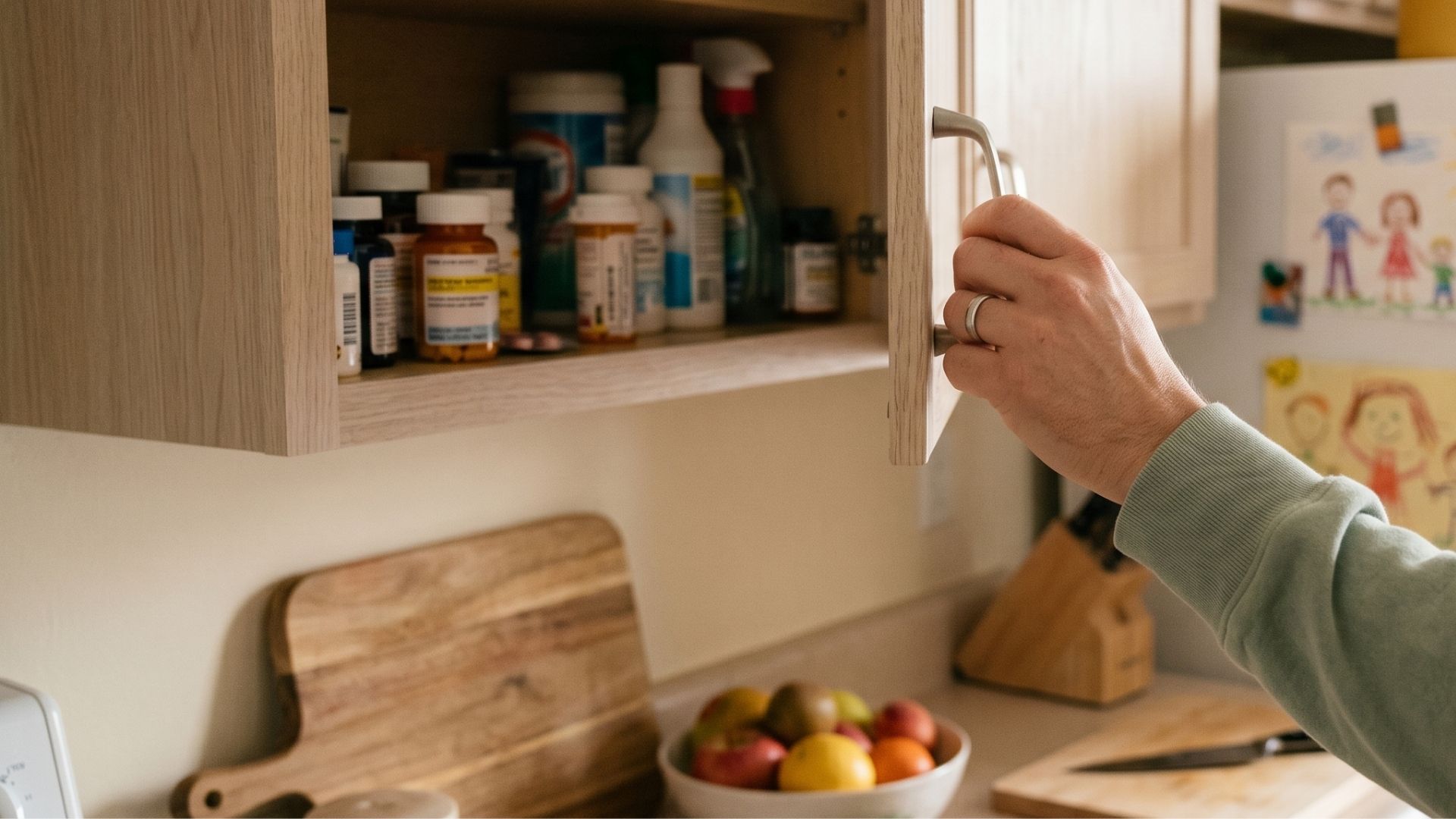
Most playdate accidents happen in the same handful of places: the bathroom, the kitchen, the medicine cabinet, and the pool. A 10-minute walkthrough catches almost all of them. The conversation with the other parent about pools and other risks is awkward exactly once; after that you have a script for life.
A safety note. Every home and every child is different. Use this as a starting checklist, not a guarantee, and follow the manufacturer's instructions for any safety product. In an emergency, call your local emergency number (911 in the US and Canada, 999 in the UK, 112 in Ireland and across the EU, 000 in Australia).
Why a quick safety pass matters more than you think
Most childhood injuries happen in homes, often in homes the kid does not live in. New environment plus distracted adult plus another kid to chase equals the moment when the toddler swallows the magnet, or the seven-year-old finds the medicine bottle, or the kindergartener wanders out the back gate to the pool.
The fix is not constant hovering. It is a 10-minute pre-playdate walkthrough that puts the genuinely dangerous things out of reach and the genuinely dangerous spaces out of access. Then you can sit on the couch with the visiting parent and not be paranoid for two hours.
Our complete guide to playdates covers the broader logistics; this piece is the safety question. It applies to the host and the visiting parent equally.
The 10-minute room-by-room walkthrough
Set a timer. You are not deep-cleaning, you are scanning for the obvious.
Bathroom (90 seconds)
Close the toilet lid (drowning risk for under-twos). Move medications, razors, and cleaning products under the sink up to a high shelf or into a cabinet that closes. If you have a child lock on the cabinet, use it. Empty any standing water from a tub or bucket. Keep the door closed during the playdate so it is not a roaming play space.
Kitchen (90 seconds)
Move knives off the counter, unplug small appliances (toaster, kettle), turn pot handles inward if anything is on the stove, and check that the dishwasher is closed and locked if it has detergent loaded. If you keep alcohol on a low shelf, move it up.
Bedrooms and play space (2 minutes)
Pick up small parts. Anything smaller than a toilet paper roll can be a choking risk for kids under three; the test is whether it fits inside one. Look for: small magnets (especially the strong rare-earth ones, which are the single most dangerous toy on the floor), button batteries (extremely dangerous if swallowed), beads, marbles, small LEGO. If a younger sibling will be at the playdate, this 2-minute scan is the most important one.
Stairs and balconies (1 minute)
Close any baby gates if a younger sibling will be there. Lock balcony doors. Move any climbable furniture away from balcony railings or open windows; toddlers climb.
Garage, shed, and outdoor space (2 minutes)
Lock the garage door. Move garden chemicals, paint, and tools into a closed cupboard. Check the back gate is secured. If you have a fire pit, cover it. If you have a trampoline, decide if it is in or out of bounds for the playdate and tell the kids.
Medication and pet food (1 minute)
Walk through any room and put away medication, vitamins, supplements, and pet medication that is sitting on a counter or table. The visiting parent's checklist of "what could my kid get into" will land here.
Final scan (2 minutes)
Walk through with kid eyes. Crouch down for 30 seconds in the play space. What can you see at three feet that an adult cannot at six? Cords from blinds (strangulation risk for small kids; tie up loose cords or use cord cleats), uncovered outlets, the dog's water bowl that a toddler will splash. Most of what you spot can be fixed in 30 seconds.
Pools, ponds, and water features
Drowning is the leading cause of death by injury for kids ages one to four in the United States. It is silent, fast, and most often happens at someone else's home, often during a non-swim event when nobody thought water was the activity.
If you have a pool, hot tub, or pond, treat it as the highest-priority safety conversation with every visiting parent. The CDC drowning prevention guidance is the single best primer; the headline rules: a four-sided fence with a self-latching gate around any pool, an adult assigned as designated water-watcher when kids are in or near it, no inflatable rafts as a substitute for swim skills, and life jackets (not floaties) for non-swimmers.
If you are visiting and the host has a pool, ask before the playdate: "Is the pool gated? Will the kids be near it?" If the answer is no fence and yes near it, that is the playdate where you stay or move locations. Not all hosts will have the same risk threshold as you; that is your call to make on behalf of your kid.
Firearms, if relevant where you live
If there are firearms in your home, keep them locked and unloaded, with ammunition locked separately, as the American Academy of Pediatrics advises. If you are the visiting parent and there could be firearms in the other home, one short question in your usual list covers it: "Are any firearms in the house stored locked and unloaded?" If the answer leaves you uneasy, move the playdate to your house or a park. That is the same call any parent gets to make about their own kid's environment. In the US, the Brady ASK campaign has more scripts for this conversation.
Choking, magnets, button batteries, and the under-fives
If a kid under five is on the playdate (whether a guest or a sibling), the floor scan matters more than anything else.
Choking on food is the most common kitchen risk. The high-risk foods are well known: whole grapes, hot dogs, popcorn, hard candy, raw carrot rounds, marshmallows, whole nuts. The AAP choking prevention guidance has the full list. Halve grapes and cherry tomatoes lengthwise, slice hot dogs lengthwise (or skip them), and skip whole nuts for under-fives entirely.
Choking on objects is the bigger risk for crawling-age babies and toddlers. Anything smaller than your thumb is a hazard. Specifically: the very small magnets (rare-earth, often sold as desk toys), button batteries (in remotes, candles, key fobs, kitchen scales, hearing aids), and small LEGO. Two magnets swallowed separately can pinch the bowel and require surgery; a button battery lodged in the throat can burn through tissue in two hours.
If you have older kids whose toys include any of these, store them out of reach during a playdate that includes a younger child. This is one of the most common ways accidents happen at multi-age playdates.
Allergies and medication
Confirm allergies in the setup text. "Anything I should not feed her?" is a 10-second question that prevents most allergy emergencies. Keep the answer in your phone for repeat playdates with that kid.
If you are hosting a kid with a serious food allergy, ask the parent to walk you through what to avoid, what an exposure looks like, and where their EpiPen lives. Food Allergy Canada's tips for hosting a safer playdate, written with parents of kids with food allergies, are a useful short primer. Wash counters, read labels ("may contain" matters), and never assume "a tiny bit" is fine.
On medication: keep all of it out of reach during the playdate, including over-the-counter (Tylenol, allergy meds, gummy vitamins, melatonin gummies, which look exactly like candy). The visiting kid does not know your house. Curious six-year-olds eat the gummies they find.
Pets, especially dogs
Even calm family dogs can be unpredictable around an unfamiliar kid, especially if the kid is loud, fast, or grabs at fur. Most dog bites to children happen at home, often involving the family's own dog.
The simple host rule: if the visiting kid does not know your dog, manage the introduction. Dog on a lead for the first 10 minutes, kid asked to be calm and offer the back of their hand to sniff, then judgement call. If your dog is at all reactive, put the dog in a separate room with a chew or a frozen Kong for the duration. That is the kind decision for everyone.
The visiting parent rule: if your kid is nervous around dogs or has had a bad experience, mention it in the setup text. "He is a bit shy around dogs, totally fine if you can put yours away for the playdate?" Most dog-owning parents will gladly do this.
Driveways, streets, and the back-gate problem
Driveways are a leading cause of injury for under-fives, especially toddlers behind a reversing car. If the playdate involves a driveway, agree on a no-driveway-without-an-adult rule before the kids spill outside.
If your kid is at a friend's house and the friend lives on a busy street, ask about the front-yard rule. Some families let their kids play in the front; some have a hard rule against it. Better to know in advance than to discover when your six-year-old sprints toward the kerb to get a ball.
Back gates are the silent escape route. If you have a back garden, check the gate latch is high and secured before any playdate. A toddler who follows their older sibling out a back gate to chase a cat is a common, terrifying scenario, and it is a 10-second fix.
What to share when you drop your kid off
Three pieces of information cover most situations: known allergies, any current medications they take and times, and your phone number plus a backup contact. A short text or a sticky note in their bag is enough.
If your kid has a recent injury, a chronic condition (asthma, epilepsy, diabetes), or a medical alert (severe peanut allergy, EpiPen, inhaler), the conversation is more detailed. Walk the host through the action plan, where the rescue medication is, and what an emergency looks like. Ask them to repeat back the steps. This is not micromanaging, it is responsible.
Our piece on drop-off playdates has more on the wider question of when drop-off is appropriate and how to set up a smooth one.
Frequently asked questions
What is the most dangerous thing in a typical home for a young guest?
Drowning is the leading cause of death by injury for kids one to four, so any pool, hot tub, or pond is the highest-priority risk. After that, button batteries, strong magnets, unsecured medications, and any unsecured firearms round out the top of the list. Most of these can be addressed in a 10-minute walkthrough.
What about toy safety, like is a hand-me-down crib or toy a problem?
Sometimes. Old cribs sold before 2011 may not meet current safety standards. Old toys may contain magnets or small parts that current standards have phased out. For a hosted playdate, the bigger question is whether anything on the floor is a choke or magnet hazard for the youngest kid in the room. Walk the play space at kid-height before they arrive.
Should I require kids to wear shoes outside during a playdate?
Outdoors, yes for most settings, especially for foot protection in yards (bee stings, glass, sharp twigs). Inside, follow the host's rule. Most families have a shoes-off policy; if not, it is fine for kids to keep them on. Whatever the rule is, be explicit at the door.
How do I handle a host who clearly has not childproofed?
Quietly and on the kid's side. If you arrive and see open medication, an unsecured pool, or other obvious risks, you can ask: "Mind if we move them to the kitchen, the rug looks like it has some choke-size pieces?" Or you can suggest moving the playdate to a park. If you do not feel comfortable, ending early is also fine. "He is getting tired, I think we will head out" is the polite and correct script.
What if my kid has a medical condition, do I need a written care plan?
For asthma, severe allergies, epilepsy, diabetes, or any condition with rescue medication, yes, a short written plan helps. One page: triggers, what an episode looks like, what to do step by step, when to call you, when to call the emergency number, where the medication is. Most pediatricians have templates. For drop-off playdates with a kid who has any of these, the written plan is the single most important thing in their bag.