
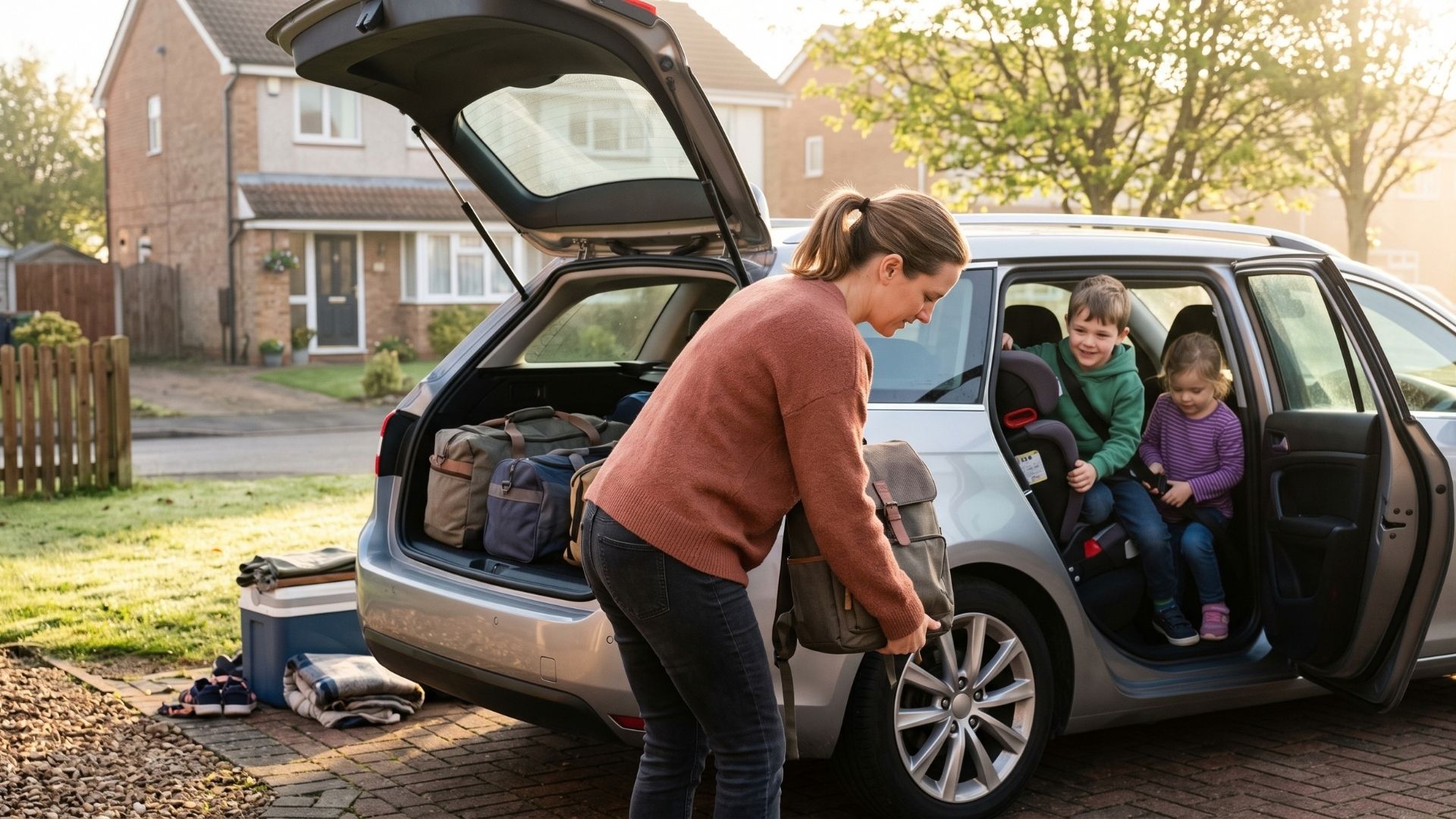
A family road trip succeeds or fails on planning, not luck. Match the distance to your children's ages, stop more often than feels efficient, pack the car so everything is reachable, and protect sleep. Do those things and the drive becomes part of the trip rather than the obstacle before it. This guide covers the whole system.
Why road trips work for families
For all the dread the long drive inspires, the road trip is one of the best travel formats a family has. It is worth remembering why before you focus on surviving it.
A road trip runs on your schedule, not an airline's. You leave when you choose, stop when a child needs to, and change the plan mid-journey without rebooking anything. You travel door to door, with no airports, no security lines, and no baggage limits, so you can bring the stroller, the favorite toys, and as many snacks as you like. It is usually the cheapest way to move a whole family, and it reaches places no plane goes.
The one real cost is the driving itself: hours of confinement that young children find genuinely hard. Everything in this guide exists to manage that cost. Get it right and a family that road-trips well builds a lasting travel habit. This article sits inside our complete guide to traveling with kids.
Realistic distance by age
The most common road-trip mistake is planning a distance that suits the adults and ignoring what the children can actually manage. Realistic distance scales sharply with age.
- Toddlers, ages 1 to 3. The hardest age for driving. Plan short legs, frequent stops, and a total daily distance well below what feels efficient. Many toddler road trips work best at two or three hours of actual driving a day.
- Preschoolers, ages 3 to 5. More patience and the ability to be entertained, but still limited. A solid half-day of driving, broken into chunks, is realistic.
- School-age children, ages 6 to 9. The sweet spot. Longer attention spans, the ability to occupy themselves, and no naps to plan around make full-day drives genuinely workable.
- Older children and teens. Close to adult endurance, given their own audio and entertainment, with stops still welcome.
Plan the trip around your youngest passenger, because the drive has to work for them. We cover each stage in depth in our guides to road tripping with a toddler, a preschooler, and a school-age child.
The stop rule
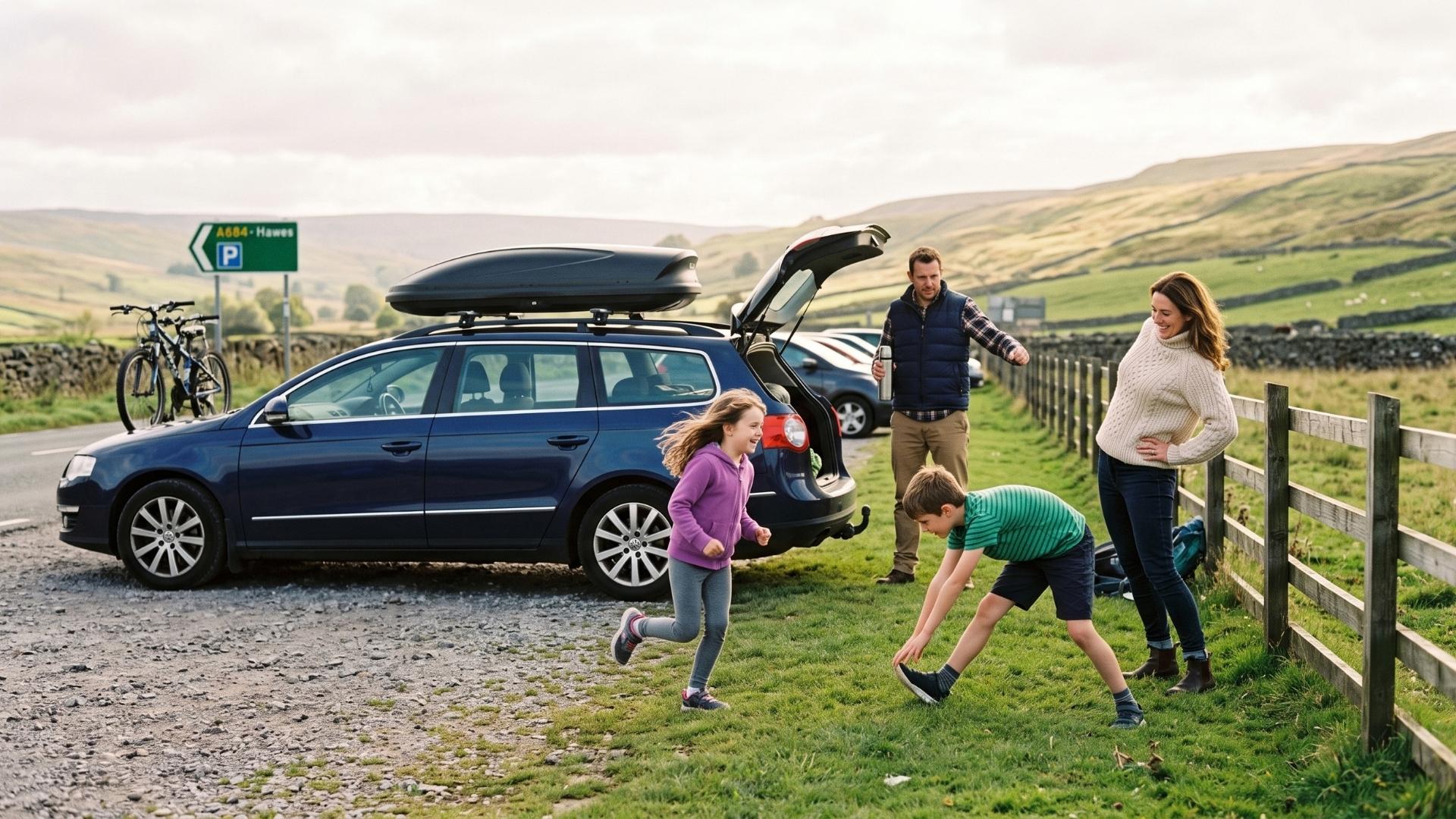
Stops are not lost time on a family road trip. They are what makes the driving possible at all. The instinct to push through and make good time is the instinct that ends in a meltdown.
As a general rule, plan to stop every two to three hours, and scale that to the age of your children: closer to every 90 minutes for toddlers, every two hours for preschoolers, and up to three or so for school-age children. Build the stops into the plan from the start rather than treating them as interruptions.
A good stop does real work, so make it count. Children need to move, so head for somewhere they can run rather than just a parking lot. Everyone uses the bathroom, whether they say they need to or not. Eat or have a proper snack sitting still. And let the stop last long enough to be a genuine reset, fifteen to thirty minutes, not a rushed five. A trip with generous, well-chosen stops arrives later and far happier than one that raced.
One stop rule has no exceptions: never leave a child alone in the car, not even for a quick bathroom run or a coffee. The AAP warns that a car can heat up 20°F (about 11°C) in 10 minutes, and that children heat up 3 to 5 times faster than adults. Everyone gets out, every time.
Plan the first stop earlier than the rule strictly requires. The opening leg of a trip often begins with restless excitement and a recent meal, and a stop within the first 90 minutes, even if it feels too soon, settles everyone and sets the rhythm for the day. It is far easier to establish a calm stop pattern from the start than to recover one after a difficult first three hours on the road.
What to pack
How you pack the car shapes the whole drive. The principle is simple: anything you might need while moving must be reachable without stopping.
Pack in three zones. The trunk holds everything you will not need until you arrive: luggage, larger gear. The footwells and seat backs hold each child's own activity bag. And one front-accessible bag, within an adult's reach, holds the things you will need on the move.
That front bag is the trip's command center. It should hold:
- Snacks and water, restockable, the single most useful thing in the car.
- Wet wipes and paper towels, more than you think, plus a roll of trash bags.
- A full change of clothes for younger children, reachable without opening the trunk.
- A small first-aid kit and any medicines, including anything for car sickness.
- Sick bags or a lidded container, kept within reach even if no one usually gets carsick.
- Weather layers, so a temperature change at a stop does not mean unpacking the trunk.
- Phone chargers, and any audio you have queued for the journey.
Before the trip, check that every child's car seat and booster is correctly fitted; the US National Highway Traffic Safety Administration's car seat guidance is a reliable reference for the right seat at each age and size. Each child can also have their own small activity bag, which the age-specific guides above cover in detail.
Snack and meal strategy
Food is both the most useful tool and the biggest mess risk on a road trip. A little strategy keeps it on the helpful side.
Separate snacks from meals. Snacks are for in the car, on the move: small, low-mess, and handed back at intervals rather than all at once, so they keep buying calm for hours. Meals are for stops, eaten sitting still, off the road. Trying to serve a full meal in a moving car creates mess and misses the point of a meal stop, which is rest.
Choose in-car snacks that do not crumble, melt, or roll under a seat, and ration them rather than emptying the bag in the first hour. Our guide to car snacks that do not make a mess covers the best options in detail. For meal stops, a packed picnic eaten at a park is often better than a restaurant: it is faster, cheaper, gives children room to run, and combines the meal and the movement break into one stop.
Route planning
The route you choose is not just the fastest line between two points. On a family road trip, the route is planned around stops and sleep.
Before you travel, look at the journey and mark where the good stops are: parks, playgrounds, green spaces, and family-friendly places to eat, spaced at roughly the intervals your children need. A route with a known playground every two hours is a route that works. The shortest route with nowhere good to stop is not the fastest in practice, because the stops you are forced into will be worse.
Think about timing, too. If your children still nap, it can help to line up the longest, dullest stretch of driving with nap time, and save the more interesting segments for when they are awake. Add padding to your estimated arrival time, because a family road trip always takes longer than the route planner says. A schedule with slack in it absorbs the inevitable delays without anyone feeling behind.
Sleep and overnight driving
Sleep is the variable that decides how a long drive feels, and it is worth a deliberate plan rather than hoping it works itself out.
For trips with a long total distance, driving through a nap is a reliable tactic: a child who sleeps for two hours in the car has covered a serious chunk of the journey painlessly. Some families drive overnight or set off very early so children sleep through the hardest hours, which can work, but only if the driving adult is genuinely rested. A tired driver is the one risk on a road trip that is never worth taking, so a driver who needs sleep stops, and the schedule has to allow for that.
For very long journeys, the best plan is often to break the trip with a deliberate overnight stay rather than attempting it in one heroic push. A night in a hotel or a rental at the halfway point turns an exhausting marathon into two manageable days, and the overnight itself becomes a small part of the adventure. Do not measure a family road trip by how few hours it took.
The arrival
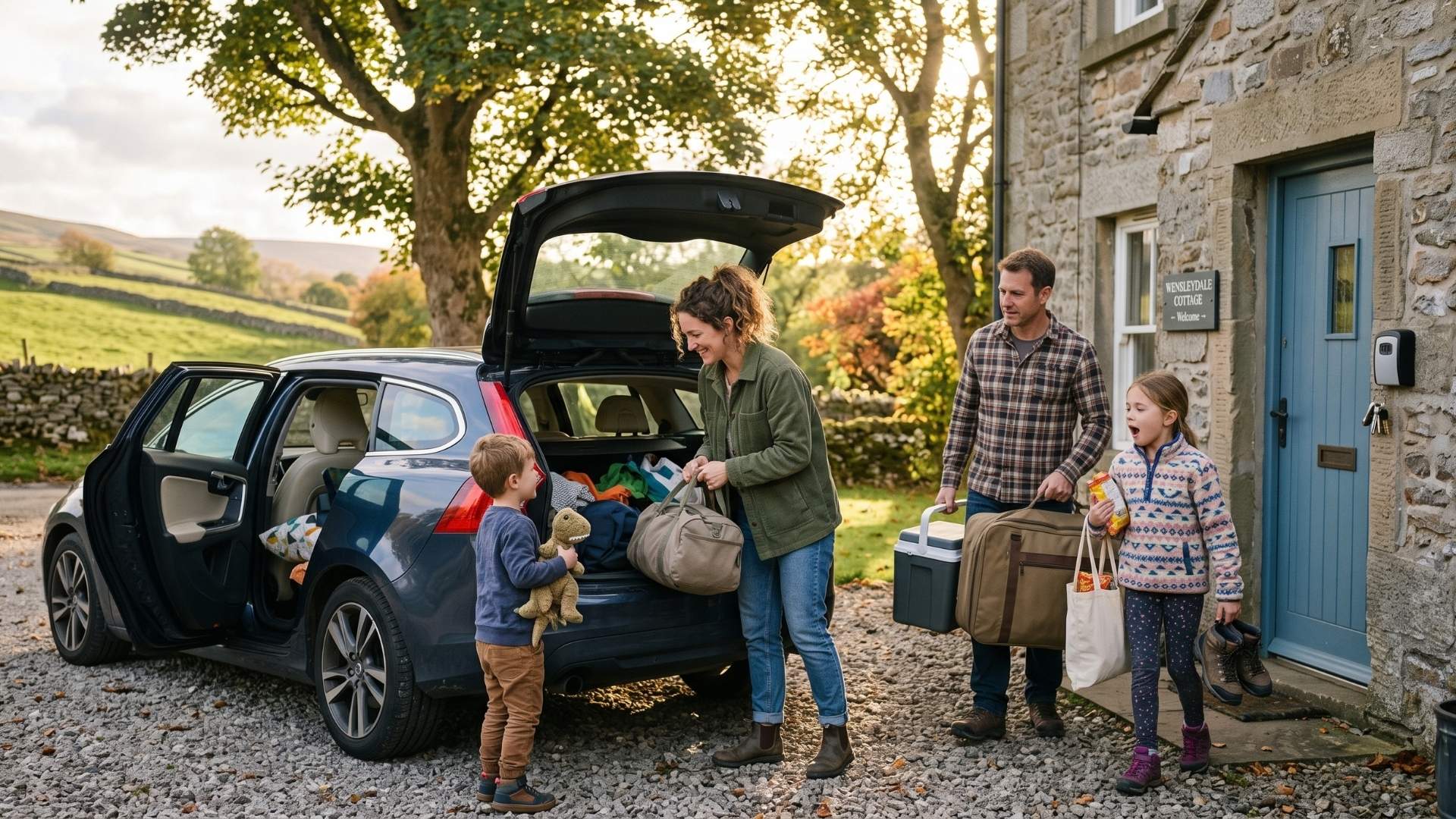
The final stretch of a road trip is the arrival, and how you handle it sets the tone for the days that follow.
The single most useful rule is to plan nothing significant for arrival day. After a long drive, everyone, drivers and children alike, is depleted. An arrival day with no agenda beyond reaching the destination, unloading the car, finding food, and resting is an arrival day that goes well. A family that drives all day and then tries to fit in a big activity usually regrets it.
It is worth building a buffer into the trip at both ends. A clear day after arrival, before any big plans, lets the family find its feet in a new place. A calm day at home after the return drive, with nothing scheduled, absorbs the tiredness before normal life resumes. A road trip with a buffer day on each side is one the whole family remembers fondly rather than recovers from.
Give the first evening over to a gentle recovery: a simple meal, a calm look around wherever you are staying, an early night to repay the sleep the journey cost. Save the real activities for the next day, when everyone is restored. The trip proper starts after the recovery, not the moment the engine stops. Once you are settled, our age-specific guides for the toddler, preschooler, and school-age years carry the detail for your children's stage. Plan your next road trip around your youngest child's limits, stop more than feels efficient, and treat the drive as part of the trip rather than the price of it.
Frequently asked questions
How far can you realistically drive in a day with kids?
It depends sharply on age. With toddlers, two or three hours of actual driving a day is often the realistic limit. Preschoolers can manage a broken half-day. School-age children, ages 6 to 9, are the sweet spot and can handle full-day drives. Always plan the distance around your youngest passenger, since the drive has to work for them.
How often should you stop on a family road trip?
Plan to stop every two to three hours, scaled to your children's ages: closer to every 90 minutes for toddlers, every two hours for preschoolers, and up to three for school-age children. Make each stop a real one of 15 to 30 minutes, with room to run, a bathroom visit for everyone, and food eaten sitting still. Stops are not lost time; they are what makes the drive work.
What should I pack in the car for a road trip with kids?
Pack in three zones: the trunk for arrival gear, each child's activity bag in the footwells, and one front-accessible bag for what you need on the move. That front bag should hold snacks and water, plenty of wet wipes and trash bags, a change of clothes for younger children, a first-aid kit, sick bags, weather layers, and chargers. Check every car seat is correctly fitted before you leave.
Should we drive overnight or during naps?
Driving through a nap is a reliable tactic, since a child who sleeps two hours in the car covers a big chunk of the trip painlessly. Driving overnight or very early can work too, but only if the driving adult is genuinely rested; a tired driver is a risk never worth taking. For very long trips, breaking the journey with a planned overnight stay is usually better than one long push.
How do I handle the day we arrive after a long drive?
Plan nothing significant for arrival day. After a long drive everyone is depleted, so let the first evening be a gentle recovery: a simple meal, a calm look around, and an early night. Save the real activities for the next day, when everyone is restored. The trip proper starts after the recovery, not the moment you arrive.
Are road trips better than flying with young kids?
Each has trade-offs. Road trips run on your schedule, go door to door with no airports or baggage limits, are usually cheaper for a whole family, and let you stop whenever a child needs to. The cost is hours of confinement that young children find hard. For shorter and medium distances with young children, a well-planned road trip is often the lower-stress choice.