
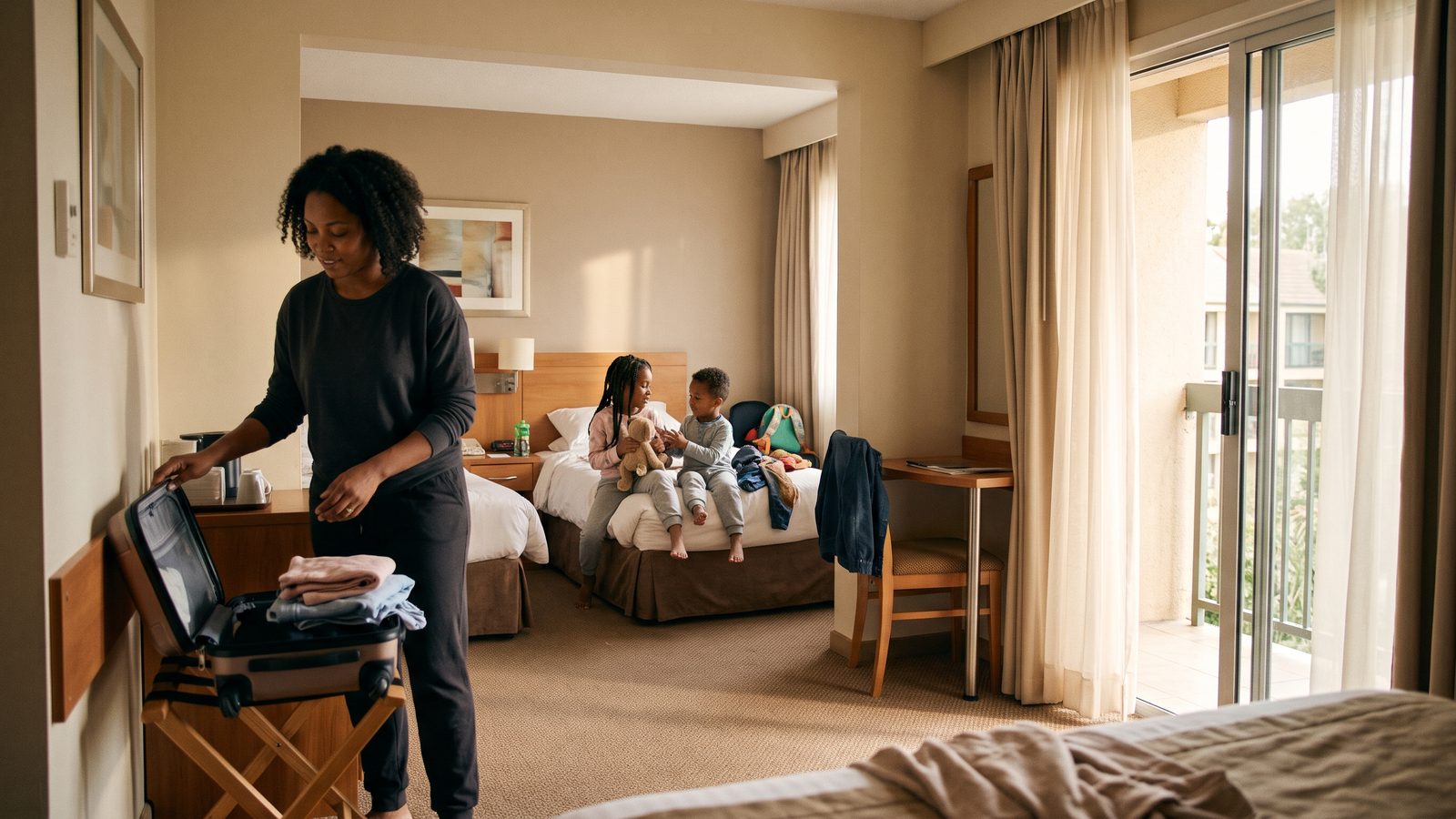
"Family-friendly" on a hotel website often means very little. Almost every hotel will let a family stay, and many will tell you they welcome families, but the practical experience varies enormously. Seven specific features separate a hotel that works for families from one that just markets itself that way. Here is how to read past the marketing.
The marketing-claim problem
The phrase "family-friendly" carries almost no useful information on its own. Hotels at every price point and style use it, including properties that struggle to handle a child in their lobby. The phrase has been so universally adopted that it now signals little beyond the hotel's willingness to take a booking from a family.
That matters because families act on the label. A family books a holiday on the strength of a property's family-friendly marketing and arrives to find a quiet adult-oriented hotel with no kid pool, no children's menu, and tense staff. The trip starts on the back foot, and the cause is rarely the hotel having lied. It is that the label can mean almost anything, and the family read more into it than was promised.
The fix is to ignore the label and look at the specific features that actually matter. Run any hotel against the seven below before you book and you will know what you are walking into, regardless of how it markets itself. This article sits inside our complete guide to traveling with kids.
The 7 features that actually matter
Seven features separate hotels that work for families from those that do not. Look for each one before you book.
- Family room layouts. Not just a double bed plus a sofa: real family rooms or connecting rooms where children can sleep separately from adults. This decides how the evenings work.
- A real pool option for children. A shallow kid pool or splash area, not just a deep main pool, and ideally separated from any adults-only zone.
- Children's food at sensible times. A children's menu that exists, has real options, and is served at the times children actually eat, not just at the late adult dinner hour.
- A staffed kid club or program, if you want one. Not every family does, but if the hotel claims one, check the hours, the ages, the staff ratios, and whether it costs extra.
- Practical amenities. Cribs (cots) and high chairs available without fuss, a baby bath if needed, a mini-fridge for milk and snacks, and ideally laundry on site for longer stays.
- Staff who actually like having children there. This is impossible to confirm before arrival, but recent guest reviews specifically from families tell you a great deal.
- Safety basics. Pool fencing, balcony railings with no gaps a child could climb through, windows that only open a little, and common areas without obvious hazards.
Pro tip: email the hotel three questions before you book
Ask which room types have a separate sleeping area for children, what ages the kid club takes and whether it costs extra, and how deep the children's pool is. A clear, quick reply is a good sign in itself.
A hotel that ticks five or more works well for most families. Three or four means manageable but compromised. Two or fewer means the label is marketing only, regardless of how prominently it appears on the website.
The pool and water reality
The pool is the most over-marketed feature in family hotel listings. A photo of a beautiful pool tells you very little about whether it works for your family.
What actually matters: a shallow children's pool or splash zone separate from the main pool, lifeguards or close staff supervision during the day, pool fencing for very young children, and pool hours that include early-morning and after-school time, not just midday when the sun is strongest. A hotel with one deep pool and a poolside bar is a hotel where families with young children spend the day tense, however well-photographed the pool is.
Whether or not the hotel provides lifeguards, water supervision is always the parent's responsibility. The Pool Safely campaign from the US Consumer Product Safety Commission, and broader guidance from Safe Kids Worldwide, both make the same point: watch children whenever they are in or near the water, keep babies and toddlers within arm's reach, and never assume someone else is watching. With several adults around, take turns being the water watcher, the one adult who is not on a phone or reading.
Kid-club authenticity
Kid clubs are the most variable feature claimed by family hotels. Two hotels with similarly worded kid-club descriptions can deliver very different things in practice.
What signals a real kid club:
- Age-grouped programs rather than a single play room for all children.
- Set hours, both morning and afternoon, with a clear schedule rather than vague availability.
- Trained staff with clear safety checks (ask about first aid training and background checks), rather than rotating front-desk staff filling in.
- A clear age range, with firm age limits at both ends.
- Activities that keep children busy and having fun, not just supervised waiting.
What signals a club that exists more in marketing than in practice: vague hours, no age groupings, staffing that depends on demand, and a price for everything beyond the room you walked into. Ask specifically before booking what the club includes, what its hours are, and whether it costs extra. Recent family reviews of the specific property will tell you what the brochure does not.
Food options
Hotel food at a family hotel is worth scrutinising as carefully as the pool.
Look for more than one dining option, including a casual one where families can eat without dressing for dinner, and a children's menu that goes beyond fries and nuggets. Check the breakfast offer specifically, since hotel breakfast often makes or breaks the day with young children; a wide buffet at a sensible hour beats a single sit-down option at an awkward time.
If your family manages food allergies, ask before booking how the kitchen handles them: a hotel that answers clearly, with marked dishes and a designated point of contact, is one that takes them seriously. One that shrugs is one to skip. And ask whether room service is available, since a sick or wiped-out child sometimes makes a quiet dinner in the room the right call, and a hotel without that flexibility can leave a family stranded.
Layout and connecting rooms
Where children sleep, and how the room is arranged, is the single most under-discussed factor in whether a hotel works for a family.
A standard double room with two adults plus a sofa for a child is workable for a night or two and gets harder fast. Children waking up when adults walk to the bathroom, adults trapped in darkness because the child is asleep, and a noticeable dip in everyone's sleep are all common outcomes.
Better layouts: a true family room with a separate alcove or partition, a one-bedroom suite with a living area between, or connecting rooms where adults and children share a wall but not a sleeping space. Check the actual layout, not just the room category name; family suite means very different things at different hotels. Connecting rooms are the gold standard for families with school-age children sharing with siblings, and worth asking for explicitly at booking.
Hotel brands and review scores: what they tell you
Hotel brand and review ranking both carry real information, but neither is decisive on family-friendliness.
Several major hotel brands have strong family programs at their right properties: many resort properties from the larger international groups handle families well, and certain mid-range chains have built loyalty by reliably welcoming families. A brand reputation is a useful starting filter. But within the same brand, individual properties vary enormously, so brand reputation does not replace looking at the specific hotel.
Review rankings are most useful when filtered for families specifically. A hotel with a high overall score and a low score from families is a hotel optimized for the wrong audience for you. Look at recent reviews from other parents about the actual property, including the things this article covers: room layouts, pool reality, kid-club specifics, food, staff manner. Combine that with the seven features above and you will know what you are booking. Pair this with our guide to hotel vs vacation rental for families and our family-resort reviews for the wider accommodation decision.
Frequently asked questions
What does "family-friendly" actually mean at a hotel?
On its own, very little. Almost every hotel uses the phrase, including properties that struggle to handle a child in their lobby. The label has become so universal that it now signals only that the hotel will take a family booking. Ignore the label and look at the specific features that matter: room layouts, the pool, food, kid clubs, amenities, staff, and safety basics.
What features make a hotel family-friendly?
Seven features separate family-friendly hotels from those that just market themselves that way: real family room layouts or connecting rooms, a shallow kid pool or splash area, children's food at sensible times, a properly staffed kid club if claimed, practical amenities like cribs and high chairs, staff who actually welcome children, and basic safety provisions like pool fencing and secure windows.
How important is the room layout in a family hotel?
It is the single most under-discussed factor in how a stay actually goes. A standard double plus a sofa is workable for a night or two and gets harder fast. Better layouts include a true family room with a partition, a one-bedroom suite with a living area between, or connecting rooms. Check the actual layout, not just the room category name, since family suite means different things at different hotels.
Are hotel kid clubs worth it?
Sometimes very, sometimes barely. Strong kid clubs run age-grouped programs with set hours, trained staff, and activities that engage children. Weaker ones are a single room with vague hours and staff filling in. Ask before booking what the club actually includes, what its hours are, what ages it serves, and whether it costs extra. Recent family reviews of the specific property tell you what the brochure does not.
Can I trust a hotel's pool photos?
Not on their own. A beautiful pool tells you little about whether it works for your family. What matters is a shallow children's pool or splash zone separate from the main pool, supervision arrangements, pool fencing for very young children, and pool hours that include the cooler parts of the day. Whatever the hotel provides, water supervision is always the parent's responsibility.
Are some hotel brands more family-friendly than others?
Yes, broadly, several major resort and mid-range brands have built strong family programs at their right properties. But within the same brand, individual hotels vary enormously, so brand reputation is a starting filter, not a guarantee. Filter review rankings for families specifically: a hotel scoring well overall but poorly with families is a hotel optimized for the wrong audience for you.