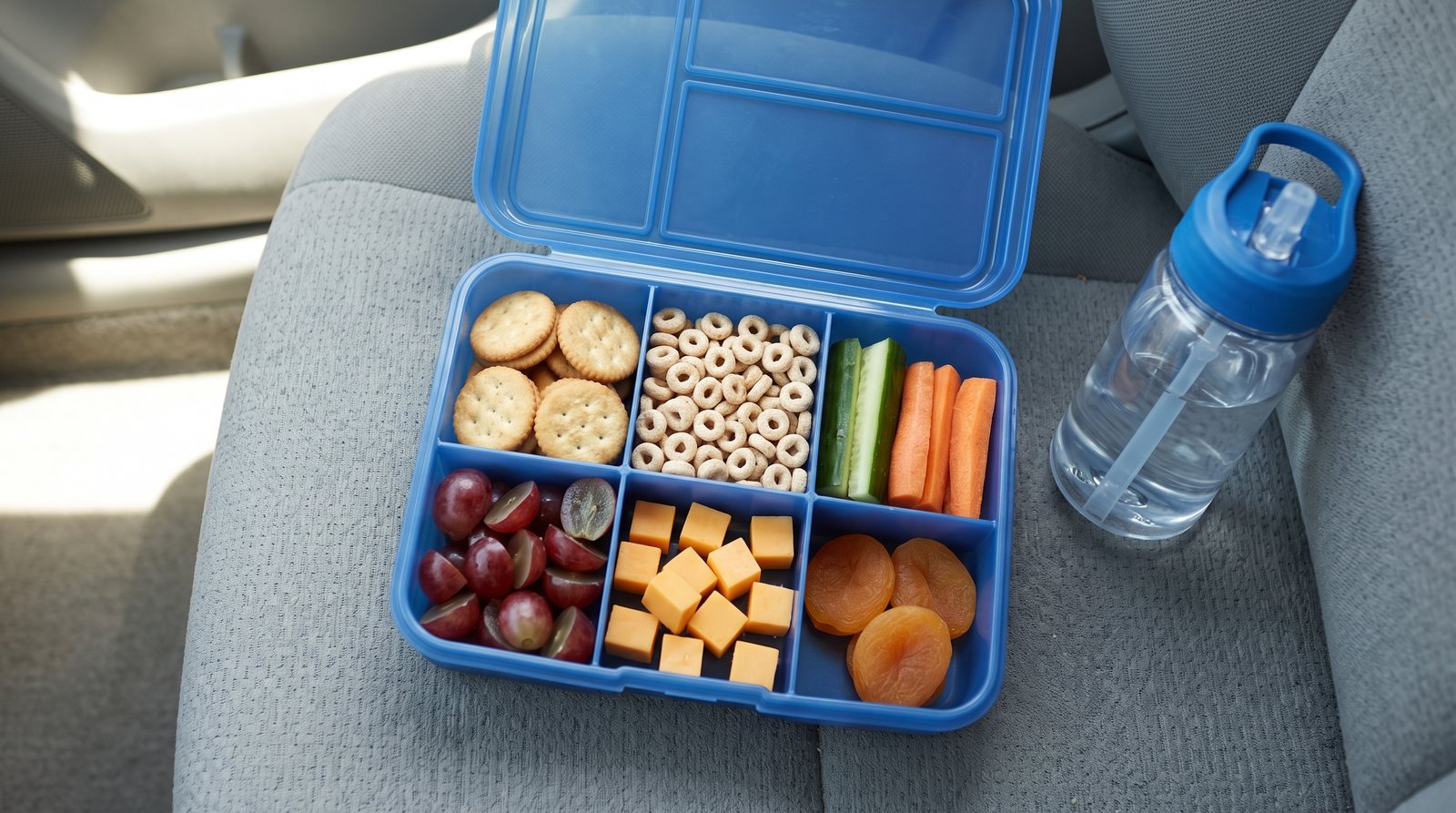
The best car snacks share one trait: they do not end up ground into the seat. A mess-free car snack is dry, not sticky, holds its shape, and can be eaten one piece at a time with one hand. Here are 20 that pass that test, plus how to handle drinks, hot weather, and allergies on a long drive.
The mess hierarchy
Before any snack list, it helps to know what makes a snack messy in a car. A snack eaten at a kitchen table can be a disaster in a moving vehicle, where you cannot see what is happening in the back and cannot easily help.
Rank any snack against four mess risks:
- Crumbly. Snacks that shatter into crumbs, very flaky pastries, certain cookies, spread everywhere and are impossible to clean from a car seat. Firm, dense snacks crumble far less.
- Sticky. Anything coated in syrup, honey, or sticky sauce ends up on hands, then seatbelts, then windows. Sticky is the hardest mess to undo on the road.
- Melty. Chocolate and anything chocolate-coated turn liquid in a warm car. Save these for stops, not the moving car.
- Juicy. Very ripe or soft fruit, and anything in sauce, drips. Juicy snacks belong in a lidded pot, eaten at a stop.
A good car snack scores low on all four: dry, firm, not sticky, not melty. The 20 below are chosen on exactly that basis. This article is part of our complete family road trip guide, and the toddler road trip guide covers stops and pacing for the youngest travelers.
20 mess-free car snacks
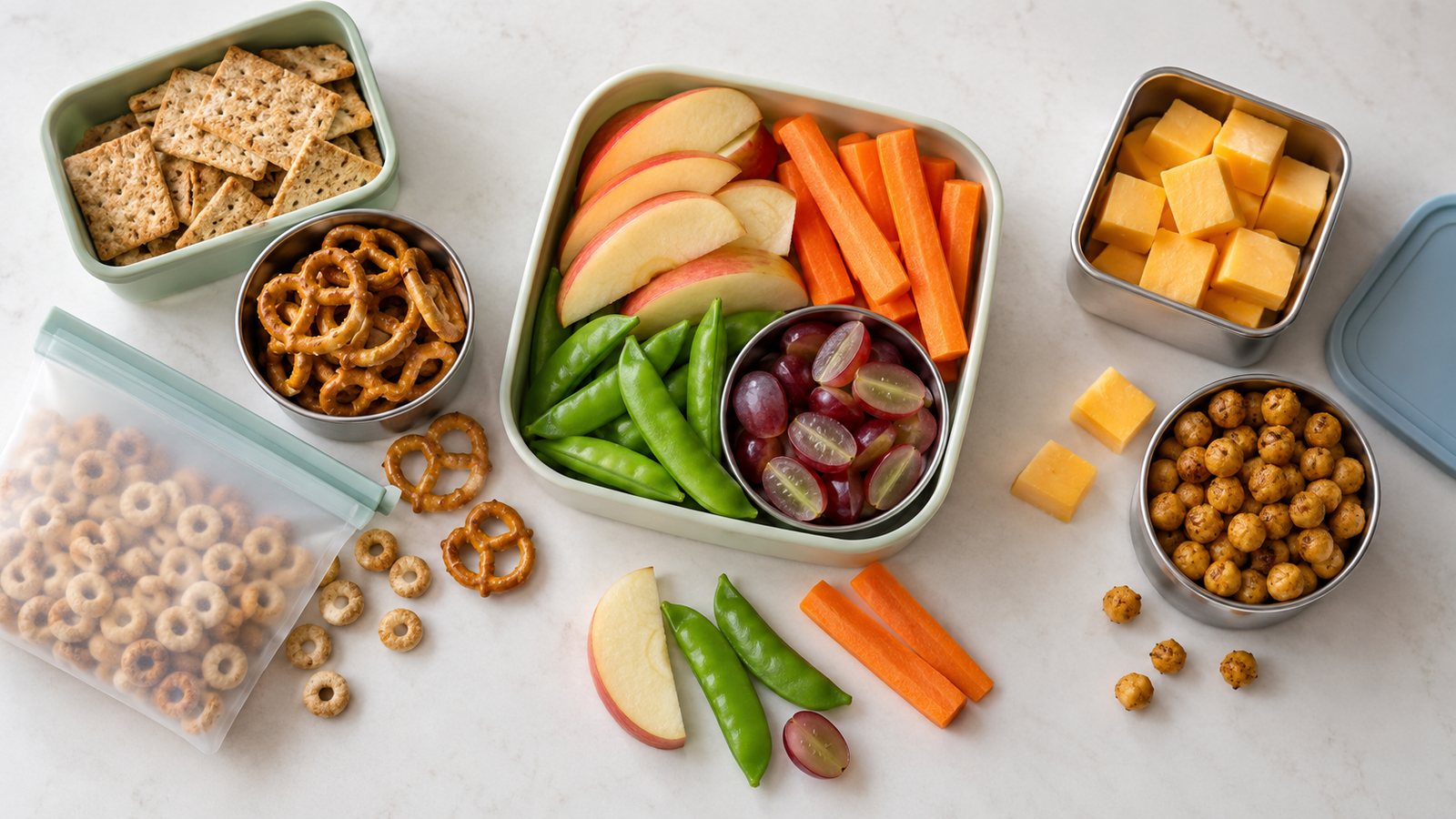
These 20 all hold up in a moving car. They are grouped so you can build a varied snack box rather than packing five versions of the same thing.
Under 4? Read this first.
Several snacks on this list are choking hazards for young children as written. The AAP's choking prevention guidance lists popcorn, nuts and seeds, whole grapes, raw carrot sticks, raw apple pieces, and chunks or sticks of cheese among the foods to avoid or change for children under 4. For toddlers, choose dissolvable cereal, soft foods cut small, cheese grated or thinly sliced, and grapes and blueberries cut lengthwise into quarters, and keep popcorn, chickpeas, seeds, and raw vegetables for older kids. From the driver's seat you cannot see or quickly reach a child who is choking, so with babies and toddlers, offer food at stops or only when an adult is sitting beside them.
Dry and crunchy:
- Whole-grain crackers. Firm, low-crumb, and filling. The dependable base of any car snack box.
- Dry O-shaped cereal. Easy to eat one piece at a time, and toddler-friendly.
- Pretzels or pretzel sticks. Dry, firm, and satisfying. Choose lightly salted.
- Mini rice cakes. Light, crunchy, and very low-mess.
- Breadsticks. Hold their shape, eaten one at a time, almost no crumbs.
- Plain popcorn (ages 4 and up). Light and fun; skip toffee or heavily buttered versions.
- Baked veggie straws or baked chips. A crunchy treat that stays dry.
Fruit and vegetables that travel:
- Apple slices, thinly cut for younger children, or small whole apples for older kids. Crisp and low-drip; a little lemon juice keeps slices from browning.
- Grapes, quartered lengthwise for children under 4. Firm grapes travel well in a lidded pot.
- Clementine or mandarin segments. Peel them at a stop and store the segments in a pot.
- Dried fruit such as raisins or chopped dried apricots. Sweet, no drip, and shelf-stable.
- Cucumber sticks. Crunchy and hydrating, and they hold their shape.
- Carrot sticks (ages 4 and up, or steamed soft for younger kids). Sturdy, low-mess, and long-lasting.
- Sugar snap peas (ages 4 and up). Sweet, crunchy, and tidy to eat.
- Blueberries in a small lidded pot. Firm and bite-sized; the lid keeps them under control. Quarter them for children under 4.
Protein and more filling options:
- Cheese: cubes, sticks, or individually wrapped rounds for older kids, thin slices for toddlers. Filling and low-mess; keep cool in warm weather.
- Roasted chickpeas (ages 4 and up). Crunchy, dry, and protein-rich.
- Mini sandwiches or wrap pinwheels, cut small. Use dry-ish fillings so nothing drips.
- Nut-free trail mix of cereal, seeds, and dried fruit (ages 4 and up, because of the seeds). Easy to portion and mess-free.
- Firm cereal or oat bars, not chocolate-coated. Choose dense bars that hold together rather than crumble.
Build the box from a few items across all three groups, so a long drive has variety without anyone running out of their favorite.
The drink question
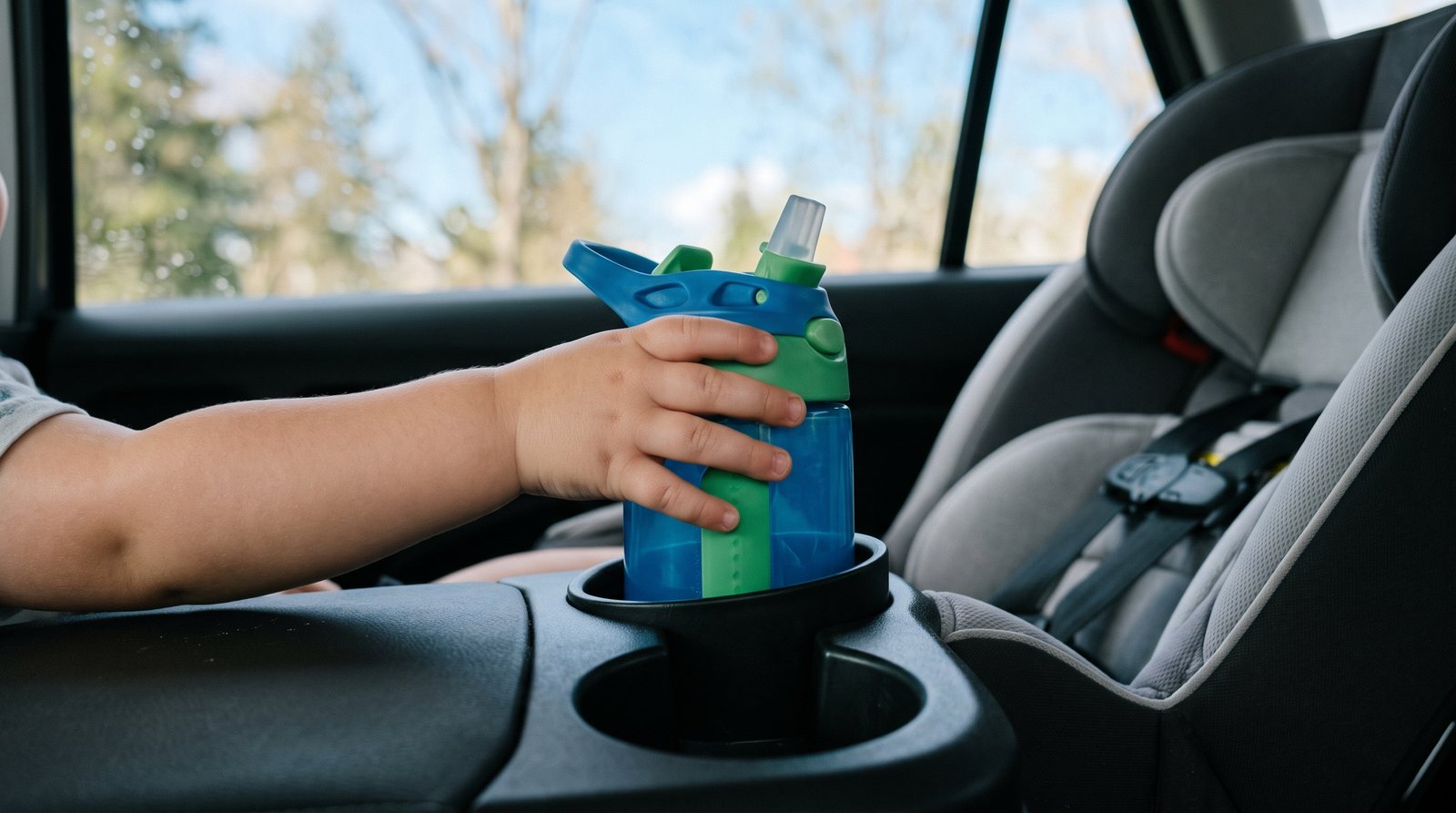
Drinks cause more car mess than snacks, and they are worth their own plan.
Water is the default car drink, every time. It is the only spill that does not stain, does not get sticky, and does not need cleaning beyond a quick wipe. Give each child their own spill-resistant bottle, ideally a straw or sports-cap design they can use one-handed without tipping it up. A named bottle each also stops the endless mid-drive squabble over whose drink is whose.
Keep juice, soda, and milk for stops, not the moving car. Juice and soda are sticky and staining, and milk left warm in a car can spoil. If you do offer juice, water it down and serve it at a stop. The simplest rule that keeps a car clean: in the moving car, the only drink is water.
Hot-weather rules
A car heats up fast, and heat changes which snacks are safe. On a warm-weather drive, a couple of rules matter for food safety, not just mess.
Keep anything perishable in a cool bag with an ice pack: cheese, hard-boiled eggs, yogurt-based items, and sandwiches with meat or egg fillings should not sit for hours in a hot car. Perishable food should not sit out of the fridge for more than 2 hours, or 1 hour when it is above 90°F (32°C), as it easily is in a parked car.
The dry, shelf-stable snacks from the lists above, crackers, dry cereal, pretzels, dried fruit, breadsticks, are the ones that handle a hot car without any worry, which is another reason to build the box around them. Save chocolate and anything that melts for an air-conditioned stop. For the specifics on safe food temperatures, the FoodSafety.gov guidance is the reliable reference.
Allergen swaps
Car snacks often travel into shared spaces, other people's cars, rest stops, and many schools and groups are nut-aware, so it is worth knowing the swaps.
The simplest move is to keep the snack box nut-free and peanut-free as a default. Most of the 20 snacks above already are. For trail mix, build it from cereal, seeds such as pumpkin and sunflower, and dried fruit rather than nuts. For anything spreadable, sunflower seed butter stands in for nut butter.
If your family manages other allergies, the same care applies: read the label on every packaged snack, since recipes change, and choose plain, recognizable foods whose ingredients are clear. Our guides to the best snacks for kids and school snacks that travel well both cover allergy-aware options in more detail.
The snack-box system
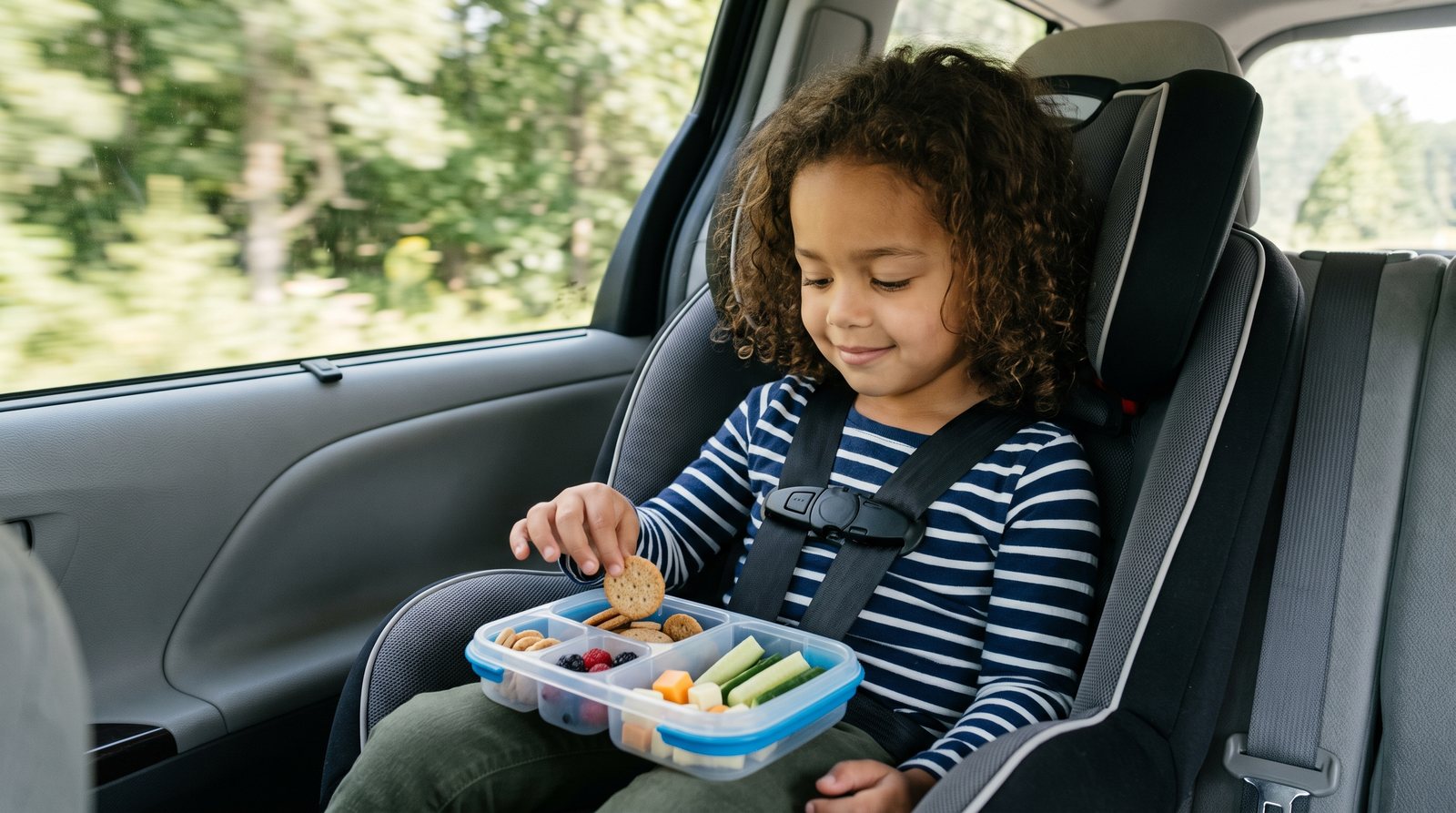
How you hand out snacks matters as much as which snacks you pack. The system that works best on a long drive is one box per child.
Give each child their own container, a divided box or a small lidded box, packed with their snacks for the journey. Within that, let them decide when to eat. A child managing their own box stops the constant requests to the front seat, removes the fairness arguments, and teaches a small lesson in pacing: a child who eats everything in the first hour learns to spread it out next time.
A few rules keep the system working. The box holds the snacks for the whole journey, so once it is empty, the next snacks come at a stop. Water is always available, separate from the box. And keep a small restock bag in the front for very long trips, so a box can be topped up at a stop rather than running dry mid-afternoon. Pack each child's box the night before, build it from the mess-free 20 above, and the snack side of the road trip looks after itself.
Frequently asked questions
What are the best mess-free snacks for the car?
The best car snacks are dry, firm, not sticky, and not melty: whole-grain crackers, dry cereal, pretzels, rice cakes, breadsticks, cucumber sticks, apple slices, dried fruit, and cheese, plus popcorn, carrot sticks, roasted chickpeas, and nut-free trail mix for kids aged 4 and up. For toddlers, choose dissolvable cereal and soft foods cut small, and offer food at stops or with an adult beside them. Anything crumbly, sticky, melty, or juicy belongs at a stop, not in the moving car.
What should kids drink in the car?
Water, every time, in the moving car. It is the only spill that does not stain or get sticky. Give each child their own spill-resistant straw or sports-cap bottle they can use one-handed. Keep juice, soda, and milk for stops, since they are sticky and staining, and milk can spoil in a warm car.
Which car snacks are safe in hot weather?
Dry, shelf-stable snacks, crackers, dry cereal, pretzels, dried fruit, breadsticks, handle a hot car with no worry. Keep perishable items like cheese, hard-boiled eggs, and meat or egg sandwiches in a cool bag with an ice pack, and do not leave perishable food out for more than 2 hours, or 1 hour above 90°F (32°C). Save chocolate and anything that melts for an air-conditioned stop.
How do I make car snacks nut-free?
Keep the snack box nut-free and peanut-free as a default, since car snacks travel into shared spaces. Most mess-free snacks already are. Build trail mix from cereal, seeds, and dried fruit instead of nuts, and use sunflower seed butter in place of nut butter. Always read labels on packaged snacks, since recipes change.
How do I stop kids eating all their snacks at once?
Use a one-box-per-child system. Give each child a container packed with their snacks for the whole journey and let them decide when to eat within it. A child who finishes everything in the first hour learns, gently, to pace themselves next time. Once a box is empty, the next snacks come at a stop, not from the front seat.
How much snack should I pack for a road trip?
Pack more than you think you need, but in a structured way: one box per child built from a variety of mess-free snacks across dry, fruit-and-vegetable, and protein groups, plus a small restock bag in the front for long trips. Snacks buy calm on a long drive, so running out is worse than packing a little extra.