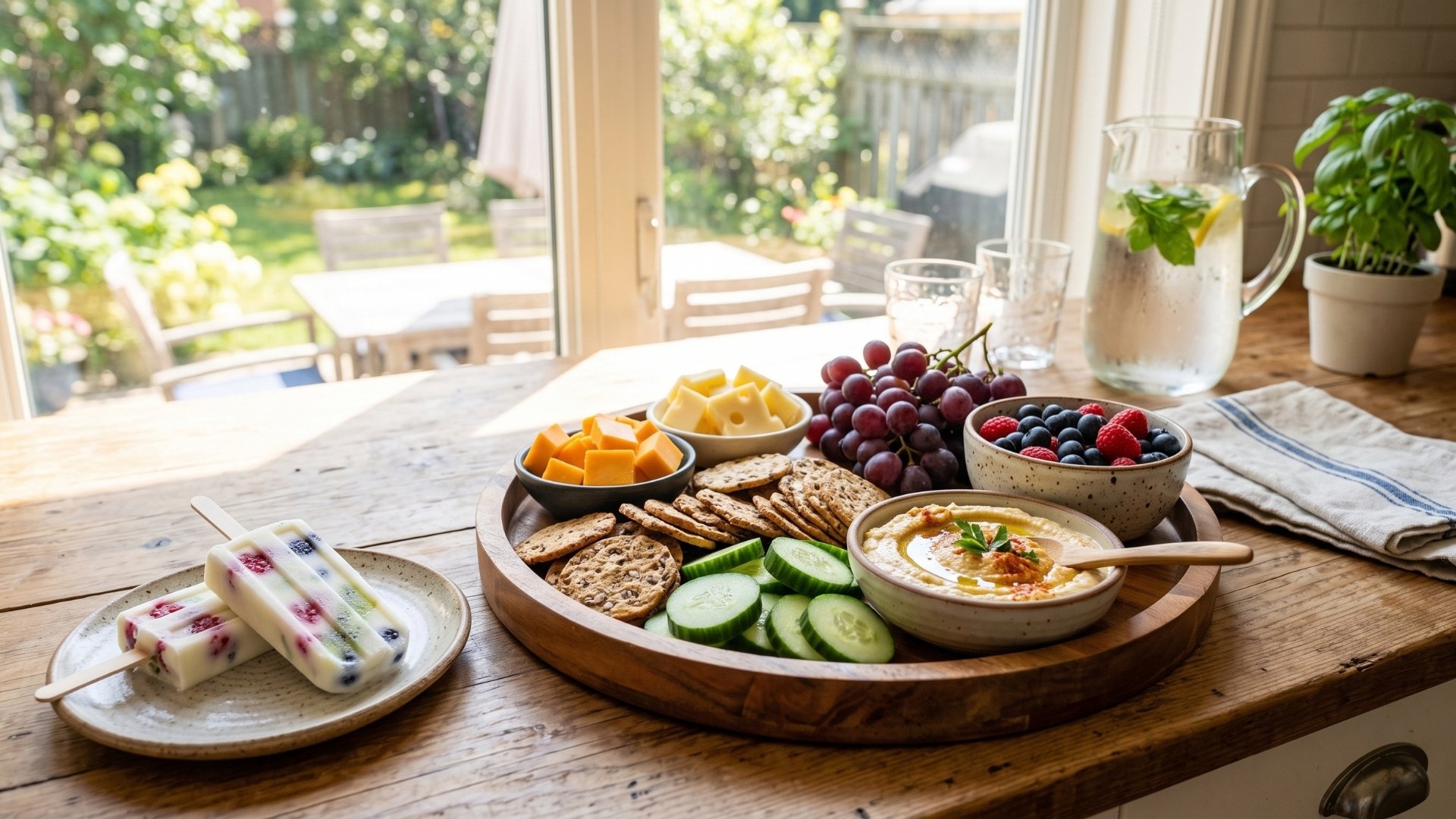
No-cook snacks are the answer for the days when turning on the oven is the last thing anyone wants: hot summer afternoons, no-kitchen-access situations (hotels, camping, a friend's house), and the low-bandwidth lazy days when assembly is the most you can manage. They are also the snacks kids can most easily make themselves. Here are no-cook snacks across five categories, plus the build-your-own snack station that turns a hot afternoon into the kid's own project.
Why no-cook snacks earn their own category
No-cook is not the same as quick. A quesadilla is quick but it needs heat. A no-cook snack needs zero heat, which matters in four specific situations.
- Hot days. In summer, the kitchen is already the hottest room. A snack that does not add to that is a kindness to the whole house.
- No kitchen access. Hotels, vacation rentals without an oven, camping, a long day out, a friend's house where you do not want to take over the kitchen. No-cook snacks travel anywhere.
- Lazy days. Some afternoons, assembly is the maximum effort available. No-cook snacks meet you there without guilt.
- Kid independence. No-cook snacks are the safest snacks for kids to make themselves: no stove, no oven, no hot surfaces. A 5-year-old can assemble most of the snacks below.
This article is part of our complete guide to feeding kids. It is the no-heat companion to our guide to quick snacks under 5 minutes (some of which use the microwave and toaster) and our 50 best snacks for kids (the broad master list).
Fruit-based no-cook snacks
Fruit is the original no-cook snack. These move it slightly beyond a plain piece of fruit without adding heat.
- Apple or pear slices with nut butter or sunflower seed butter for dipping.
- Banana with a spoon of nut butter, eaten straight off the spoon.
- Fruit and yogurt parfait: layer yogurt, fruit, and a sprinkle of granola in a glass.
- Frozen grapes for kids 4 and up, a summer favorite that doubles as a cooling treat. For under-fours, quarter grapes lengthwise and serve them chilled, not frozen.
- Melon and cucumber chunks with a squeeze of lime and a tiny pinch of salt.
- Berries with a small bowl of yogurt for dipping.
- Apple "nachos": sliced apple spread on a plate, drizzled with nut butter and sprinkled with a few mini chocolate chips or granola.
- Fruit kebabs: chunks of melon, grape, strawberry, and pineapple threaded on a skewer (blunt the skewer end for young kids, or use a straw).
Vegetable-based no-cook snacks
The trick with no-cook vegetable snacks is a good dip. The dip carries the vegetable; most kids who refuse plain vegetables will eat them with hummus or ranch.
- Carrot, cucumber, and pepper sticks with hummus.
- Cucumber rounds topped with a small spoon of cream cheese (cucumber "crackers").
- Cherry tomatoes and mozzarella balls with a tiny drizzle of olive oil.
- Sugar snap peas, raw, eaten like a snack (most kids eat these like candy).
- Bell pepper strips with guacamole.
- Celery sticks with nut butter and a few raisins (the classic, if your family eats nut butter and the school context allows it).
- A vegetable plate with two dips: carrots and cucumber alongside hummus and a yogurt-ranch.
For under-fours, cut raw vegetables into manageable sticks and supervise; whole raw carrots and large chunks are a choking risk. The AAP's choking prevention guidance lists raw carrot sticks, whole grapes, and nuts among the foods to avoid or modify until age 4. Steam-then-chill is an option for very young kids, though that involves brief cooking.
Cracker, bread, and dip no-cook snacks
The cracker-and-spread family of snacks is the no-cook backbone. Endlessly variable, all assembly.
- Crackers with cheese slices.
- Crackers with hummus and a cucumber round on top.
- Rice cakes with avocado and a pinch of salt.
- Rice cakes with nut butter and banana slices.
- Cream cheese and cucumber on a bagel half (no toasting).
- Tortilla rolled with cream cheese and turkey, sliced into pinwheels.
- Bread with nut butter and sliced banana or a thin layer of jam.
- A snack-board: crackers, cheese cubes, deli meat slices, cucumber, grapes, and a few olives.
For allergy-friendly versions of all of these, see our guide to playdates and food allergies for the swap list (sunflower seed butter for nut butter, dairy-free cheese, gluten-free crackers).
Frozen no-cook treats
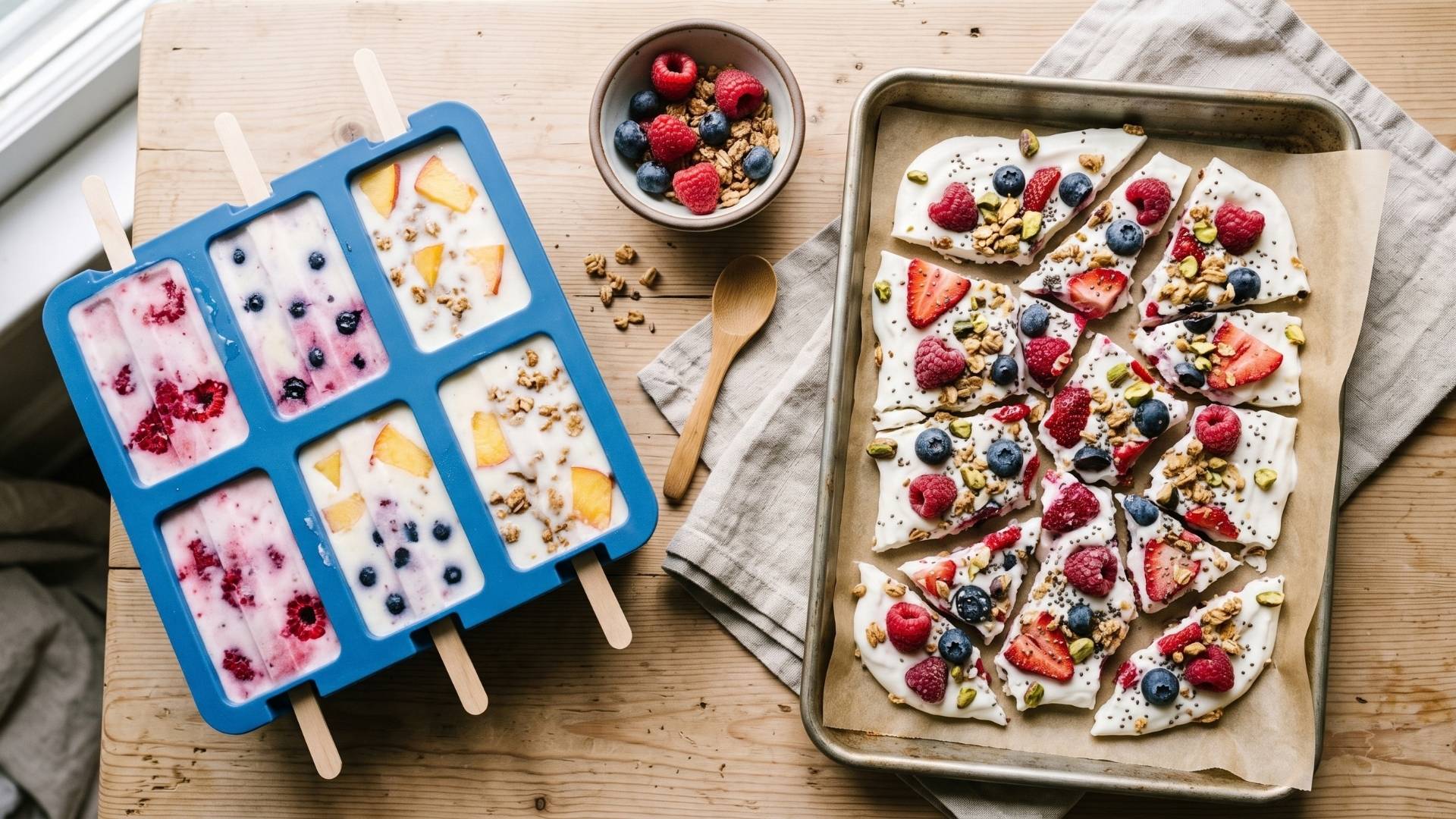
Frozen treats are the summer no-cook hero. All of these are assembled (no cooking), then frozen; the freezer does the work.
- Yogurt-and-fruit pops: blend yogurt with fruit, pour into popsicle molds, freeze overnight.
- Frozen banana "ice cream": freeze banana chunks, blend until smooth (this does need a blender but no heat).
- Frozen yogurt bark: spread yogurt on a tray, scatter berries and granola, freeze, break into pieces.
- Frozen grapes and frozen blueberries straight from the freezer (ages 4 and up; for younger kids, serve them chilled and quartered or squashed).
- Smoothie pops: pour any smoothie into popsicle molds and freeze.
- Frozen yogurt-covered berries: dip berries in yogurt, freeze on a tray.
Frozen treats are a make-ahead win. Spend 5-10 minutes assembling on a Sunday, and the freezer holds a week of cooling no-cook snacks for hot afternoons.
Protein no-cook snacks (the substantial ones)
For when a kid needs more than fruit, these no-cook snacks carry real protein and staying power. MyPlate's guidance for families suggests including choices from each food group across meals and snacks; pairing one of these with a fruit or vegetable is the easy way to do that at snack time.
- Hard-boiled eggs (boiled in a Sunday batch; the boiling is the only cooking, and it is done in advance).
- Cheese cubes or string cheese with crackers and fruit.
- Greek yogurt with granola and berries (Greek yogurt has more protein than regular).
- Cottage cheese with diced peach or pineapple.
- Deli meat roll-ups: a slice of deli meat wrapped around a cheese stick.
- Tuna or chicken salad (from a pouch or pre-made) on crackers.
- A nut-and-seed trail mix with dried fruit (skip in nut-restricted contexts; use a seed-only version).
- Edamame, if you buy it pre-cooked and chilled (many supermarkets sell ready-to-eat shelled edamame).
The build-your-own snack station
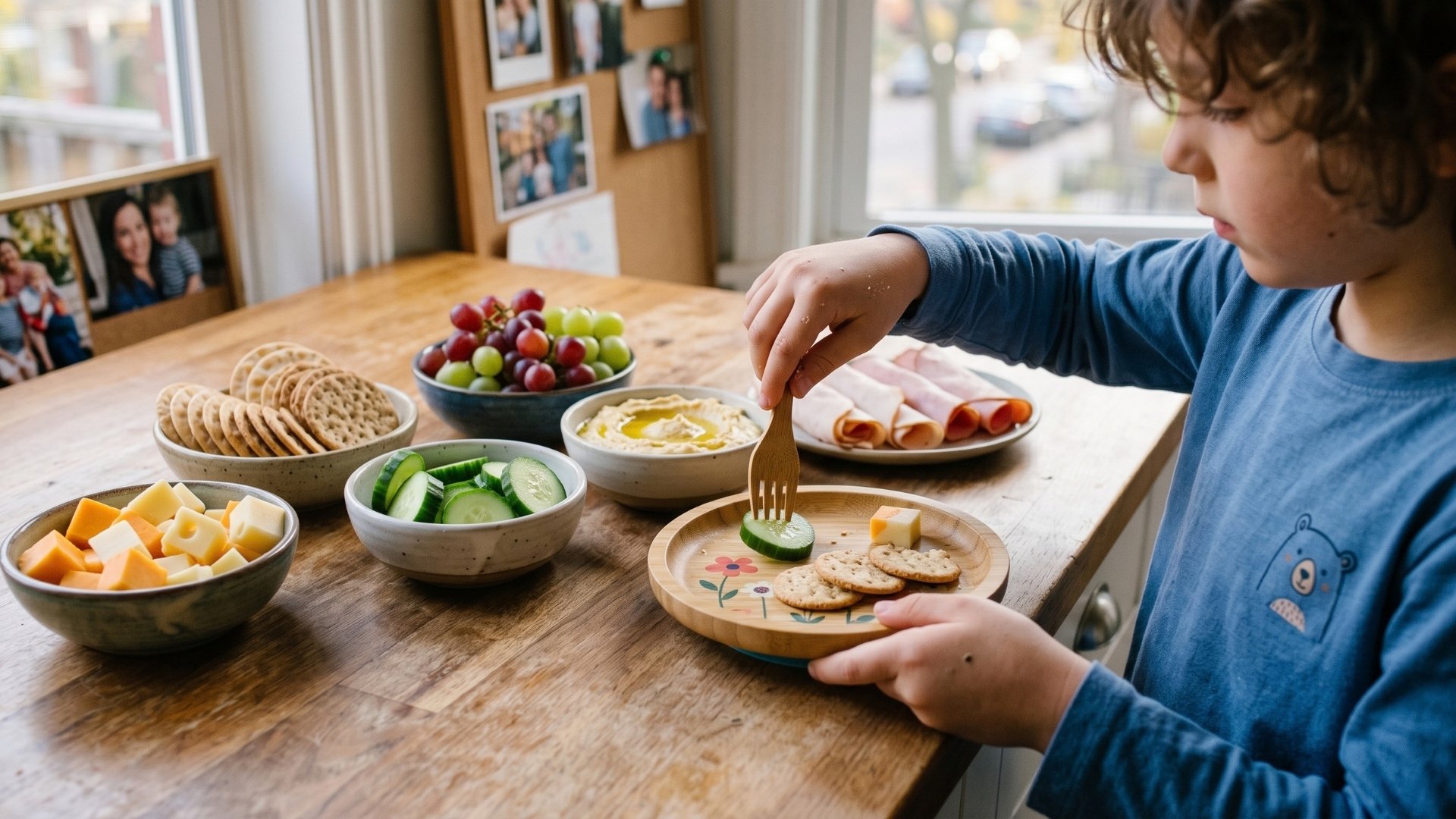
On a hot or lazy day, the best no-cook snack is the one the kid assembles themselves. The build-your-own snack station turns snack time into the kid's own small project and removes the parent from the loop entirely.
How to set it up.
- Lay out 5-7 components in small bowls or on a divided tray: cheese cubes, crackers, cucumber rounds, grapes, hummus, deli meat, a few olives.
- Give the kid a plate and let them build their own snack from the components.
- For younger kids, you set up the station; for kids 6+, they can pull the components from the fridge and pantry themselves.
- Variation for a hot afternoon: a fruit station (melon chunks, berries, grapes, sliced apple) with a bowl of yogurt for dipping. The kid builds their own fruit-and-yogurt snack.
The snack station works as a playdate snack, a sibling snack (everyone builds their own), and a hot-day activity all at once. Reset the components back into the fridge after; very little waste.
No-cook snacks away from home (travel, hotels, camping)
No-cook snacks travel because they need no equipment. The away-from-home snack kit.
- For a hotel room: a cooler bag or the in-room mini-fridge stocked with cheese, yogurt, fruit, cut vegetables, and hummus; a box of crackers; a bag of pretzels. No microwave needed (though most hotel rooms have one as a backup).
- For camping: shelf-stable no-cook options (crackers, nut or seed butter, dried fruit, trail mix, apples and oranges that travel well, shelf-stable cheese, canned tuna). A cooler extends the options to fresh cheese, yogurt, and cut vegetables.
- For a long day out: a snack box of crackers, cheese, fruit, and cut vegetables; refillable water bottles. No-cook snacks survive a backpack better than anything that needs reheating.
- For a friend's house: a small container of your kid's safe snacks if allergies are a factor, or just to have a familiar option. No-cook means you do not have to ask to use their kitchen.
For the picnic-format version of away-from-home no-cook food, see our guide to family picnics done well. For the school-snack version (the backpack-from-8am-to-mid-morning context), see our guide to school snacks: what travels and what does not.
Frequently asked questions
What no-cook snacks are best for very hot days?
Frozen treats (yogurt-and-fruit pops, frozen grapes, frozen yogurt bark) and water-rich fresh foods (melon, cucumber, berries). These cool the kid down as well as fill them up. Avoid heavy, warm-feeling snacks on hot afternoons; lean into cold and fresh.
Can no-cook snacks still be filling enough?
Yes. The protein no-cook snacks (hard-boiled eggs, cheese, Greek yogurt, deli roll-ups, tuna on crackers) carry real staying power. Pair a protein with a carb and a fruit or vegetable and the no-cook snack is just as substantial as a cooked one. Heat is not what makes a snack filling; protein and fat are.
What are the best no-cook snacks for a hotel room?
Use the in-room mini-fridge: cheese, yogurt, cut fruit, hummus, cut vegetables. Add a box of crackers and a bag of pretzels from the pantry side. This covers a few days of snacks without needing the kitchen. A small soft cooler bag extends the options if the fridge is small.
Are no-cook snacks good for kids to make themselves?
The best snacks for kids to make independently, yes. No stove, no oven, no hot surfaces means no burn risk. Most kids ages 5+ can assemble fruit-and-yogurt, crackers-and-cheese, or a build-your-own snack plate with no adult help. The build-your-own snack station is designed exactly for this.
How do I make no-cook snacks balanced?
Same combo logic as any snack: pair a carb-or-fruit with a protein-or-fat. Crackers and cheese; apple and nut butter; yogurt and granola; cucumber and hummus. The no-cook constraint does not change the nutrition principle; it just rules out the heat.
What no-cook snacks travel well for camping?
Shelf-stable options need no cooler: crackers, nut or seed butter, dried fruit, trail mix, whole apples and oranges, shelf-stable cheese, canned tuna, granola bars. With a cooler, you add fresh cheese, yogurt, cut vegetables, and hummus. The no-cook approach means camping snacks need no campfire and no stove time.