
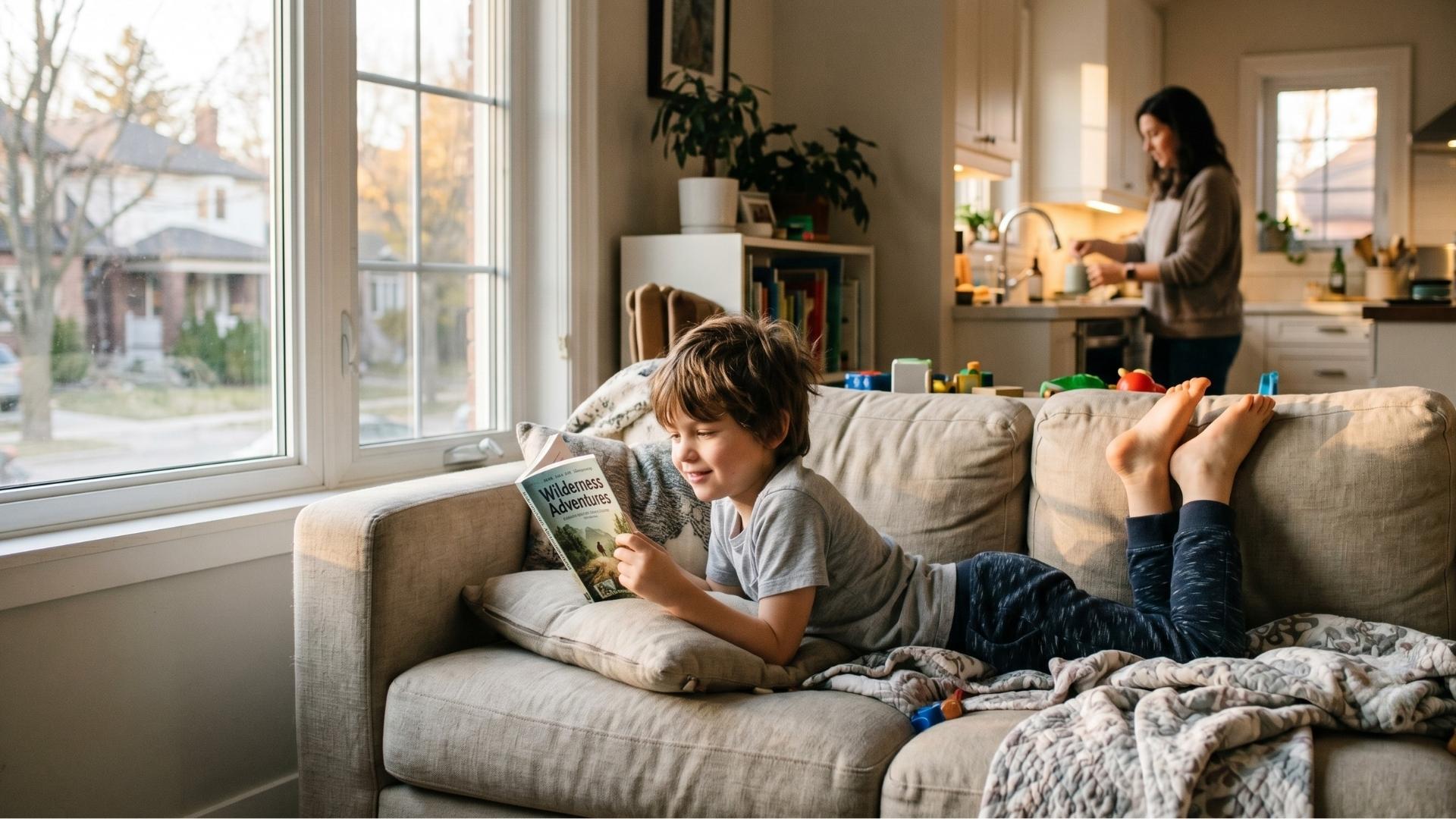
Most playdate refusals are not what they look like. The kid saying "no, I do not want anyone over today" is usually saying something specific: I am tired, I do not click with that kid, I want a quiet afternoon, I am over-scheduled. Very rarely is it: I do not want friends. Here is how to read what your kid is actually saying, the difference between not-today and not-ever, and the cases where the right move is to listen and the cases where the right move is a gentle nudge.
Why kids refuse playdates (the 6 most common reasons)
Before deciding what to do about it, name what is going on. Most refusals fall into one of six patterns.
- Tired. The kid had a long week, a hard day, a poor night's sleep. They want their own space and their own pace. Often correctable with rest, not with social engagement.
- Mismatched playmate. The proposed kid is one your kid does not particularly enjoy, even if you and the other parent are friends. The refusal is specific to that kid, not to playdates in general.
- Over-scheduled. Three structured activities a week, plus school, plus a playdate, plus a family event. The kid is at saturation; refusing is the only way they have to push back. Common in the after-school-into-evening window.
- Introvert needing recovery. After a school day full of social demands, an introverted kid genuinely needs solo time before any more social input. The refusal is not a sign of social difficulty; it is the kid's nervous system asking for a refill.
- Specific anxiety about the format. Sleeping over at someone else's house. A drop-off at a new place. A group of unfamiliar kids. The refusal is about the format, not playdates in general.
- Genuine social difficulty. The rarer pattern: persistent refusal across all formats, friends, and timing. This one warrants a closer look.
The first step in any refusal: ask which one this is. "Is it that you do not want to see Sam, or you do not want to see anyone today?" Most kids will tell you, often more directly than you expect. If you are still building out the broader playdate playbook, our complete guide to playdates covers the bigger picture.
"Not today" vs. "not ever" (the diagnostic question)
The single most useful sorting question is whether the refusal is situational or systemic.
Not today.
Refuses this specific playdate, this specific kid, this specific time slot. Other playdates with other kids in the past month have been fine; another time slot would be fine. This is the typical pattern and the easiest to handle. Honor the no, propose another day or another kid, move on.
Not this kid.
Refuses any playdate with one specific kid, even if happy with playdates generally. Often a chemistry mismatch; sometimes a real social problem with that kid (mean comments, overpowering personality). Worth a calm conversation about why; worth respecting the no even if it is socially inconvenient because you are friends with the parent.
Not this format.
Will not do drop-offs but is happy with stay-and-plays. Will not do home playdates but loves the park. Will not do group settings but is happy one-on-one. Format-specific refusal is not a problem; it is data. Adjust the format.
Not ever.
Refuses every playdate, in every format, with every kid, across multiple weeks. Adds avoidance of school, of family events, of birthday parties. This pattern is the one to take seriously; it usually points to either burnout (over-scheduled) or social anxiety (which has different solutions than just respecting the no).
Most kids cycle through periods of refusal that look like "not ever" but turn out to be "not this season." Watch for two to three weeks before treating it as a pattern; act sooner only if there is real distress.
The post-school decompression need
Many kids who refuse playdates after school are not refusing playdates; they are refusing more social input. The school day is socially exhausting for most kids: 6 to 7 hours of group navigation, sustained attention, peer dynamics. By 3pm, a lot of kids are at their social-bandwidth limit.
If the refusal pattern is post-school-only (Tuesday-after-school no, Saturday-morning yes), the kid does not need a different friend group; they need decompression time before any more social input.
Practical fixes for the post-school slump:
- Schedule playdates on weekends, not weekday afternoons. Saturday and Sunday morning are the prime social windows for most kids; afternoons are for recovery.
- If a weekday playdate has to happen, build in a 30-minute decompression buffer first. The kid comes home, has a snack, watches a quiet show or has alone time, then the friend arrives.
- Keep the after-school playdate short: 60 to 90 minutes max, ending well before dinner. Long after-school playdates produce the meltdown at 6pm.
For the broader after-school logistics, see our guide to after-school playdates for working parents.
The bad-fit playmate problem
Sometimes the refusal is specific: not all playdates, not even most playdates, just this one kid. Common at every age, especially when the parents are friends and the kids have been pushed together more than they would have chosen.
How to read it. Listen for the language: "I do not really like Maya." "Sam is mean to me." "He always wants to play the same thing." Each is real information about the dynamic.
What to do.
- Ask why, with neutral curiosity. "You do not seem to like playing with Maya. What is going on?" Most kids will tell you something specific: she takes my toys, he laughs at me, she only wants to play her game. Take it seriously.
- Validate the no. Even if you are friends with the parent. "I hear you. We do not have to schedule another one for a while." Forcing playdates with a kid your kid does not click with teaches them that their preferences do not matter.
- Adjust the parent friendship separately. You can stay friends with the other parent without monthly kids' playdates. Coffee dates, evenings out, family events where the kids do not have to interact closely. The adult friendship and the kid friendship are different relationships.
If you are not sure whether the kid issue is a real mismatch or just a bad day, run one more playdate in a low-stakes setting (park, not house) and watch carefully. Our guide to when kids do not click covers the assessment in detail.
The over-scheduled kid (when your kid is too booked)
The most common cause of persistent playdate refusal in middle childhood is over-scheduling. The kid has school five days a week, sport on Mondays, music on Wednesdays, art on Thursdays, religious school on Sundays, family obligations on weekends. The playdate is not refusable in the same way; their week is the problem.
Run the audit. Map your kid's weekly schedule honestly. Count the hours of structured, externally-directed time. Then count the hours of unstructured, kid-directed time (free play, alone time, choose-your-own-activity). For most kids ages 5 to 12, the second number should be at least 50% of the first; for many over-scheduled kids, it is closer to 10%.
If the kid is over-scheduled, the answer is not more playdates; it is fewer of everything else. Drop one structured activity. Protect a Saturday morning as nothing-on-the-calendar. Skip the family obligation that does not actually matter. Free time is when kids self-organize their social needs.
The AAP HealthyChildren guidance on over-scheduling covers the developmental case for unstructured time. Most over-scheduled kids are not refusing playdates because they hate playdates; they are refusing because they have nothing left to give.
The introverted kid who is actually fine
Some kids genuinely prefer fewer playdates than the cultural script expects. They have one or two close friends they see regularly, and that is enough. They prefer solo activities (reading, drawing, building, playing alone in their room) for big chunks of time. They do not seek out group settings.
This is not a problem. Roughly a third of kids are introverted by temperament, and introverted kids have shorter social-need cycles than extroverted kids. A weekly playdate plus regular school socializing is plenty for most introverts; pushing for more produces refusal, not enrichment.
How to tell if your kid is introverted-and-fine vs. socially-struggling-and-needs-help.
- Introverted-and-fine: has one or two close friends, sees them regularly, enjoys playdates when they happen, recharges in solo time, does not appear distressed about the social pattern.
- Socially-struggling: no close friends across an extended period, distress about not having friends, avoidance that grows over time, declining engagement in school social settings, loneliness expressed verbally.
If the first set fits, your kid is not under-socializing; they are doing introversion well. Adjust your expectations downward (fewer playdates, more depth in the ones you have); do not interpret their pace as a problem.
When to push gently vs. when to let it be
Not every refusal should be honored immediately. Some kids dig in on a no that they would actually be happy to walk back if you nudge them through it. Three rules of thumb.
Push gently when:
It is the third or fourth refusal of the same playmate they were happy with last month (sometimes a kid avoids re-engaging out of awkwardness, not real preference). The kid says no but their face says "convince me." The refusal is right after a small social mishap (tantrum at school, friend conflict) and the next playdate could heal it. The pattern is becoming avoidance and you can tell.
How to push gently:
"Maya was asking about you yesterday. I think it would be fun to see her. We could do just an hour, at the park, and you can come home if you want." Low-stakes, time-limited, escape route built in.
Let it be when:
The kid is clearly tired. The kid has explained why they do not want this specific kid. The kid has had a hard week and needs decompression. The format is wrong (drop-off when stay-and-play would work). You are about to be late for dinner anyway.
When in doubt, lean toward letting it be. A few skipped playdates do not damage social development; a kid who feels their preferences are constantly overridden does.
When to talk to a pediatrician
Most playdate refusals are normal and need no professional attention. Some patterns are worth a conversation with your pediatrician.
- Persistent refusal across all formats and friends, lasting more than 3 to 4 weeks, with no clear cause (not tied to a specific event, illness, or schedule problem).
- Avoidance growing over time. Used to do playdates, now refuses; used to attend school easily, now resists; used to enjoy family events, now panics about them.
- Physical anxiety symptoms. Stomach pain, headache, sleep disruption, panic attacks before social events. Especially if these are new patterns.
- Distress about the social pattern. Not just the parent; the kid themselves expressing loneliness, sadness about not having friends, self-criticism about being weird or unliked.
- School reports of social isolation. Teacher confirms the kid does not engage at school, eats alone, has no consistent friend group across the year.
If two or more of these apply, book a check-in with your pediatrician. The conversation is not scary and does not commit you to anything; it just gets you a professional read. Early support for social anxiety, autism spectrum, or other patterns produces much better outcomes than waiting. The Child Mind Institute on social anxiety in kids is a useful pre-read.
What to skip in the meantime. Pushing harder. Comparing to other kids. Bribing or threatening. None of these help; many make the pattern worse.
Frequently asked questions
My kid says "I have no friends" but is invited to plenty of birthday parties. What is going on?
Often a perception gap. Kids tend to underestimate how liked they are, especially during emotional moments. The friend reality and the friend feeling are different things. Listen, validate, but check the actual evidence: do they get invited to parties, do they have weekly playdates, do they talk about specific kids by name? If yes, the loneliness is more about a feeling than a reality, often tied to a specific recent incident. If the social isolation is real (no invitations, no named friends, no weekly contact), the concern is more pressing.
Can I make my kid have a playdate they do not want?
Sometimes yes (gentle nudge, time-limited, escape built in). Mostly no. A kid forced into a playdate they do not want has a bad time, the host has a bad time, the playdate does not produce friendship, and the kid learns that you do not respect their no. Honor most refusals; gently push only when you have specific reason to think they would be happy if they showed up.
What if all my kid's friends do playdates and mine refuses?
Two questions. Is your kid distressed about the social pattern, or only you are? Is your kid actually friendless, or just refusing the playdate format? Some kids socialize heavily at school and do not need playdate top-ups; they look isolated to you, but their social tank is full. If your kid is genuinely lonely, work with them on what kind of social setting would feel doable (smaller, shorter, library instead of home). If your kid is fine and only you are worried, lean toward trusting the kid.
Is it weird if my kid only wants to play with one specific friend?
Not at all. Many kids are deeply attached to one or two friends and are uninterested in expanding the circle. This is especially common for introverted kids and kids who are slow to form friendships. As long as the friendship is healthy (no one-sided dynamics, no constant conflict, no exclusion), one deep friendship is enough at most ages. Quality beats quantity.
What if the refusal is about not wanting to leave home?
Try inviting the friend over instead. Some kids find leaving home harder than hosting. If your kid is happy hosting but refuses to go to others' houses, the refusal is about transitions and unfamiliar settings, not about playdates. You can do most of your social calendar as host playdates for a while; the visiting-other-homes piece will come with maturity.
How long should I let a refusal pattern continue before I act?
Three to four weeks of consistent refusal, with no clear cause, is the rough threshold to start asking deeper questions. Refusal of a single playdate, a single week, or a single friend is not a pattern. Refusal across all friends, all formats, multiple weeks, with growing avoidance, is a pattern worth taking seriously. If the kid is in distress, act sooner.