
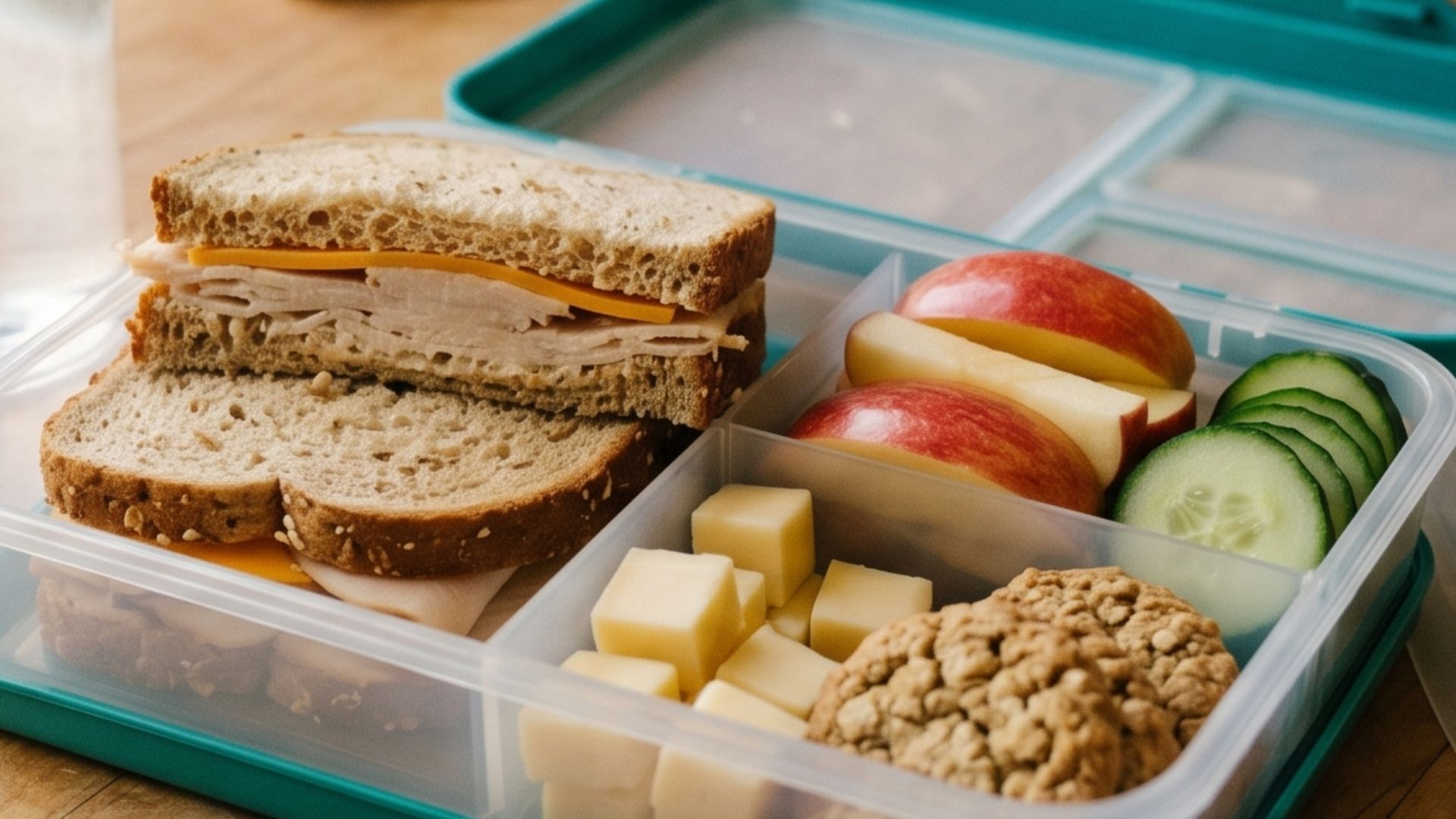
The lunchbox that comes home empty is the lunchbox that gets eaten. Most kids have a narrow set of foods they will reliably eat at school: familiar, easy to handle without parents nearby, and not embarrassing in front of the lunchroom. Here are 20 lunchbox ideas kids actually eat, the 4-component formula that prevents the all-carb lunch, and the Sunday-prep system that turns weekday mornings from packing-marathon to 5-minute assembly.
What kids actually eat at lunch (vs. what looks good in photos)
Pinterest lunchboxes are not the goal. The Pinterest lunchbox has 12 tiny components, takes 30 minutes to pack, and frequently comes home half-eaten. The lunchbox that gets eaten has 4 things, takes 5 minutes to assemble in the morning, and uses the same containers every day.
Three things kids actually need from a school lunch.
- Familiar food. New foods at school often go uneaten because the kid has 20 minutes, no parent to encourage, and a social audience. Save adventurous foods for home dinner.
- Easy to handle. Sandwiches that hold together. Containers that open easily. Cutlery the kid can manage. No assembling at the lunch table.
- Enough fuel to last. School lunches typically need 400-600 calories with a balance of protein, carbs, fat, and fruit/vegetable. Too small means a hangry kid by 2pm.
The 4-component formula
Stop reinventing lunch. Use the 4-component formula every day; rotate within categories.
- Main: a sandwich, wrap, pasta, rice bowl, or hot thermos. The carb-and-protein backbone.
- Fruit: apple slices, grapes (halved for under-fours), sliced strawberries, blueberries, mandarin segments, banana.
- Veg or savoury side: cucumber rounds, baby carrots, cherry tomatoes, sugar snap peas, hummus and pita strips, cheese cubes.
- Treat or extra: a couple of cookies, a granola bar, yogurt, a small piece of chocolate, popcorn. Small; not the focus.
The formula works because every component has a category, every category gets covered, and the kid does not have to negotiate the contents. The USDA MyPlate guide for parents is consistent on this: balanced lunches outperform either restricted or sugary versions for school-day energy and focus.
If your kid has food allergies (theirs or a classmate's), see our guide to food allergies at school and our playdates and food allergies guide for the foundational allergy-management framework.
20 lunchbox ideas (sandwich, no-sandwich, hot, and snack-style)
Sandwich-based (5).
- Turkey-and-cheese on whole-grain bread, cucumber rounds, apple slices, granola bar.
- Peanut butter and banana on whole-wheat (use sunflower seed butter for nut-free schools), grapes, baby carrots, mini cookies.
- Hummus and cucumber wrap in spinach tortilla, sugar snap peas, blueberries, cheese cubes.
- Cream cheese and cucumber bagel halves, cherry tomatoes, mandarin segments, a few pretzels.
- Egg salad on a soft roll, sliced bell peppers, strawberries, yogurt tube.
No-sandwich (5).
- Pasta salad (cold pasta, cherry tomatoes, mozzarella balls, olives, dressing on the side), grapes, granola bar.
- Rice bowl (cold rice, shredded chicken, soy-sesame dressing, edamame), mandarin segments, cookies.
- Bento-style: cheese cubes, crackers, sliced ham, cucumber rounds, grapes, mini muffin.
- Pinwheels (tortilla rolled with cream cheese and turkey, sliced into rounds), sliced apple, baby carrots, yogurt.
- Quesadilla (made the night before, packed cold), cherry tomatoes, sliced strawberries, popcorn.
Hot thermos lunches (5).
- Mac and cheese in a thermos, sliced apple, cucumber, mini cookies.
- Chicken and rice soup, crackers, mandarin segments, granola bar.
- Spaghetti bolognese (last night's dinner) in a thermos, grapes, baby carrots.
- Chicken nuggets in a thermos with ketchup container, sweet potato fries (warm in thermos), apple slices, yogurt tube.
- Bean and rice burrito bowl (warm), cucumber rounds, strawberries, cookies.
Snack-plate / Lunchables-style (5).
- Crackers, cheese slices, deli meat slices, grapes, baby carrots, a small treat.
- Hummus, pita strips, cucumber, cherry tomatoes, hard-boiled egg, mandarin segments.
- Pretzels, peanut butter (in a small container for dipping), apple slices, cheese cubes, granola bar.
- Cottage cheese (in a small container), sliced peach, crackers, mini muffin, strawberries.
- Ham and cheese rolls, crackers, cucumber, grapes, yogurt.
Allergy-safe versions
If your kid's school is nut-free or has classroom allergens, swap the obvious ingredients.
- Peanut butter swaps: sunflower seed butter (SunButter is the common brand), tahini, soy butter, or skip the spread for a different sandwich.
- Dairy swaps: oat-milk-based cheese (some are good, some are not; try a few brands), avocado as a creamy spread, hummus instead of cream cheese.
- Egg swaps: chickpea-mash sandwich filling instead of egg salad. Or skip the egg-based options entirely.
- Wheat/gluten swaps: rice cakes, gluten-free crackers, gluten-free wraps. Many store-brand gluten-free crackers and wraps are now genuinely good.
- Sesame swaps: read crackers and bread labels carefully (sesame is in many products); default to plain crackers and basic sandwich bread.
For the broader top-9-allergen swap list with specific products, see our guide to common allergen swaps that actually taste good.
The cold-pack reality (food safety)
Schools rarely have refrigerators for student lunches. Cold packs and insulated lunch bags are the difference between food-safe and food-poisoned.
- Use an insulated lunch bag for any lunch with dairy, meat, or eggs. Plain old fabric lunchboxes do not keep food cold enough between 8am and noon.
- Two cold packs per lunch. One on top, one on the bottom of the food. A single cold pack is often not enough by lunchtime, especially in warmer weather.
- Frozen items as cold packs: a frozen yogurt tube, a frozen cheese stick, a frozen juice box. Thaws by lunch and keeps the rest cold in transit.
- Hot foods stay safe in a high-quality thermos for 4-5 hours. Pre-warm the thermos with hot water for 5 minutes before adding the hot food; it stays meaningfully hotter.
- What to skip in a non-refrigerated lunchbox: mayonnaise-heavy salads on hot days, raw fish or sushi (unless you have an excellent cold-chain), runny dairy that warms up unappetisingly.
The Sunday-prep, daily-assembly system
The lunchbox that takes 5 minutes on a school morning is the one that already has 80% of the work done on Sunday.
Sunday prep (30-45 minutes for the week):
- Hard-boil a dozen eggs (lasts the week).
- Cut and store: cucumber rounds, baby carrots, cherry tomatoes, sugar snap peas (lasts 4-5 days in airtight containers).
- Wash and store fruit: grapes, berries, apples (cut Wednesday-Thursday or use lemon juice to keep apples).
- Portion snacks into reusable containers: cheese cubes, crackers, granola bars, mini muffins.
- Bake one batch of muffins or cookies for the treat slot (lasts the week).
- Pre-pack 5 reusable containers with the dry components (the snack-plate-style lunch is fully assembled by Sunday afternoon).
Daily morning assembly (5-10 minutes):
- Pull lunchbox from cupboard. Add cold packs.
- Pack the main: yesterday's leftover, sandwich made fresh, or pre-made bento from Sunday.
- Add the prepped fruit, vegetable, and snack containers.
- Add water bottle (filled the night before).
- Done.
The Sunday investment is 30-45 minutes for the week. The daily morning savings are 15-20 minutes per day across 5 weekdays. Net win: roughly 60-90 minutes per week of less-rushed mornings.
The 5-day rotation (so you do not have to plan)
Most kids prefer the same 4-5 lunches on rotation. Embrace it.
A workable weekly rotation:
- Monday: sandwich-based (turkey-and-cheese, PB&J, or whatever your kid's go-to is).
- Tuesday: bento-style snack plate.
- Wednesday: hot thermos (often last night's dinner).
- Thursday: pasta salad or rice bowl (cold).
- Friday: pizza-style or quesadilla (the Friday treat lunch).
Adjust to your kid's preferences. The point is the structure: pick 5 lunches that work; rotate them. The kid stops complaining about novelty (most kids prefer predictability at lunch); you stop reinventing every morning.
For the broader meal-planning framework that includes lunches, dinners, and snacks together, see our guide to meal planning for families.
Frequently asked questions
How big should a kid's school lunch be?
Most kids ages 5-12 need 400-600 calories at lunch. Tweens often need more (600-800). The packed-and-came-home-half-eaten lunch is your data; if half comes home repeatedly, the portion is too big or the food is wrong. Adjust over a week or two.
What if my kid will not eat anything from the lunchbox?
Three diagnostics. First, ask the kid: too rushed, too embarrassing, too cold-by-lunchtime, did not like it. Second, watch what comes home: which components and which categories. Third, narrow the rotation to the 3 lunches they consistently eat; rebuild from there. Adding new things one at a time as their preferences develop.
How do I handle no-nut, no-dairy, no-gluten school rules?
Read the school's specific allergy policy. Common requirements: no peanut butter, no tree nuts, no peanut-based snacks. Less common: full top-9 allergen restrictions. Plan around the explicit list. Sunflower seed butter, hummus, cheese (if allowed), beans, eggs, and whole-grain crackers cover most situations. When in doubt, ask the school office for the exact policy and a list of safe brands.
What about lunchbox containers and gear?
Bento-style boxes (PlanetBox, Yumbox, OmieBox) are worth the investment if you pack lunches 5 days a week. They have built-in compartments that eliminate the snack-bag waste and visual chaos. For thermos lunches, a high-quality stainless-steel thermos (Hydro Flask or Thermos brand) keeps food hot for 4-5 hours. Reusable cold packs in two sizes cover most lunchbox shapes.
Should I let my kid pack their own lunch?
By age 8 or 9, yes, with structure. Set out the components on Sunday-prepped containers; the kid assembles their own lunch in the morning under the 4-component formula. Builds independence and reduces the kid-complaining-about-mom's-lunch dynamic. By age 12, most kids can pack their own from start to finish with minimal supervision.
What about a hot lunch from the school cafeteria vs. packed?
Both work. School lunches are typically nutritious enough for most kids and free up morning time. Packed lunches give you control over allergens, portion size, and specific preferences. Many families do a mix: packed lunch most days, school lunch on the day with the kid's favourite cafeteria meal. The right balance depends on your kid, your school, and your bandwidth.